The Strait Opens, the Sanctions Crumble: Reading the 18 June US–Iran Sequence
Within roughly two hours on 18 June 2026, CENTCOM lifted its maritime blockade of Iranian ports, JD Vance declared Iran's missile capacity 'substantially degraded,' and the Wall Street Journal reported a final deal that would terminate US sanctions on Tehran.
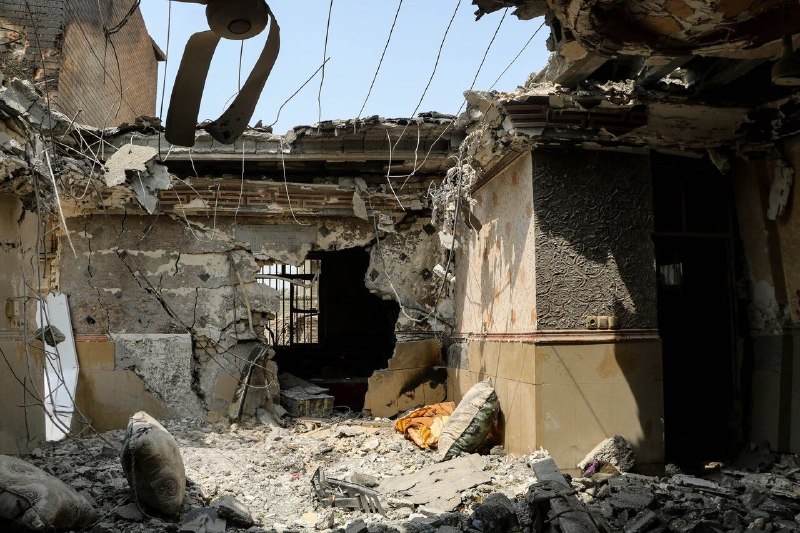
At 17:08 UTC on 18 June 2026, US Central Command announced that American forces had lifted the maritime blockade on traffic entering and leaving Iranian ports and coastal areas, ending enforcement operations. Nine minutes earlier, the same command had confirmed the stand-down through Israeli media channels. By 16:05 UTC, Vice President JD Vance had already told reporters that Iran's ability to launch missiles was "substantially degraded," though not eliminated, and that Washington had "accomplished" the mission. An hour later still, the Wall Street Journal reported that the United States had agreed to terminate all Iranian sanctions under a final deal. In the space of a single afternoon, three decisions — military, declaratory, and economic — locked into place one after another, in plain view, and on a schedule that suggests the choreography was agreed in advance rather than improvised under fire.
The sequence is the news. None of its individual elements is new. What is new is their simultaneity: the lifting of a coercive measure before the public justification for it has been retired, paired with a financial concession that goes well beyond what the original coercive measure was designed to extract. Read together, they describe not a negotiation in progress but a closing act — the wrapping-up of an opening move. This article reads the day's three announcements in order, sets them against the reporting that preceded them, and asks what kind of settlement the United States has just bought itself, and what it has conceded in the buying.
The blockade, and what ending it actually means
A maritime blockade is, in classical international-law terms, an act of war. The version that the United States ran against Iran in the weeks leading up to 18 June was a selective one: a declared exclusion zone around Iranian ports and coastal approaches, enforced by US naval and air assets operating from the Persian Gulf and the broader CENTCOM area of responsibility. CENTCOM's 17:08 UTC statement said blockade-enforcement operations had "ceased," and that the force posture that had sustained the interdiction had been stood down.
The tactical effect is straightforward. Tankers and commercial traffic that had been diverted, held in port, or rerouted around the Strait of Hormuz can now resume direct passage to and from Iranian terminals. Iranian-flagged vessels and third-party cargo that had been unable to secure insurance or charter under the blockade regime will be repriced in the days that follow. The diplomatic effect is less straightforward. A blockade is a lever; levers are most useful when the other side knows they will be reapplied. By lifting the measure while sanctions termination is reportedly still on the table, Washington has spent the lever and is now negotiating with cash.
The order matters too. Termination of enforcement came first, in CENTCOM's announcement. The sanctions-termination reporting, attributed to the Wall Street Journal by unusual_whales on X, came second, and was framed as "per WSJ" rather than as an official US government action. A government that had wanted to retain leverage would have held the blockade open until the legal architecture of the sanctions lift was in force. The decision to lift first is consistent with a posture in which Washington wanted Iranian oil to flow as a price for moving to a final deal — that is, with a side that has decided the deal itself, not the threat, is the asset.
Vance, the degraded missile capacity, and the rhetoric of accomplishment
Vice President Vance's 16:05 UTC remarks, relayed by Clash Report on Telegram, are the political companion to the operational order. Iran's missile-launch capability is, in Vance's phrasing, "substantially degraded." He added: "Is it zero? No. But it's substantially degraded. We haven't abandoned that mission. We accomplished it."
The careful line — degraded, not eliminated; mission accomplished, not total victory — is the rhetoric of a settlement, not of a continuing war. A US administration that intended to push the campaign into a wider escalation would not be reassuring domestic audiences that the operational objective has been met. A US administration that intends to lock in a political settlement has every reason to say so, in exactly that register. Vance's words are best read as a calibrated signal: to Tehran, that the kinetic phase is over; to Israel, that the United States considers the principal military risk to be at a level it can live with; to Congress and the American public, that the costs of further escalation are not being committed to without a political return.
What the statement does not do is name the basis of the degradation assessment. The sources available in the public reporting on 18 June do not specify whether the assessment reflects strikes on launchers, on storage, on production, on command-and-control, or on a combination. The US administration has, on past campaigns, offered similar framings — Syria 2018, the Soleimani strike — that turned out, on later review, to be more rhetorical than operational. A reader should treat the claim as the official US position, not as an audited outcome.
Sanctions termination, the WSJ report, and the financial architecture of a final deal
The third leg of the sequence is the most consequential. The Wall Street Journal's reporting, surfaced on X at 15:17 UTC, is that the United States has agreed in a final deal to terminate all Iranian sanctions. This is materially different from the suspension, waiver, or selective licensing of sanctions that has characterised the diplomatic record since 2015. Suspension leaves the architecture in place and is reversible. Termination unwinds it.
The distinction matters for three constituencies. Iranian oil exporters, who will reprice counterparty risk on the basis of whether the lifting is durable. International banks and shippers, who need to know whether previously sanctioned Iranian counterparties can be onboarded under their normal compliance regimes. And third-country governments — including the European Union, the Gulf states, Turkey, India, and China — that have maintained residual exposure to Iran and have been lobbying, in some cases for years, for the legal clarity that only termination provides.
The reporting is also the leg of the sequence on which the public evidence is thinnest. The Wall Street Journal is a tier-one scoop outlet for US foreign-policy reporting. Its reporting on 18 June is, on the evidence so far, a single attributed claim. The deal-text, the sequencing of termination against compliance milestones, and the question of which UN Security Council resolutions are being rolled back are not yet on the public record in the sources reviewed for this article. Those details will determine whether the WSJ scoop describes a binding agreement or a negotiating position described in the language of agreement.
The structural reading: leverage spent, architecture unwound
Read as a single move rather than three, the 18 June sequence describes a structural pivot in the US posture toward Iran. The instrument of coercion — naval interdiction — has been retired. The instrument of legal-economic pressure — the sanctions regime — is being retired in turn. What remains, on the public evidence so far, is the residual sanctions architecture, the IAEA file, the question of Iran's enrichment and missile programmes, and the regional balance of force between Iran, Israel, and the United States' Gulf partners.
A hegemonic order that has spent two decades constructing a sanctions architecture against Iran does not unwind that architecture cheaply. The cost is paid in three registers. First, in credibility: any future US administration that wishes to lean on the sanctions tool against Tehran, or against any other sanctioned state, will be measured against the precedent that sanctions can be terminated as a settlement instrument. Second, in the regional balance: Israel, the Gulf states, and Turkey each have equities in the Iranian file that differ from Washington's, and none of them were parties to the reported final deal. Third, in domestic US politics: a sanctions-termination of this scale will be contested in Congress, and the executive's authority to deliver it will be tested.
The frame that the day invites is not that the United States has been defeated in the Persian Gulf. The frame is that the United States has decided the coercive campaign has run its course, that the financial concession is the price of a settlement it wants, and that the price is being paid in the form of an architecture unwound. That is a different and a more interesting story than either "blockade defeated" or "mission accomplished." It is the story of a superpower choosing to spend leverage it still held.
What remains uncertain, and where the evidence thins
Several questions are open as of the time of writing, and the public reporting on 18 June does not yet resolve them. The sanctions-termination reporting rests on a single Wall Street Journal scoop. The deal text, the verification protocol, the treatment of Iran's missile programme, and the role of the IAEA have not been placed on the public record. Vance's assessment of Iranian missile capacity is an official claim, not a verified outcome. The Israeli position on the reported deal is not yet stated in the public sources reviewed; given Israel's standing equities in the Iranian file, its response is a near-term variable. The Iranian position, similarly, has not been confirmed in the open sources; the lifting of the blockade is a US operational fact, not a joint statement.
What this article can responsibly say is that on 18 June 2026, in a two-hour window between 15:17 and 17:08 UTC, the United States lifted its maritime blockade, declared its principal military objective accomplished, and was reported to have agreed to terminate its sanctions regime against Iran. What it cannot say, yet, is the full legal shape of the deal, the timetable on which the architecture is dismantled, or how the regional system absorbs the change. The next forty-eight hours of reporting — the WSJ's follow-on coverage, the Israeli and Iranian official reactions, the IAEA board, the US Congress — will determine whether 18 June is remembered as a closing date or as the moment the terms of a new contest were set.
Monexus read the day's three announcements — CENTCOM's stand-down at 17:08 UTC, Vance's "substantially degraded" framing at 16:05 UTC, and the WSJ's sanctions-termination scoop reported at 15:17 UTC — as a single, choreographed sequence rather than as three independent decisions, and foregrounded the financial architecture that the lift implies rather than the military outcome alone.
Wire provenance
This editorial synthesis draws on the following public wire/social posts:
- https://t.me/wfwitness
- https://t.me/amitsegal
- https://t.me/ClashReport