A ceasefire in name, a warning in fact: reading the US-Iran deal through the price of oil
Within hours of a US-Iran ceasefire, Brent was sliding to its lowest level since the war began. The same day, Washington publicly reserved the right to resume the war. Both signals are now in the market.
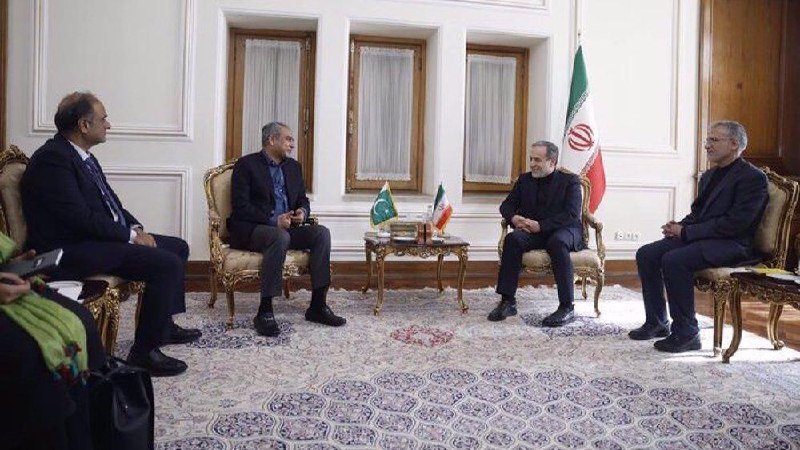
By 09:45 UTC on 18 June 2026, Brent crude was trading at its lowest level since the start of the US-Iran war, according to a Reuters market report circulated the same morning. Within nine minutes, the picture had hardened: the United States had publicly declared it stood ready to resume the war if Iran did not follow through on the agreement. By 09:41 UTC, Russia had weighed in with a statement welcoming the deal. Three signals, one trading session, no coherent story yet. That is the deal on the table — and the deal is the warning.
The shape of the next quarter in Middle Eastern energy and in Iran's place in the global financial system is being set in these hours, and the signals are deliberately mixed. A ceasefire that the market reads as durable enough to flatten a war risk premium is, in the same breath, framed by the principal signatory as conditional on behaviour that has not yet been specified. The price action and the political posture are not contradicting each other. They are the same policy, aimed at two audiences.
What the market was told
Reuters reported at 09:45 UTC on 18 June 2026 that oil had fallen to its lowest level since the start of the Iran war after a ceasefire deal was signed. The size of the move, and the speed, tells a reader something specific: traders had spent the previous weeks pricing in a tail risk — a wider war, a Strait of Hormuz disruption, a sustained premium on Middle Eastern sour crude — and the announcement of an agreement was enough to compress that premium in a single session. That is a vote of confidence in the deal's existence, not necessarily in its durability.
The same morning's statements suggest the market is reading the deal at face value. The risk is that the deal's own signatories are not.
What Washington actually said
At 09:54 UTC on 18 June 2026, the United States announced it was prepared to resume war with Iran if Tehran did not follow through on the agreement. The phrasing — "prepared to resume" rather than "reserves the right to respond" or similar diplomatic formula — is unusually blunt. It is the language of a party that wants the other side, the regional audience, and its own domestic audience to understand that the guns are not being holstered, only paused.
This is not an inconsistency. A deterrence posture and a ceasefire are not opposites; they are paired instruments. The announcement at 09:54 UTC is the price the deal had to pay to be signed at all — or at least the framing its principal backer chose to attach to it on day one. Either way, the conditionality is now public, and oil traders will price it the next time Iranian compliance is questioned.
What Moscow added
At 09:41 UTC on 18 June 2026, Russia said it welcomed the agreement to end the US-Iran war. The statement, distributed by BRICS News on Telegram, is the kind of diplomatic courtesy that, on its own, says little. Read alongside Washington's 09:54 UTC warning, it does more work: Moscow is positioning itself as a stakeholder in the de-escalation, and in the conditionality. A Russia that "welcomes" a US-Iran deal is a Russia that expects to be consulted about whether the deal is being honoured, and that reserves the right to be offended if it is not. The statement is short; the precedent it sets is not.
What the principals have said about why this matters
US President Donald Trump told reporters on 17 June 2026 that he had pushed for the Iran deal to avoid an "economic catastrophe" on par with the Great Depression, according to a Polymarket circulation of his remarks. The next day, he said the world would "find out pretty soon" whether the MOU signing actually happens. Read together, the two statements describe a president who is selling a deal that is, in his own telling, load-bearing for the global economy, and who is not yet certain the other side will sign on the dotted line. The 09:54 UTC warning is the policy expression of that uncertainty.
Stakes and what remains uncertain
If the deal holds, the immediate beneficiaries are oil importers — Europe, India, China, the broader Global South — and Iran's government, which gets sanctions relief in exchange for whatever compliance the agreement specifies. The principal loser is the war-risk premium that has accrued to Gulf producers and to defence-sector equities exposed to a long US presence in the Gulf. If the deal does not hold, the losers extend to every emerging-market economy whose currency has been trading on the assumption that the Strait stays open at predictable insurance rates.
The honest reading is that the sources do not yet specify the substance of the MOU itself — only that it exists, that the market is acting as if it will be honoured, and that one of its signatories has publicly reserved the right to walk it back. A ceasefire in name, a warning in fact. Both are now in the market.
This piece was framed by Monexus as a market-and-signal read rather than a deal-text read: the agreement's text was not in the public sources at the time of writing, so the analysis is restricted to what was said, by whom, and when.
Wire provenance
This editorial synthesis draws on the following public wire/social posts:
- http://reut.rs/3ScajVC
- https://t.me/bricsnews
- https://t.me/bricsnews
Follow the event.
These dated source records provide context. They do not retrospectively verify this archive article.
Separate what the nuclear watchdog reported from what it could not determine after the June 2025 strikes.