The $300 Billion Question: Inside the US-Iran Deal That Wasn't Quite Signed
Donald Trump put his name on a US-Iran accord in Geneva on 18 June 2026 and then disowned the price tag attached to it. The result is a deal held together by mutual exhaustion, with a $300 billion reconstruction fund sitting at the centre of a domestic political fight.
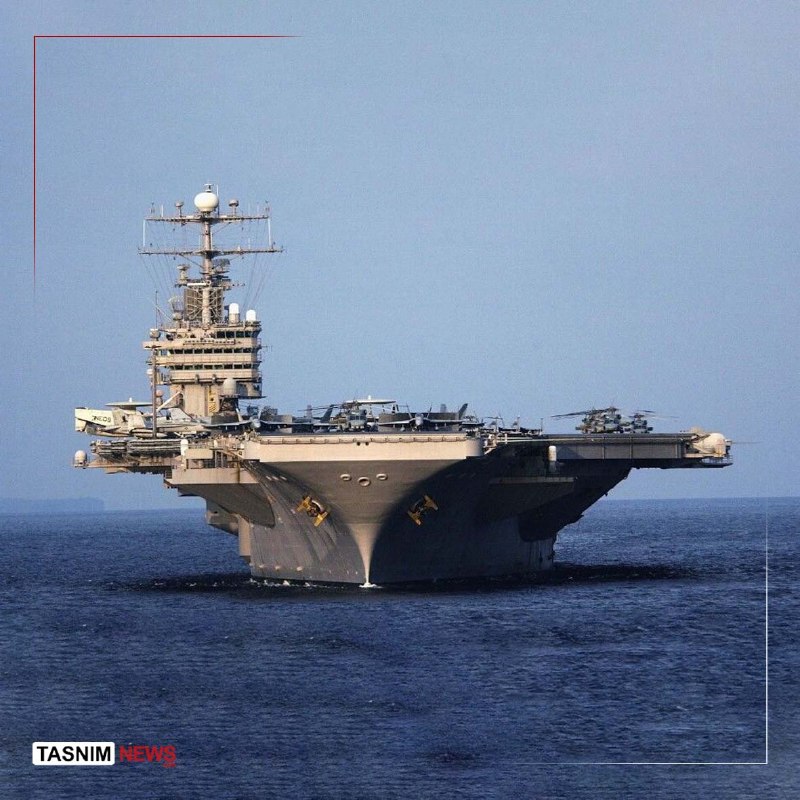
At 19:54 UTC on 18 June 2026, the BBC reported that the United States had lifted its naval blockade of Iran in the hours after a deal was signed in Geneva. Within minutes, an explanation surfaced under Donald Trump's own post on X claiming that US participation in the $300 billion reconstruction plan for Iran was "fake news." By 19:52 UTC, Al Jazeera was already filing that the memorandum's price tag had become a US political flashpoint. By 19:57 UTC, Trump was telling Middle East Eye he expected a "complete ceasefire on all fronts." The sequence — a deal signed, a blockade lifted, a price tag disowned — captures the strange shape of the agreement the White House is now trying to sell at home and abroad.
The gap between what was announced and what the signatories are willing to defend is the story. Iran and the United States put pen to paper in Geneva on a framework deal that includes a reconstruction fund reportedly worth $300 billion, an end to the US naval blockade, and what Trump characterised as a comprehensive ceasefire. Iran's supreme leader publicly disagreed with the deal, telling state-aligned outlets he considered Trump's signature an act of "desperation." That makes the framework simultaneously an operative agreement and a politically orphaned one — at least on the Iranian side. On the American side, the orphaning is of a different kind: the president is endorsing the document while disowning the bill.
What the deal appears to contain
Reuters published an explainer on 18 June asking how Trump's deal with Iran compares to the Obama-era Joint Comprehensive Plan of Action, and the comparison is unavoidable. Like the JCPOA, the Geneva framework is structured around sanctions relief in exchange for constraints on Iran's nuclear programme. Unlike the JCPOA, it bundles a multi-billion-dollar reconstruction component — the $300 billion fund flagged by Al Jazeera — and arrives under conditions of open war footing rather than cold-war attrition. The blockade, which had constrained Iranian oil exports, was lifted within hours of signing, according to the BBC.
The reconstruction fund is the lever. By tying reconstruction to a quantified figure and routing it through an MoU structure, the deal implicitly acknowledges that sanctions relief alone will not stabilise the Iranian economy or the regional order around it. Iranian state infrastructure, energy grids, and civilian supply chains have absorbed years of pressure. The fund is meant to address that — but it is also the precise component Trump is now telling his base he never agreed to.
Middle East Eye's live coverage, timestamped 19:57 UTC, quoted Trump saying the US expects a "complete ceasefire on all fronts." That phrasing goes beyond the usual bilateral nuclear-language and into the wider regional theatre — Hezbollah, the Houthi front, the Iraqi militia corridor. The deal, in other words, is being sold not as a narrow nuclear non-proliferation agreement but as a regional pacification. Whether the document itself contains those commitments is precisely what the political fight in Washington now turns on.
The political fight in Washington
Al Jazeera's reporting at 19:52 UTC framed the $300 billion fund as already a domestic flashpoint. Members of Congress, Al Jazeera reported, are connecting the price tag to "affordability issues" — a coded but recognisable reference to the domestic economic anxiety that has defined the post-2024 political cycle. The argument runs that no American administration can ask voters to absorb continued inflation in grocery and fuel prices while committing hundreds of billions to a foreign reconstruction project, even one co-signed by a Gulf-led investor consortium.
Trump's response — publicly denying US participation in the $300 billion figure while leaving the rest of the deal intact — is the kind of move only available to a president who treats his own signature as negotiable. It also reflects a structural problem the deal's drafters appear to have underestimated: foreign-policy documents now arrive into a US political environment that treats large rounded numbers as campaign ammunition. A $300 billion figure is not just a financial commitment; it is a meme.
Reuters' explainer positions the document against the JCPOA, which was negotiated over years and structured with congressional review baked into its architecture. The Geneva framework appears to have been negotiated over weeks and signed as an MoU — a status that gives it less domestic legal standing and more political manoeuvrability for all sides. Iran's supreme leader has already used that flexibility to publicly dissociate from the document while leaving it in force. Trump is now using the same flexibility on the US side.
The Iranian side: a deal nobody owns
Iran's supreme leader's public objection — reported by the BBC at 19:54 UTC — is the more consequential of the two disavowals because Iran's constitutional structure makes the supreme leader's view dispositive. If Khamenei publicly says he disagrees with the deal and frames Trump's signature as desperation, the deal survives only as long as Iranian executive organs choose to operate it. Iran's foreign minister and negotiating team may continue to honour the agreement; the supreme leader retains the capacity to repudiate it.
This is the deepest structural difference between the JCPOA and the Geneva framework. The JCPOA was negotiated under conditions where both Iran's then-president and the supreme office publicly endorsed the final document. The Geneva framework appears to have been negotiated with an Iranian executive willing to sign and a supreme leader unwilling to defend it. That asymmetry will shape how the deal functions in its first hundred days.
The regional ceasefire language is the part most exposed to this asymmetry. A "complete ceasefire on all fronts" requires Iranian leverage over Hezbollah, the Houthis, and Iraqi Shia militias to actually translate into quiet. If Iran's supreme leader is signalling he disagrees with the deal, the regional constituencies he backs have less reason to read the document as binding on them.
The blockade, oil, and the price of quiet
The BBC reported the US lifted its naval blockade after the deal was signed. That is the most operationally significant single action of the day, because the blockade was the principal lever the United States was applying on Iranian oil exports. Lifting it returns to market a meaningful tranche of crude that had been sitting off Iranian terminals or moving through shadow channels at discounts. For global energy markets, that is a near-term supply-side event with price implications.
For Iran's domestic economy, the blockade lifting is more important than any MoU paragraph. Iran's foreign-currency position, its ability to import refined products, and the price of basic goods inside the country all respond to whether oil flows freely through the Strait of Hormuz and the Gulf of Oman. The $300 billion reconstruction fund, even if it materialises, is a multi-year project. The blockade lifting is a same-day change.
This sequencing — blockade first, reconstruction debate later — is the deal's quiet design. Iranian officials get immediate economic relief, which buys political space for the supreme leader's eventual public posture to soften. US lawmakers get to argue about a $300 billion number that is years away from any actual disbursement. Both sides can claim the win that matters most to them while deferring the harder political fights.
What this deal is actually for
Strip away the headlines and the Geneva framework does three things. It formally ends the US naval blockade, which was the active instrument of US pressure on Iran. It sets up a multi-billion-dollar reconstruction fund with a price tag large enough to anchor a political argument about who pays for regional stabilisation. And it gestures, in Trump's ceasefire language, at a wider regional pacification that extends beyond the nuclear file.
The third element is the most ambitious and the least defined. Middle East Eye's reporting notes Trump's expectation of a "complete ceasefire on all fronts." If the Geneva document includes binding language on Hezbollah, the Houthis, and Iraqi militias, that would mark a significant expansion of the US-Iran bilateral into a regional architecture. If it does not — if the ceasefire language is aspirational — then the regional expectations Trump is generating will collide quickly with the reality that Iran's leverage over its proxies depends on continued Iranian strategic alignment with them, which the supreme leader has just signalled is not guaranteed.
The deal, in short, is a price-disowned framework with a working blockade-lifting and an aspirational ceasefire. That is a narrow base to build a regional architecture on, but it is also the kind of narrow base that has historically been where US-Iran understandings begin — under conditions of mutual exhaustion rather than mutual trust.
Stakes and the next ninety days
The next ninety days will be defined by three tests. First, whether Iranian oil exports return to pre-blockade volumes and at what discount, which will tell the market whether sanctions relief is functional or theatrical. Second, whether the US Congress succeeds in writing the $300 billion figure out of any future authorising legislation — which would effectively convert Trump's signature into a position paper. Third, whether the regional ceasefire language produces actual quiet on the Hezbollah and Houthi fronts, or whether the supreme leader's public disagreement translates into operational non-cooperation.
If two of those three resolve positively, the Geneva framework becomes the foundation of a second-stage negotiation — one that may look closer to a successor JCPOA. If only one resolves, the deal functions as a transactional blockade-for-hostages swap and nothing more. If none resolve, the framework is a document that both signatories have already publicly disowned, which is a precarious place for any peace accord to start.
The strangest feature of 18 June 2026 is that all of those outcomes remain live simultaneously. A deal was signed. A blockade was lifted. A price tag was disowned. A supreme leader dissented. A president claimed fake news about a document bearing his own signature. The architecture is provisional by design — which is also why it could hold.
— Monexus framed this story around the gap between a signed document and the political cover its signatories are willing to give it. The wire coverage focused on the signing itself; the more durable story is the disavowal that began within minutes.
Wire provenance
This editorial synthesis draws on the following public wire/social posts:
- http://reut.rs/3SODr5k
- https://x.com/sprinterpress/status/
- https://x.com/reuters/status/
- https://x.com/middleeasteye/status/