The $6bn Question: What the Interim US–Iran Deal Actually Buys Washington
A $6bn unfreeze in Qatar, a verbal commitment to dismantle highly enriched uranium, and a US vice president publicly telling Israel to stay quiet in Lebanon. The interim US–Iran arrangement is thinner than its critics claim — and more consequential than its defenders admit.
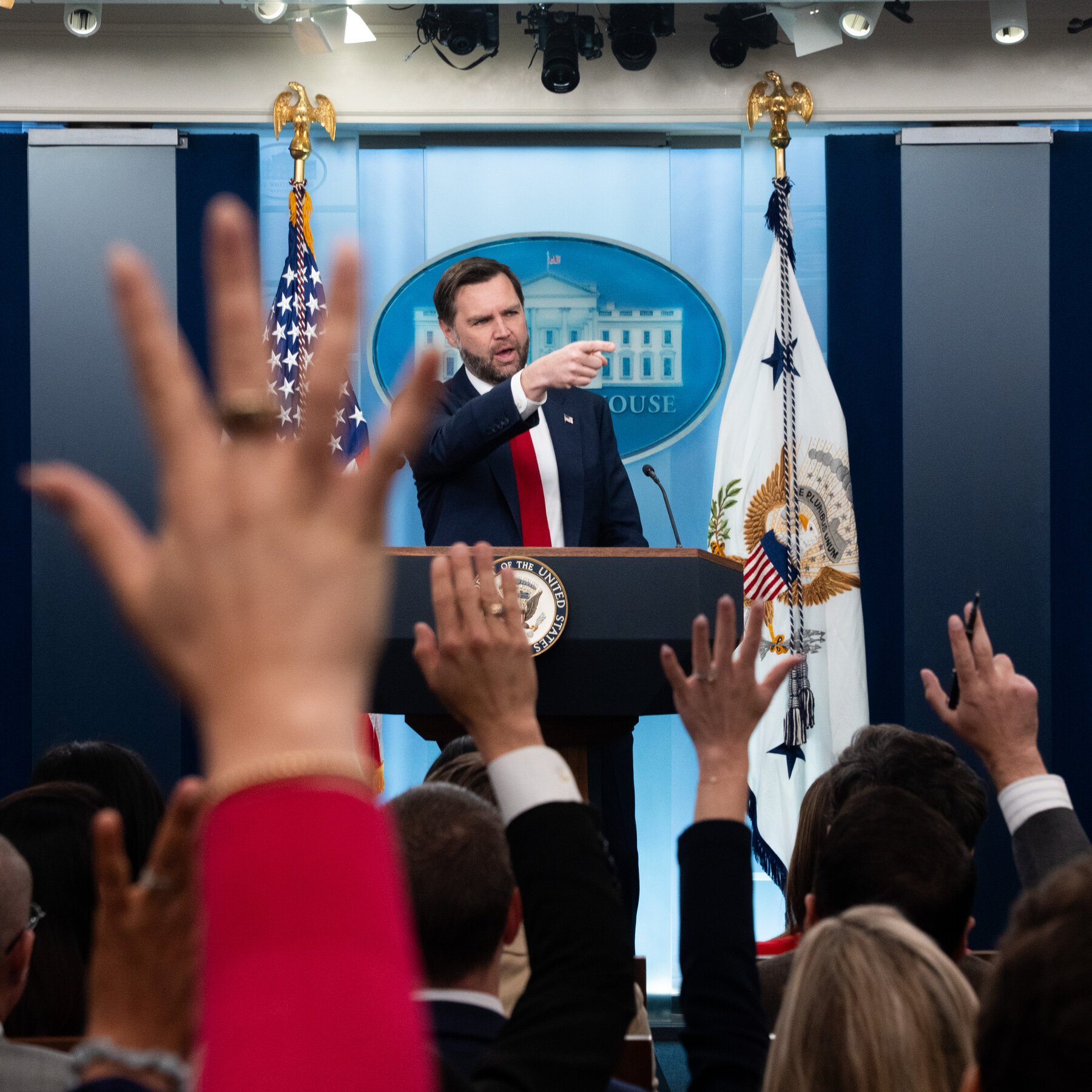
On 18 June 2026, a portfolio of open-source channels relayed a single, consistent set of terms for the interim arrangement between Washington and Tehran: Iran will receive phased access to roughly $6bn in previously frozen funds held in Qatar, restricted to humanitarian and non-sanctioned American goods; Iran has committed, in the words of US Vice President JD Vance, to "destroy their highly enriched uranium"; and the US, in return, has stopped short of a full sanctions lift, offering instead what Vance framed as a transparency tool — "by lifting sanctions we will be able to see where Iran is sending and receiving money."
The dominant cable-news read this week treats the deal as either a historic concession or a strategic surrender. Both readings are wrong in instructive ways. The deal is modest in its deliverables and loud in its signalling, and the gap between those two facts is where the actual story sits.
The numbers, stripped of theatre
Strip the politics away and the financial core is small. The $6bn figure has been public for months under the Qatari-administered escrow arrangement that grew out of the 2023 prisoner exchange framework; the novelty is not the money's existence but its release schedule. The funds are routed through Qatar and constrained to humanitarian and non-sanctioned American goods, a channel designed to give Tehran a partial relief valve while keeping the principal levers of the broader sanctions architecture intact.
For a country whose economy has been under maximum-pressure designation for the better part of a decade, $6bn phased over months is oxygen, not a transfusion. It is, however, the kind of oxygen that lets a regime pay for food and medicine without recourse to the informal hawala networks that have financed its regional proxies. That is precisely the trade-off the deal's structure encodes.
The uranium question nobody can verify
Vance's claim that Iran has committed to destroy its highly enriched uranium stockpile is the deal's single most consequential assertion and its least verifiable. Highly enriched uranium does not simply "disappear." It must be downblended, shipped to a third country, or placed under continuous international inspection — none of which has yet been confirmed by the IAEA in the open-source record as of 18 June 2026. The commitment, as described in the Vance statements carried by open-source channels, is verbal and political, not technical. There is a meaningful difference between a leader pledging on a podium to destroy a stockpile and inspectors watching the centrifuge halls empty.
The structural problem is older than this deal. Iran retains the knowledge, the cascades, and the underground facility footprint that any future sprint to a weapon would require. No interim understanding changes the half-life of that knowledge, and no announced figure of destroyed material, however large, addresses the reconstitution timeline. The deal's defenders argue that the constraint comes not from the uranium itself but from the visibility Iran now tolerates; its critics argue that visibility without enforcement is theatre. Both camps are partly right, and the disagreement is about time horizons rather than facts.
The Israel variable, managed in public
The most striking line carried in the open-source thread on 18 June belongs to the same Vance statement set: "We expect Israel not to be going wild in Lebanon." It is unusual for a US vice president to address a presumed ally's operational latitude that bluntly, in public, on the same day as a deal announcement. The follow-up line — "Israel doesn't give up the right to self defence if Hezbollah fires rockets or drones at Israel" — re-establishes the boundary, but the order of the two sentences is itself the message: Washington is signalling that the diplomatic window has a shelf life, and that Israeli action perceived as widening the war in Lebanon would shorten that shelf.
This is not, on the sources available, a US-imposed ceasefire. It is a preference, expressed in the conditional, with the implicit threat of reduced diplomatic cover should the preference be ignored. Israeli security concerns remain legitimate, and any reading of the Vance framing that treats them as a Western talking point to be managed rather than a substantive constraint is careless. But the same framing also concedes — for the first time publicly at this level — that the US sees the Lebanon front as a variable it can and intends to pressure.
The shipping lane tell
Buried in the same statement set: "Iran hasn't shot at ships in two nights." The phrasing is deliberately small. Two nights is not a trend, and the Strait of Hormuz remains a flashpoint where one vessel incident can collapse the whole architecture. But the vice president chose to lead with it, and the choice is informative. The deal's working theory is that a US administration willing to release $6bn in frozen funds is also the kind of administration that will not tolerate a tanker war, and that this combination is what is keeping the water open. The counter-theory — that the lull reflects Iranian caution ahead of the formal signing, not a new equilibrium — is at least as plausible and is not falsifiable from the open-source record.
The second shipping-related line, "we believe that international waterways should be toll free," is a doctrinal statement rather than a tactical one. It reasserts a position the US has held since at least the 1970s and that the current arrangement does not formally alter. Its inclusion in the same statement cycle is a signal to maritime insurers and to regional capitals that the legal architecture governing the Strait has not been negotiated away in the back room — a useful inoculation against the narrative that the deal is a strategic capitulation.
The case for scepticism, the case for restraint
Two honest reads of the deal are available, and neither requires bad faith to hold. The sceptics note that the relief is tangible and the reciprocal commitments are not, and that the historical record of interim arrangements with Iran is a record of interim arrangements not surviving contact with the next crisis. The restrainers note that a deal that produces two quiet nights in the Strait, a verbal commitment to dismantle a stockpile, and a US vice president publicly disciplining an ally is, by the standards of the last eighteen months, an unusually productive document — and that the alternative is not a better deal but the next round of escalation.
The sources available on 18 June 2026 do not let this publication adjudicate between those two reads. They permit a tighter claim: the interim arrangement is real, its financial and signalling components are in the public record, and the verification work that would make it durable has not yet been done. That work is the story of the next sixty days, and it is the story the cable-news frame, in either direction, is mostly skipping over.
This article stays inside Monexus's interim-deal coverage lane. Where wire coverage emphasised the $6bn headline in isolation, this piece treated the unfreeze, the uranium claim, the Israel signal, and the shipping-lane read as one architecture rather than four separate stories.
Wire provenance
This editorial synthesis draws on the following public wire/social posts:
- https://t.me/ClashReport
- https://t.me/osintlive
- https://t.me/osintlive/100
Follow the event.
These dated source records provide context. They do not retrospectively verify this archive article.
Separate what the nuclear watchdog reported from what it could not determine after the June 2025 strikes.