A deal nobody signed in ink: reading the US-Iran memorandum
Axios reports a memorandum of understanding to end the war. The text, the terms, and the verification regime are not yet public — and that is the story.
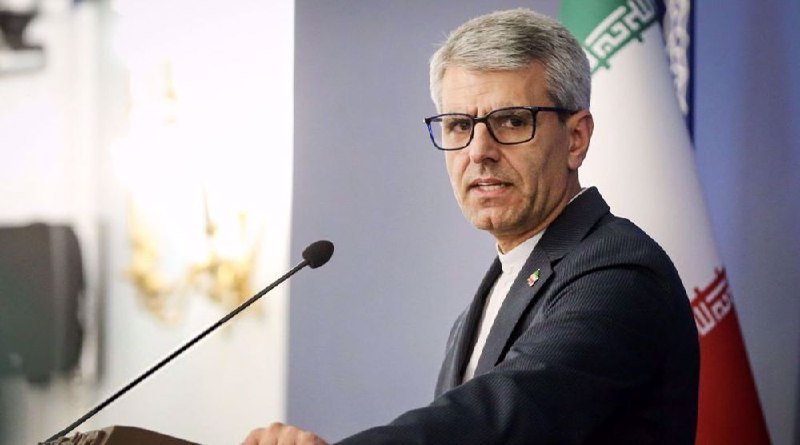
On 17 June 2026, at 21:40 UTC, Axios's Barak Ravid dropped the line that moved the morning: the United States and Iran had signed a memorandum of understanding to end the war. Cointelegraph carried the wire within minutes. By the time the dust settled on the terminals, the question had already migrated from whether a deal exists to what kind of document is being described, and to who verifies that its terms are being kept.
The premise of this publication is straightforward: a memorandum of understanding is not a treaty. It is, by long diplomatic convention, a non-binding political expression of intent — a hand-shake with letterhead. Reporting it as a war-ending event, before the text is in the public domain, risks dressing up a confidence-building gesture as a peace settlement. The market reaction that briefly followed was the reaction to the framing, not the document.
What we are told, and what we are not
The substance, as it stands at 22:00 UTC on 17 June, is thin. A memorandum of understanding has been signed. There is no published text. There is no list of counterparties beyond the two governments. There is no disclosure of whether the document addresses enrichment, missile programmes, proxy formations, frozen assets, sanctions sequencing, or the unhappier question of prisoner exchanges. The Cointelegraph wires — two of them, timed 15:51 UTC and 21:40 UTC on 17 June — repeat the Axios scoop and the secondary line that the deal "could accelerate the reopening of the Strait of Hormuz." That is reporting on reportage.
The Strait framing matters. Roughly a fifth of the world's seaborne crude transits Hormuz. Even a credible step toward reopening compresses insurance premia and freight rates; a non-credible one does the opposite the moment traders discount the words. The market will price the document before the document is read.
The counter-narrative Tehran is already selling
Iranian state media, were this story running through that channel, would frame the MOU as a recovery of sovereignty: an end to sanctions pressure achieved through strategic patience, with no freeze on the nuclear programme as a precondition. That frame is not in the Cointelegraph wires, and we have no Iranian state-media input on the thread as it stands. But a serious reading requires acknowledging the symmetry: in Tehran, the MOU is being received as the adversary backing down; in Washington, the same text is being sold as the adversary agreeing to step back. Both cannot be the headline. The text will tell us which is closer to the truth, and right now there is no text.
The structural problem with confidence-building-by-leak
This is the larger pattern worth naming plainly. Diplomacy conducted through single-source scoops, published before the parties have agreed to publish, is diplomacy that has to perform for an audience it has not yet bound. It rewards the loudest interpretation, which is rarely the most accurate one. A negotiator who has signed a non-binding MOU may, by the time the briefing is read, find that their domestic political room to honour the spirit of that MOU has been closed by the way it was announced. Conversely, an adversary can weaponise a vague document by demanding public adherence to clauses the other side never accepted.
The pattern is familiar. The 2015 Joint Comprehensive Plan of Action was published in full and survived four years; the 2018 withdrawal was a single executive decision. The 2023 Saudi-Iran rapprochement brokered in Beijing was announced with a three-line communique and held, against the odds, because both sides treated the text as binding. The current MOU sits closer to the 2023 model in form. It is the politics around it that determine whether it follows the JCPOA trajectory or the Beijing-brokered one.
The stakes over the next thirty days
If the MOU holds and the text is published within a week, the immediate beneficiaries are the oil-importing economies of Asia — and the Iranian rial, which has been the most reliable real-time indicator of sanctions pressure. Iranian crude already discounted a war-risk premium; an actual reopening of Hormuz compresses the spread. If the MOU is not published, or if its terms are contradicted by either side within the fortnight, the premium reasserts and the brief rally is the trade that loses money.
The secondary stake is diplomatic. A non-binding MOU that nonetheless produces a verifiable opening of the Strait would be the first sustained de-escalation between Washington and Tehran in this cycle. That is worth more, over a five-year horizon, than any single sanctions tranche. But it requires the text. Until the text exists, what we have is two governments, one scoop, and the world's oil market pricing the difference between them.
The honest read is that the news is real and the document is not yet. The Monexus desk treats the Axios scoop as a high-confidence signal that negotiations have reached a stage where both sides want the headline; it does not, yet, treat the MOU as a war-ending event. The two are different claims, and conflating them is the failure mode to watch in the next forty-eight hours.
Desk note: the wire led with the signing; this publication is holding back from the signing-equals-peace framing until the document and a counter-source confirmation are in hand.
Wire provenance
This editorial synthesis draws on the following public wire/social posts:
- https://t.me/s/cointelegraph
- https://t.me/s/cointelegraph
Follow the event.
These dated source records provide context. They do not retrospectively verify this archive article.
Separate what the nuclear watchdog reported from what it could not determine after the June 2025 strikes.