US sanctions on Hezbollah-aligned Lebanese officials: a calibrated pressure campaign
Washington's 18 June designation of Lebanese officials for 'systematically undermining the state's authority' is the latest move in a sanctions architecture aimed at Tehran, not Beirut.
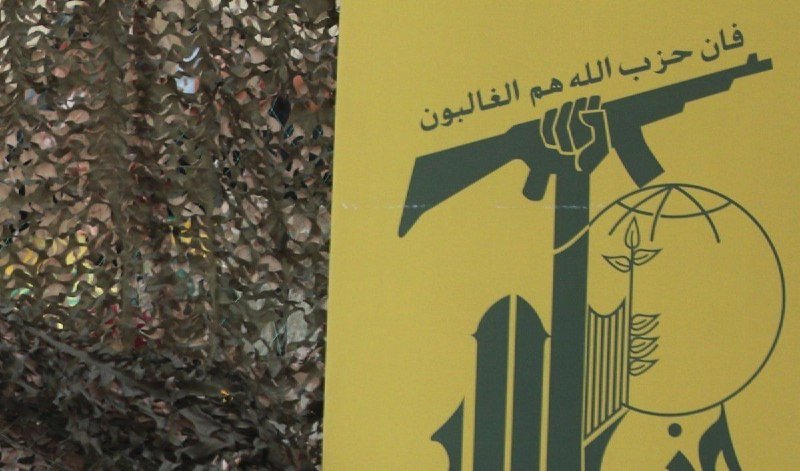
On 18 June 2026 the US State Department announced sanctions on Lebanese officials it accuses of acting in concert with Hezbollah to dismantle the authority of the Lebanese state. A separate Treasury action, confirmed by Reuters the same day, broadens the net to additional individuals and entities alleged to be assisting the group's financial and logistical operations. The headline reads as a Lebanon story. The substance is an Iran story wearing Lebanese clothing.
The framing matters. Washington did not designate a state, a ministry, or a political party. It went after named individuals — a deliberate legal choice that preserves the diplomatic fiction of engagement with Beirut while punishing the architecture of a non-state ally of Iran. The Treasury press language, paraphrased across wire reports, targets those who 'undermine the state's authority' and 'aid Hezbollah,' a formulation designed to thread the needle between Lebanese sovereignty and the longer campaign against Tehran's regional footprint.
What the designation actually does
US sanctions of this kind freeze any US-based assets the designated persons may hold, bar American persons from dealing with them, and signal to European and Gulf banks that exposure to the named individuals carries correspondent-banking risk. The practical effect runs through the dollar: most cross-border transactions ultimately clear through US financial infrastructure, and Treasury designations effectively close that channel to the designated. For Lebanese officials operating in a dollarised economy already straining under a multi-year banking crisis, that is not a symbolic penalty.
Reuters confirmed on 18 June 2026 that the Treasury action extends beyond the State Department list, suggesting a coordinated two-track process: a diplomatic, publicly visible State designation, and a financial-infrastructure-facing Treasury designation. The combination is the point. The two-track model is standard practice for Iran-aligned networks — visible political naming on one side, quiet bank-de-risking on the other.
The counter-narrative from Beirut and beyond
The Lebanese state is not a unitary actor on this question. The country's confessional political system, in which Hezbollah retains an armed wing and seats in cabinet, means Beirut's official response will be choreographed rather than confrontational. Iran-aligned regional media, including Al Alam Arabic, treated the 18 June announcement as a direct intervention in Lebanese sovereignty — a framing designed to consolidate domestic political sympathy around the targeted officials. That framing has weight inside Lebanon, where significant constituencies view external sanctions as collective punishment rather than targeted accountability.
A second reading holds that the designations are too narrow to matter. Hezbollah's financial apparatus has spent two decades adapting to successive US and Gulf pressure campaigns, building hawala corridors, dollar-cash smuggling routes, and Iranian commercial front companies. Naming a handful of officials may produce headlines and bank-relationship friction without measurably constraining the group's operational budget. Sceptics of the sanctions-first approach, including several former Treasury and State officials in US commentary, have made exactly this argument for years. The Biden administration and now the present US government have continued the policy anyway, on the theory that cumulative friction matters more than any single designation.
The structural frame: dollar politics, not Beirut politics
What is unfolding is not principally a Lebanon policy. It is a chapter in the long-running US campaign to compress Iran's regional reach by severing the financial links between Tehran and its forward partners — Hezbollah, the Houthi network, and the residual Shia-militia architecture in Iraq. Lebanon is the theatre; the dollar is the weapon. Washington has spent the last decade building a sanctions architecture in which the cost of doing business with Iranian proxies is repriced upward for any bank anywhere that wants to keep a correspondent relationship with the US financial system. This round of designations sits inside that logic, not inside a standalone Lebanon policy.
The corollary is that Beirut's government is being asked, in effect, to choose between its dominant non-state partner and the US-led financial order. Lebanese officials, regardless of sect, have spent the post-2019 collapse years trying to thread that needle — accepting IMF conditionality with one hand while tolerating Hezbollah's armed presence with the other. The 18 June sanctions make that needle thinner, but they do not change the underlying geometry: there is no Lebanese coalition government that survives without some accommodation with Hezbollah, and there is no functioning Lebanese banking system that survives without some access to dollar clearing.
Stakes over the next twelve months
If the campaign continues at this pace, three things become more likely. First, additional Lebanese officials with documented ties to Hezbollah's financial network will be designated, in batches timed to Lebanese political milestones. Second, European and Gulf banks will quietly close correspondent relationships with Lebanese institutions suspected of channelling funds to designated persons, deepening Lebanon's banking isolation. Third, domestic Lebanese politics will harden — every new designation becomes a sovereignty argument inside Beirut and a financial decision in bank compliance departments in Frankfurt, Dubai, and Riyadh.
The uncertainty is the timeline and the trigger. The sources do not specify which Lebanese institutions may already be operating under heightened compliance scrutiny, nor whether the European Union will move in parallel with its own designation list — a step that would amplify the bank-de-risking effect considerably. The Polymarket note on the 18 June action flagged the underlying fact pattern but offered no probability frame on next steps; the Reuters wire carried the Treasury announcement without naming the targeted officials in the public headline, suggesting a phased rollout. What can be said with confidence is that the pressure on the Hezbollah–Beirut financial interface is being ratcheted, not relaxed, and that the next move is more likely to come from Washington than from Beirut.
How Monexus framed this vs the wire: the wire cycle carried the announcement as a discrete sanctions event; this publication treats it as the latest increment in a decade-long US financial-pressure campaign aimed at Iran's regional network, with Lebanon as the immediate theatre and the dollar system as the binding constraint.
Wire provenance
This editorial synthesis draws on the following public wire/social posts:
- https://t.me/alalamarabic
- https://x.com/reuters/status/4abn4Wy