Vance sells a Hormuz deal Tehran has not yet endorsed
JD Vance framed a vague US-Iran understanding as a 'JCPOA two' on 18 June 2026, but Tehran's own channels say the memorandum is unsigned and the Supreme Leader is still addressing the nation.
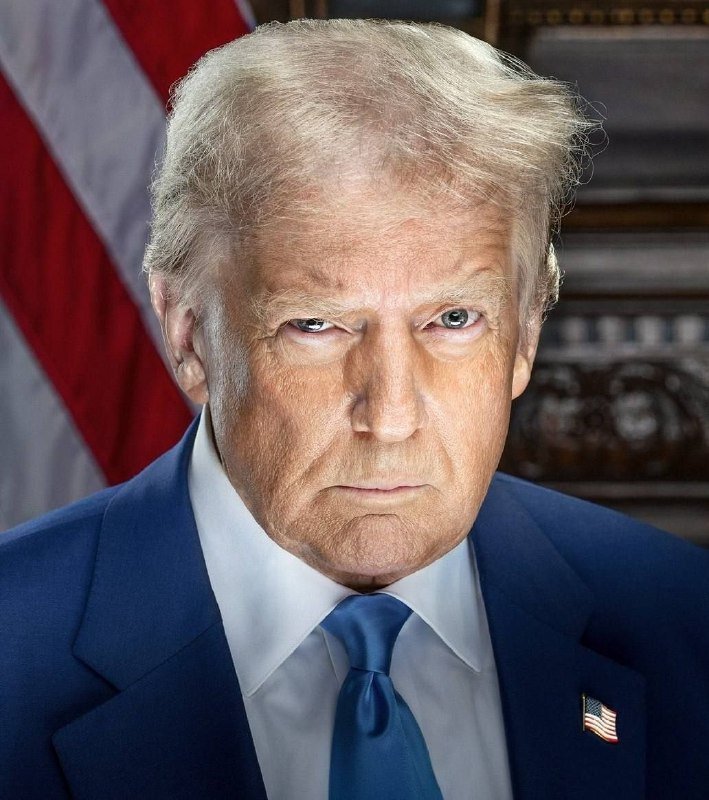
The announcement was made to look settled before Iran's Supreme Leader had spoken. On 18 June 2026, US Vice President JD Vance held a televised briefing in Washington at roughly 15:41–15:57 UTC in which he sketched the terms of what he called an Iran–United States "understanding," drawing a direct line back to the 2015 Joint Comprehensive Plan of Action. Within the same hour, Iran's Fars News Agency and Tasnim — both outlets that carry the official line from the Islamic Republic — were reporting that Ayatollah Khamenei's address to the nation on the presidential memorandum was still roughly an hour away, and that its substance had not been disclosed.
What is on the table, on Vance's account, is a narrow arrangement: an oil embargo that the US will lift, in his words, "not as a privilege for Iran" but as a tool to monitor Iranian financial flows; a US commitment to allow the continued transit of roughly 12.5 million barrels of oil through the Strait of Hormuz, which Vance said moved "last night"; an explicit US refusal to permit uranium enrichment on Iranian soil; and an insistence that pre-existing sanctions architecture will not be unwound. Vance compared the package to JCPOA, and said Israel would have to live with the peace process "just like everyone else." On the same afternoon, Iranian state-aligned Telegram channels were still describing the document as a "memorandum of understanding between the presidents" awaiting Khamenei's verdict.
What the Vance package actually says
Three of Vance's lines, transmitted by Fars News between 15:41 UTC and 15:57 UTC, define the scope of what is being sold. First, sanctions are staying: "We will not cancel the sanctions against Iran," Fars News quoted him as saying, with the qualifier that a sanctions architecture remains in place. Second, the oil embargo is being reframed as a financial-monitoring concession: lifting it, Vance said, is "not a concession to Iran, we want to monitor their financial network." Third, the maritime chokepoint is being treated as a global public good: "Straits should not be used to put pressure on the world economy," he said, adding that the US does not want a repeat of recent disruption. The 12.5-million-barrel Hormuz figure — the only specific volume in the briefing — was flagged by Tasnim as a Vance "claim," not a verified transit count.
The package, as Vance described it, leaves several of the original 2015 architecture's most contested elements untouched: missile development, regional proxy networks, and the broader sanctions inventory. He framed Trump's earlier-day comments on Iranian missile rights as a routine observation that "countries do not give up their rights," not a US endorsement of Iran's missile programme — a clarification Fars News labelled "Vance's attempt to backtrack on Trump's statements." On enrichment, the line is the hardest: "We will not allow Iran to enrich uranium," per Fars News, with no carve-out for the cascades at Natanz or Fordow and no clarity on whether the Russians and Chinese — guarantors of the original JCPOA — have been consulted.
The Iranian counter-frame
Read the same afternoon through Iranian state-aligned Telegram channels, the document is something smaller. Fars News, in a 16:27 UTC alert, framed the morning's events as a "memorandum of understanding between the presidents" that required the Supreme Leader's public sign-off before becoming policy. The 15:41 UTC Tasnim wire referred to the Vice President of the United States as the "vice president of the terrorist state" — language that, while inflammatory, is the kind of framing Iran's English-language outlets do not use and signals the register in which the deal is being processed inside the Iranian system. The Iranian counter-frame is not that the deal is fraudulent; it is that the deal is provisional. Khamenei's address, when it lands, will be the binding signal — and if his pattern of recent years holds, the gap between what the Americans call an "understanding" and what the Islamic Republic ratifies can be wide.
A second, quieter counter-frame is the Hormuz volume itself. Vance's 12.5-million-barrel figure, if taken at face value, implies that shipping through the strait is operating at near pre-disruption levels. The Iranian-aligned framing is that this throughput is itself a vulnerability — that the US is essentially committing not to weaponise the chokepoint it could weaponise, in exchange for an oil-embargo adjustment that lets Iran move crude. Both readings can be true at once. What neither reading resolves is the dollar architecture: which banks, which insurers, and which yuan- or rupee-based clearing arrangements will actually process Iranian crude once the embargo is technically lifted.
The structural shape of the deal
The most revealing element of Vance's briefing was not the nuclear file — it was the financial monitoring language. A US administration that frames lifting an oil embargo as a means of "monitoring" Iranian financial flows is, in effect, conceding that the previous sanctions regime was porous enough to be useless, and that the new architecture will be defined by the visibility of transactions rather than their prohibition. That is a meaningful shift. It is closer to the compliance model that SWIFT-adjacent European regulators have been pushing for two decades, in which sanctioned states are partially integrated into dollarised plumbing and their flows are surveilled in real time, than to the model of maximum pressure that the Trump administration's first term pursued.
The Vance framing also repositions Israel. His line that Israel "is just like everyone else" and must respect the peace process is not a throwaway. It is a public marker that the White House is willing to spend political capital with the Israeli right to keep a Hormuz-centred deal alive — a posture that is only available because oil-market volatility has, for now, raised the cost of estranging Tehran above the cost of restraining Tel Aviv. That is a tactical, not a strategic, posture: it will not survive a quiet phase in oil markets.
What remains contested and unresolved
Several things have not been settled. The text of the memorandum has not been published, and the names of the Iranian and US signatories have not been disclosed through the channels carrying this story. The status of JCPOA's European and Russian co-signatories is not addressed in the Vance readout, and there is no indication that Moscow or Beijing has been brought into the verification chain. The 12.5-million-barrel Hormuz figure is a Vance claim, not a customs or ship-tracking cross-reference. And the Supreme Leader's address — the only signal that will tell Iranian observers whether the deal is real inside the Islamic Republic — was still pending as of the 16:27 UTC Fars News alert.
The honest reading of 18 June 2026 is that the US has a deal it can announce and Iran has a document it has not yet endorsed. Whether those two converge in the next 48 hours is the question that will determine whether this becomes the diplomatic reset Vance is selling, or a one-sided announcement that the Iranian system quietly shelves. The market will price the first reading; the Iranian bazaar will price the second.
This article tracks the Vance briefing as carried by Iranian state-aligned wire channels. Where a claim originates with Vance, the text attributes it to Vance; where a framing originates with Fars News or Tasnim, the text attributes it to those outlets. No Western wire confirmation of the 12.5-million-barrel Hormuz figure, or of the precise terms of the memorandum, was available in the source set at the time of publication.
Wire provenance
This editorial synthesis draws on the following public wire/social posts:
- https://t.me/FarsNewsInt
- https://t.me/FarsNewsInt
- https://t.me/FarsNewsInt
- https://t.me/FarsNewsInt
- https://t.me/farsna
- https://t.me/farsna
- https://t.me/farsna
- https://t.me/JahanTasnim
Follow the event.
These dated source records provide context. They do not retrospectively verify this archive article.
Separate what the nuclear watchdog reported from what it could not determine after the June 2025 strikes.