Vance tries to square Trump's Iran circle as the deal's critics close in
Vice President Vance spent Wednesday defending an Iran memorandum of understanding that the president appeared to complicate the night before, exposing how thin the consensus inside Washington still is.
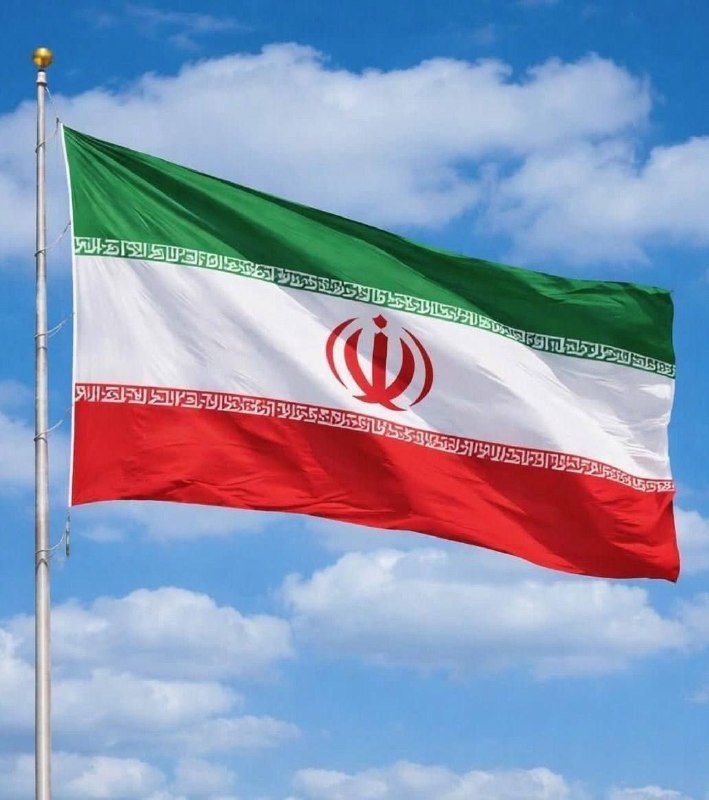
The Iran–United States memorandum of understanding is barely a week old, but its defenders in Washington are already performing the most demanding task in modern diplomacy: explaining what the deal actually says. Vice President JD Vance took to US television on 18 June 2026 to defend the framework, hours after President Donald Trump appeared to raise expectations about concessions on Iran's missile programme that the agreement itself does not appear to deliver. The disconnect is now the story.
The deal is real, but it is also narrower than the surrounding rhetoric suggests. Vance's job on Wednesday was to widen the political coalition behind the memorandum while narrowing the text back to what was actually negotiated. It is a familiar Washington choreography — and a fragile one. Critics on Capitol Hill, in the Gulf, and inside the foreign-policy establishment have already noticed the gap between the two pitches.
What Vance said, and what Trump said
The proximate problem is sequencing. In an interview published on 18 June 2026 by France 24, Vance defended the memorandum of understanding from Washington, arguing that the framework held despite mounting criticism at home and abroad. France 24 framed Vance's performance as an attempt to repackage an agreement whose specifics had not yet survived contact with presidential commentary.
The problem, as Iran's state-aligned outlets were quick to point out, was that Trump the night before had suggested the United States had extracted concessions on Iran's missile capabilities that the publicly described text does not contain. Within hours, Iran's Fars news agency had posted video of Vance on Telegram with a caption summarising the vice president's reply: "All that President Trump said yesterday is that naturally, countries do not give up their right" to defend themselves — a formulation that softens the missile claim without disavowing it. Fars also carried a separate Vance clip, dated 18 June 2026 at 15:51 UTC, in which the vice president added that "straits should not be used to pressure the world economy," a clear reference to the Strait of Hormuz and a coded signal to Tehran that Washington does not intend to weaponise the chokepoint.
Read together, the two clips amount to a quiet walk-back dressed up as clarification. Trump implied the missile file was open. Vance insists it is not. Iran, predictably, has noticed.
Why the Strait of Hormuz line matters
The Hormuz remark is the more consequential of Vance's two interventions, even if it attracted less coverage. Roughly a fifth of the world's traded oil transits the strait; any credible suggestion that the United States would use it as a lever against Iran's customers is a direct threat to the energy architecture of Asia, and a particular provocation to China and India, the two largest importers of Gulf crude. By stating explicitly that the straits "should not be used to pressure the world economy," Vance was doing two things at once.
He was reassuring Tehran that Washington does not intend to escalate by proxy. And he was reassuring Beijing and New Delhi that the deal does not come with a hidden secondary sanctions regime aimed at the Chinese and Indian refiners who keep Iran's export economy alive. Both constituencies are essential to the durability of any arrangement. Both are also constituencies that Gulf Arab capitals cannot afford to alienate, which is why Saudi and Emirati readouts of the memorandum have been notably measured.
The counter-narrative, voiced in some Gulf-state outlets and inside the Israeli defence commentariat, is that Vance's Hormuz line is a giveaway. On that reading, Washington is foreclosing one of the few remaining tools of economic pressure on Iran in exchange for a memorandum whose nuclear constraints are narrower than the 2015 framework and whose sunset clauses are shorter. That critique has weight. It is also the critique that the memorandum's defenders inside the Trump administration appear to have accepted as the price of the deal.
The structural frame: a deal built on managed ambiguity
What we are watching is not a treaty, and the political space around it is being managed rather than collapsed. A memorandum of understanding is, by design, an instrument whose ambiguity is the point. Each side is supposed to be able to claim enough of a win to sell the arrangement at home, while leaving the hard questions — missile ranges, enrichment caps beyond the deal's horizon, the treatment of proxy networks — for a later conversation that may never come.
The risk is that the ambiguity is being clarified in public faster than it can be stabilised in private. Trump's loose phrasing on missiles opens a door that Vance has to close in real time. Iran's state media, with the Fars feed acting as an unofficial stenographer for the foreign ministry, is already turning every Vance clip into a written commitment. And the Gulf states, whose silence has so far been a form of consent, are watching for any sign that the United States has either over-sold or under-delivered.
This is the structural shape of late-cycle dollar politics. The United States can still convene a negotiation between adversaries who do not speak to each other directly. It can no longer dictate the terms. The memorandum's text is a ceiling; the political interpretation is the floor; and the space between them is where the deal will either hold or collapse.
Stakes over the next 90 days
Three audiences are now on the clock. Congressional Republicans will want to see the missile file reopened before any sanctions-relief architecture is allowed to move; the testimony in the coming weeks will test whether the administration is willing to spend political capital defending Vance's narrower framing of Trump's broader claim. Gulf capitals will want to see early evidence that the deal constrains Iran's proxy networks more than its nuclear file alone would suggest, and they will read the next round of Israeli strikes against Hezbollah-linked targets in Lebanon and Syria as the proxy-file scorecard. And Iran's negotiators, who are watching Vance's clips as closely as anyone, will treat any American backsliding on the Hormuz line as a signal that the deal's commercial promises are negotiable downward.
The window is narrow. A US administration that over-promises on missiles and under-delivers on energy-corridor guarantees will find its Tehran partners unable to sell the deal at home. An Iran that over-reads Vance's soft-pedalling and over-tests the strait framework will find the memorandum's American defenders unable to defend it on Capitol Hill. Both sides now have an interest in letting the gap between Vance's words and Trump's stand, because the alternative — closing it — would require one of them to publicly lose.
This publication framed the Vance interview as a defence-and-clarify operation rather than a policy escalation, and read the Hormuz line as a deliberate signal to Tehran, Beijing and New Delhi rather than as a stray remark.
Wire provenance
This editorial synthesis draws on the following public wire/social posts:
- https://t.me/farsna
- https://t.me/FarsNewsInt
- https://en.wikipedia.org/wiki/Strait_of_Hormuz
- https://en.wikipedia.org/wiki/Joint_Comprehensive_Plan_of_Action
Follow the event.
These dated source records provide context. They do not retrospectively verify this archive article.
Separate what the nuclear watchdog reported from what it could not determine after the June 2025 strikes.