Two stories, one pattern: how a US-Israel disagreement and a Lebanon strike reveal the limits of the current arrangement
JD Vance's public criticism of the Israeli government over stalled negotiations, paired with Israeli artillery use of white phosphorus in southern Lebanon, exposes how the American-Israeli relationship is being tested on two fronts at once.
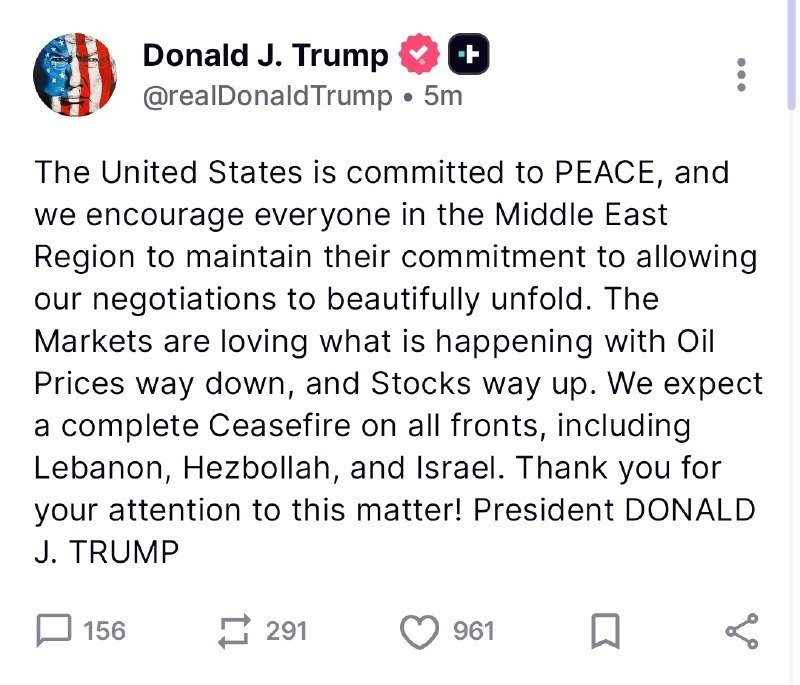
Within a single news cycle on 18 June 2026, two reports from Iranian state media captured something the Western wire services have struggled to label clearly. The first, carried by Tasnim at 14:57 UTC, recorded US Vice President JD Vance publicly criticising the Israeli government for disrupting a negotiation track he said was close to producing an agreement. The second, filed twenty minutes later by both Tasnim English and its Persian service at roughly 15:02 UTC, reported that the Israeli military had struck residential areas of southern Lebanon with artillery and white phosphorus munitions. Read separately, these are two stories. Read together, they sketch the shape of a relationship that is no longer functioning on autopilot.
Vance breaks the script — carefully
The Vance remarks, as relayed by Tasnim at 14:57 UTC on 18 June 2026, are striking mainly for being on the record at all. A sitting US vice president criticising an Israeli government for sabotaging a negotiation that Washington is itself brokering is the kind of line that, until recently, would have been whispered in a congressional hallway rather than said into a microphone. According to the Tasnim summary, Vance acknowledged that negotiations had on several occasions reached a point where a deal was within reach, before being knocked off course.
The framing matters. Vance did not challenge the Israeli government's right to participate in the process or to defend its interests. He criticised the disruption of an agreement process — language that locates the friction inside a shared diplomatic project rather than between adversaries. That is a specific choice, and a deliberate one. It signals that Washington still views the Israeli government as a partner whose behaviour it expects to correct, not as an obstacle it intends to bypass.
The counter-narrative inside Israel, reflected in most Hebrew-language outlets over the preceding months, is that the government has domestic reasons — coalition politics, hostage-families pressure, security-cabinet splits — to walk away from a deal that would require politically costly concessions. That read is not wrong. But it does not contradict Vance's point. A government can have understandable reasons for walking away and still be, by the measure of its closest ally, the party that walked away.
Phosphorus in southern Lebanon
Twenty minutes after Vance's remarks, Tasnim and its Persian-language counterpart reported that Israeli artillery had targeted residential areas in southern Lebanon using white phosphorus. The reports describe the weapons as banned or prohibited. White phosphorus is not categorically banned under international humanitarian law; its use against military targets is permitted under certain conditions, while its use against civilians or in populated areas is restricted under Protocol III of the Convention on Certain Conventional Weapons. The relevant question is therefore not whether the weapon exists in Israeli stockpiles — it does, and has for decades — but whether its delivery pattern, against residential areas, crosses the threshold.
The reports do not specify the village, casualty count, or independent verification from UN agencies or the International Committee of the Red Cross. That absence matters. Tasnim is an outlet with a clear editorial line; its reporting on Israeli military operations consistently foregrounds the maximalist interpretation. Western wire reporting on the same operations, when it has access, tends to carry Israeli military statements that the munitions are being used for smokescreen purposes rather than against personnel. A reader weighing the two framings has no native way to settle the dispute without independent on-the-ground reporting, and that reporting is what is missing.
What can be said without controversy is that southern Lebanon has been a theatre of sustained cross-border activity since October 2023, that civilian infrastructure has been hit repeatedly, and that humanitarian organisations have, in earlier phases of the conflict, documented the use of incendiary munitions in populated areas. The institutional memory exists; the specific incident from 18 June 2026 awaits verification.
The structural frame
What unifies the two stories is not a single decision in a single cabinet room. It is the slow erosion of an arrangement that, for roughly two decades, allowed Washington and Jerusalem to operate on the assumption that their disagreements could be managed inside a closed diplomatic channel, away from microphones and certainly away from a US vice president's voice. That assumption is no longer holding.
Two structural shifts explain why. The first is the fragmentation of the Israeli coalition system, which has produced governments whose hold on parliamentary majorities is thinner and whose incentive to defer to Washington has weakened. The second is the changing political economy of US Middle East policy, in which the cost of an open breach with the Israeli government has dropped because the domestic audience that would punish such a breach is no longer as monolithic as it once was. Vance is the leading edge of a Republican foreign-policy tendency that is willing to say in public what earlier administrations only said in private.
The Global South press — Tasnim, Al Mayadeen, Middle East Eye, The Cradle — has, for years, framed this trajectory as the slow collapse of an American-led order in the region. That framing is not wrong, but it is incomplete. The arrangement is not collapsing; it is being renegotiated in public, in real time, with both sides still insisting the framework holds.
The stakes
If the trajectory continues, the most likely outcome is not a clean break but a noisier alignment. Washington will continue to supply, to fund, and to shield diplomatically — but with more visible friction, more public criticism from senior officials, and more latitude for unilateral Israeli decisions that Washington declines to endorse after the fact. The Palestinian and Lebanese civilian cost of that noisier alignment is borne on the ground, not in the press releases.
What remains genuinely uncertain is whether the Vance line is a tactical adjustment — pressure applied to extract a specific Israeli concession on the negotiation track — or a strategic one. The Iranian press is treating it as the latter. Western wire coverage, to the extent it has picked up Vance's remarks, has mostly treated it as the former. A reader who wants the truth will have to wait for the next round of negotiations to see whether a deal materialises, or whether the disruption Vance described continues. On 18 June 2026, the evidence points in both directions.
Desk note: Monexus frames the Vance remarks and the Lebanon strikes together because the wire services covered them as separate stories. The structural read is that they are the same story — the renegotiation of an alliance under public strain — told from two different angles.
Wire provenance
This editorial synthesis draws on the following public wire/social posts:
- https://t.me/tasnimnews_en/
- https://t.me/tasnimnews_en/
- https://t.me/JahanTasnim/
- https://en.wikipedia.org/wiki/White_phosphorus_munitions
- https://en.wikipedia.org/wiki/Southern_Lebanon_conflict_(2023%E2%80%93present)
Follow the event.
These dated source records provide context. They do not retrospectively verify this archive article.
Separate what the nuclear watchdog reported from what it could not determine after the June 2025 strikes.