Kevin Warsh's first Fed meeting holds rates and sets up a more confrontational 2026
The Federal Reserve held its benchmark rate at 3.5–3.75% on 17 June 2026, but the statement — and the chair’s first press conference — signalled that the era of patient waiting is over, with officials pencilling in increases that markets had stopped pricing in just weeks ago.
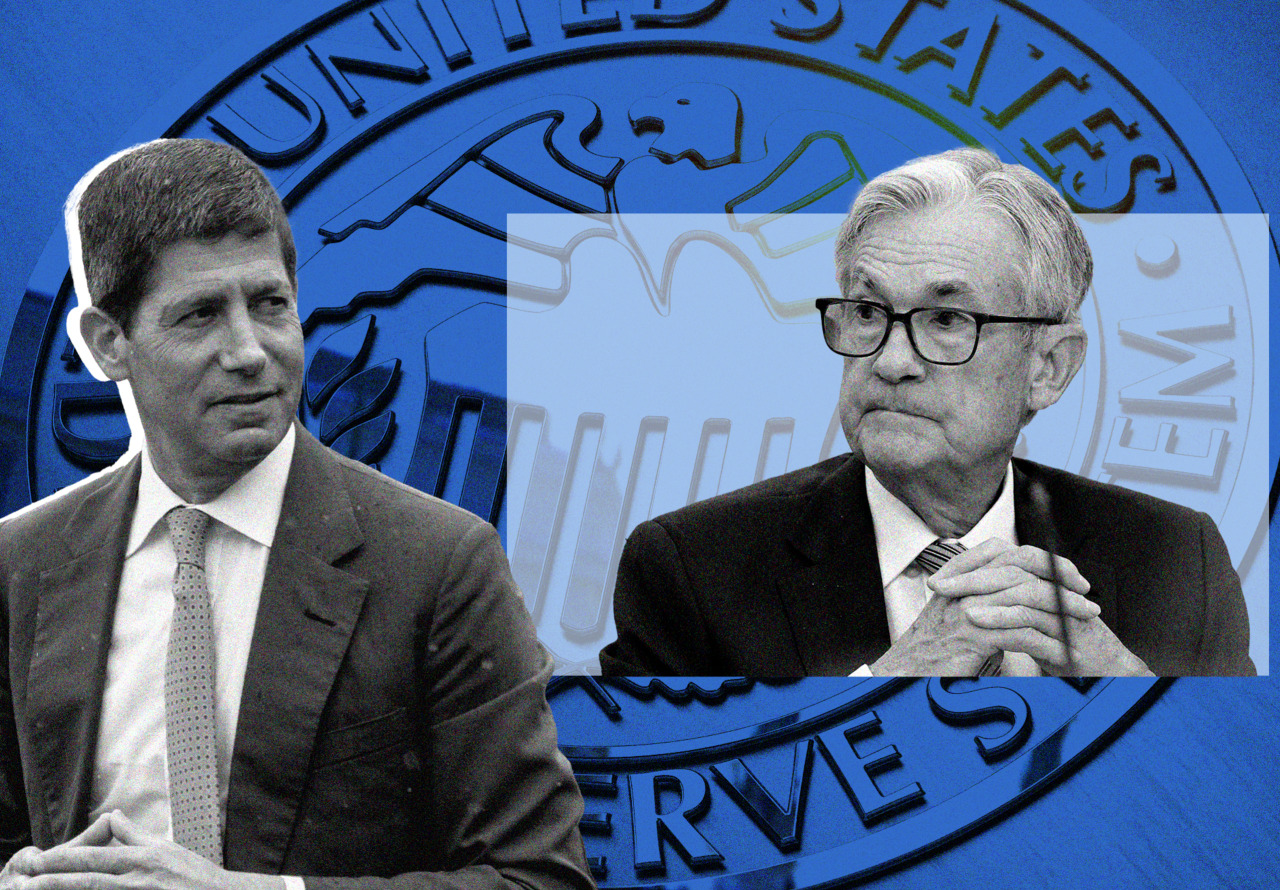
For the better part of a year, the Federal Reserve has been the most patient institution in American public life. It has held its benchmark policy rate steady at 3.5–3.75% through four meetings in 2026, declining to cut despite a president who demanded lower borrowing costs and declining to hike despite an inflation picture that has refused to settle. On 17 June 2026, at his first meeting as chair, Kevin Warsh made clear that the patience is structural rather than tentative. The Federal Open Market Committee left rates unchanged once more, but the new "dot plot" — the quarterly projection in which each policymaker pencils in a personal rate path — tilted decisively toward tightening, and Warsh used his inaugural press conference to frame the next move as a question of when, not whether.
The market reaction was immediate and unsparing. Crypto, which had drifted sideways into the decision, wobbled as Warsh described the bar for further patience as "uncomfortably high." Equities gave up intraday gains. The two-year Treasury yield, the most rate-sensitive corner of the curve, rose to its highest level since the spring. The narrative that had prevailed for most of 2026 — that the Fed would eventually be dragged, kicking and screaming, into cutting to support an administration facing a soft patch — is no longer the dominant one in the room. The new narrative is that a chair with credibility in the inflation-fighting wing of the institution has decided to use it.
A new chair, an old argument
Warsh's path to the chairmanship is unusual. He served on the Federal Reserve Board from 2006 to 2011, a tenure bookended by the global financial crisis and the launch of quantitative easing, and he has spent the years since as a partner at the Warburg Pincus private equity firm and as a paid contributor to the consensus view of Fed watchers that the post-pandemic tightening cycle went too far too late. He was also, in his earlier career, a protégé of the late William McChesney Martin Jr. tradition of central banking — the school that treats the central bank's job as withdrawing the punch bowl just as the party gets going. That pedigree is now on the page.
In the statement released at 18:00 UTC on 17 June, the FOMC kept the federal funds rate target range at 3.5–3.75%, the fourth consecutive hold of 2026, and noted that "uncertainty over the outlook has increased." That uncertainty was, in large part, a reference to events outside the central bank's control: the still-unsettled state of the Trump administration's diplomatic track with Iran, and the macroeconomic shock that even a partial deal — or a partial collapse of the talks — would transmit through energy markets into headline inflation. The BBC's coverage of the meeting noted that the committee held the line in part because policymakers wanted more clarity on the Iran file before committing to a directional move. Cointelegraph's market write-up, filed within hours of the press conference, captured the second-order effect: traders were no longer pricing the Iran peace process as a pure risk-on signal, because a deal that removed an oil-supply risk premium would simultaneously harden the Fed's resolve on price stability.
The composition of the FOMC itself matters here. Warsh was confirmed earlier this year on a partisan vote, and he has spent his first weeks at the institution re-asserting the chair's primacy over the committee's communications strategy. Officials who in 2025 spoke freely about the case for near-term cuts have, in the past two press cycles, rediscovered the value of collective phrasing. That is not by accident. The chair sets the table.
The Trump variable
The political backdrop is the part of the story that cannot be edited out. Donald Trump has, throughout his second term, treated the Federal Reserve as an agency whose independence is a courtesy rather than a constitutional fact, and he has publicly pressed for lower rates at every opportunity, including in remarks reported by Cointelegraph on 17 June in which the president cast the Iran track and the rate track as parallel problems of his own to solve. Warsh's appointment was widely read, in markets and in the commentariat, as the administration hedging — keeping the institutional language of independence intact while installing a chair with a sufficiently hawkish reputation to be credible if the data turned.
The data has, in places, turned. Core services inflation has remained stickier than the staff projections issued at the start of the year. Wage growth, while off its 2022 peak, has not rolled over the way the soft-landing scenario requires. The labour market, the single variable on which the doves built their case, has stopped cooling at the pace the Fed's own January Summary of Economic Projections assumed. None of that is dispositive on its own. Taken together with an energy complex that could move 15% in either direction depending on whether the Iran track produces a durable arrangement, it is the sort of evidence base that a chair with Warsh's priors was always going to read as confirmation rather than noise.
The counter-read, the one that animates the administration's preferred framing, is that the Fed is engineering a recession by design — that Warsh was chosen precisely because he would refuse to ease into a downturn, and that the political cost of holding will be visited on households and small businesses first, voters second. There is a version of that story in which Warsh's hawkishness is itself a political artefact, an extension of the president's transactional view of monetary policy by other means. It is a reading that cannot be falsified by the public record, because the FOMC's internal deliberations are, by design, not on the public record. What can be said is that the dot plot published on 17 June reflects a committee that, on the whole, no longer believes the next move is a cut.
A more confrontational 2026
The practical consequence is that the second half of 2026 looks materially different from the first. The path of least resistance for the FOMC, until the 17 June meeting, was a slow drift toward one or two cuts in the autumn, justified by a softer labour market and a re-anchoring of inflation expectations. That path is now closed without a deterioration in the activity data, or a credit event, or a sharp easing in commodity prices. The new path of least resistance is one or two hikes by year-end, justified by the argument that the policy rate, at 3.5–3.75%, remains below the range that the median FOMC participant considers neutral in real terms once the inflation print is stripped out.
Markets have begun to re-price accordingly. The CME FedWatch tool, referenced in the Cointelegraph write-up, showed a measurable shift in the implied probability of a hike at the September meeting within an hour of Warsh's press conference. Crypto markets, which had been treating the dovish tail as the binding constraint on the rate path, marked down the kind of high-beta, long-duration assets that benefit most from a cheaper discount rate. The trade that worked in the first quarter — long duration, short dollar, levered exposure to AI-and-crypto narratives — is the trade that the new dot plot is built to punish.
The geopolitical overlay is real and underappreciated. A successful US-Iran arrangement that takes a meaningful supply risk off the oil market would, in a parallel universe, have been the catalyst for a Fed cut. Instead, the Warsh Fed appears to have decided that any inflation relief from lower energy prices will be spent re-tightening rather than re-anchoring expectations, and the dot plot reflects that judgment. A failed arrangement, conversely, removes the disinflationary tail entirely and raises the bar for cuts further. Either way, the chair has chosen to anchor on the inflation fight, and to let the geopolitics sort itself out.
What the new chair inherits — and what he chooses not to
The institutional history of the past decade haunts the meeting in ways that do not appear in the statement. The Fed spent 2020–2022 telling itself, with diminishing conviction, that the inflation surge was transitory. It spent 2022–2024 telling itself, with rising conviction, that the tightening cycle would produce a recession. Neither forecast aged well. Warsh's signal on 17 June — the explicit acknowledgement that uncertainty has risen, the dot-plot tilt, the hawkish framing of the inflation outlook — is an attempt to look more credible than those predecessors by being more conservative, and by signalling that conservatism out loud.
That posture has its own costs. The Fed does not control fiscal policy, and a 2026 federal budget deficit that runs in the high-single-digit percentage of GDP is a structural source of upward pressure on long-end yields that no rate decision can offset. It does not control immigration policy, and the labour-supply effect of a tighter border is, on the hawkish reading, what is keeping wage growth from collapsing, and on the dovish reading, what is keeping potential growth depressed. It does not control the geopolitical file, and the Iran track has at least a non-trivial probability of producing an energy shock that, in either direction, will be the dominant input into the next three CPI prints.
What the Fed does control, and what Warsh has used his first meeting to re-assert, is the language of the institution. "Patient" is out. "Data-dependent" has been retired. The phrase that has replaced them, in the chair's first press conference, is closer to "uncomfortably high" — a deliberate echo of the late-cycle tightening rhetoric of the 1990s and the 2000s, designed to remind markets that the committee's tolerance for further inflation surprises is, in plain words, low. It is, by historical standards, an unremarkable hawkish pivot. By the standards of 2026 — a year in which most sell-side desks had been building the case for a September cut since March — it is a discontinuity.
Stakes
The most direct losers from the new posture are the rate-sensitive corners of the economy: housing, small-business credit, and the leveraged long-tail of the equity and crypto markets. The most direct winners are savers, retirees on fixed-income portfolios, and the credibility of an institution that the past three years have left politically battered. The harder question, and the one the dot plot does not answer, is whether Warsh's signal will hold through the next round of data. If the labour market cracks in the third quarter, the committee will be asked whether it is willing to engineer a recession in defence of an inflation target that the public no longer believes in. If the Iran track collapses and oil rallies, the committee will be asked the opposite question — whether it is willing to hike into a supply shock. The chair's first meeting was, in effect, a public commitment to answer both of those questions the same way: by leaning against the inflation print, whatever the political cost.
The sources do not specify how durable that commitment will prove. What is on the public record, as of 18 June 2026, is a 3.5–3.75% policy rate, a hawkish dot plot, and a chair who has chosen to use his first meeting to set a benchmark for credibility that his successors, and the political system around him, will now have to clear.
Desk note: this publication framed the 17 June meeting as a pivot point rather than a routine hold, on the reading that the dot-plot tilt and Warsh's first press conference — rather than the rate decision itself — are the news. The wire lines ran the story as a hold; the structural story is the change in tone.
Wire provenance
This editorial synthesis draws on the following public wire/social posts:
- https://x.com/polymarket/status/
- https://www.federalreserve.gov/monetarypolicy/fomccalendars.htm