World Cup 2026: who is already through, who is not, and what the markets think
With the group stage approaching its final matchday, FIFA's path to the round of 32 is narrowing — and prediction markets are pricing the field in real time.
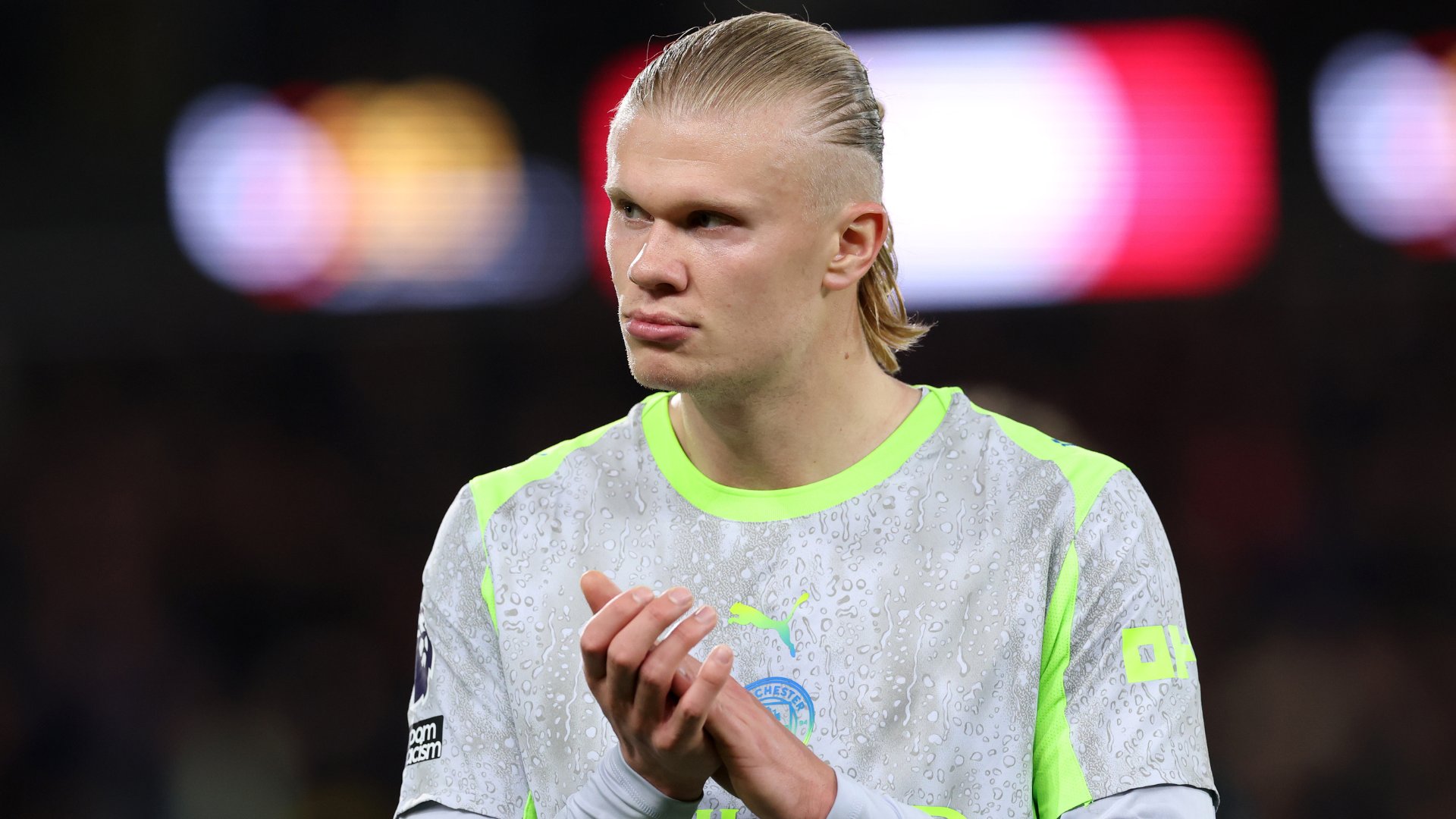
The arithmetic of the 2026 World Cup group stage is becoming a story in its own right. On 18 June 2026, ESPN published its running guide to which national teams can still book a place in the knockout rounds before the third matchday is complete — and which federations are staring at an early flight home, eight months after the tournament's draw in December 2025 made the bracket public.
The expansion to 48 teams has not softened the math. If anything, the larger field has produced a more crowded qualification picture, in which goal difference, fair-play points, and the precise sequence of results across multiple groups will decide who joins the automatic qualifiers. ESPN's 20:21 UTC update catalogues the teams that can secure passage to the round of 32 on the next matchday, alongside those whose World Cup dreams are already within a single result of ending. The piece underscores how thin the margin has become for several ranked sides that, on paper, should not be sweating at this stage of a tournament.
The clinching scenarios
The first-order question is simple: who can finish the job before the final whistle of the group stage? According to ESPN's 18 June 2026 breakdown, a handful of federations can guarantee a knockout-round berth with a win on matchday three, while others need only a draw combined with specific results elsewhere. The expanded format — 12 groups of four, with the top two in each group and eight best third-placed sides advancing — means that, in principle, a single bad result does not necessarily end a campaign; the best-losers table acts as a second safety net that did not exist in the 32-team era.
In practice, the best-losers mechanism compresses the field further. A third-place finish that would have been fatal in 2022 can now be a passport through, provided the goal-difference tiebreakers fall the right way. That has produced a peculiar dynamic: teams that lose a dead rubber still gain a statistical advantage from scoring late consolation goals, because the points-per-game and goal-difference calculations cascade across all 12 groups.
The Polymarket read
Prediction markets are pricing this in real time. The Polymarket page for the World Cup winner — accessible via the 16:41 UTC posting on 18 June — has become a live tape for sentiment among speculative traders. The platform's contract structure lets participants buy and sell shares in each potential champion, and the implied probabilities shift continuously as matches unfold and as the field narrows. The market's price-discovery function has, in past tournaments, occasionally diverged sharply from bookmaker lines and from FIFA-coefficient-derived forecasts; the 2026 cycle is unlikely to be an exception.
What is notable is not the specific favourite — that detail lives on the platform itself — but the speed with which the market reprices. A draw in a marquee group-stage fixture can move several teams' implied odds by multiple percentage points within minutes, reflecting the trading community's recalibration of the best-losers and head-to-head arithmetic that ESPN's reporting walks through in plain English.
The TSA, the ranch, and the soft-power economy of fandom
A second strand of the day belonged to the United States' Transportation Security Administration. Per a 16:40 UTC post citing TSA, World Cup visitors have been warned not to pack oversized bottles of ranch dressing in their carry-on luggage — a notice triggered, the agency noted, by what it described as "ranch mania" spreading among foreign fans. The advisory sits in a category of soft-power detail that no federation controls: the small commercial artefacts — condiments, snacks, bootleg merchandise — that travel with supporters and end up on TSA's conveyor belts in Houston, Miami, and the host cities of northern Mexico.
It is, in its way, the most American subplot of a tournament staged across three countries. The warning is procedural rather than restrictive: ranch in containers under the standard liquid limit is permitted, and checked luggage remains a separate matter. The TSA's framing — that foreign visitors are the principal audience for the notice — also points to the asymmetry of expectation. American fans do not, by and large, fly with half-litre bottles of buttermilk-based condiment; the agency is bracing for a cohort whose travel habits it considers undercalibrated to US rules. Whether that is a meaningful operational concern or a press-release moment is, for now, unresolved.
What remains contested
Two uncertainties deserve flagging. The first is the precise threshold for best-third advancement, which depends on goal-difference and goals-scored comparisons across 12 groups simultaneously; ESPN's running guide is a snapshot, not a contract, and small swings in fair-play points or disciplinary totals can flip the order. The second is the durability of the prediction-market signal. Polymarket's 2026 World Cup contract is thin relative to major American-sports markets and can be moved by a small number of well-capitalised traders; the implied probabilities are a useful but not authoritative read on the actual tournament odds.
The clinching math will, in any case, sort itself out over the next 72 hours. By the time the round of 32 takes shape, the ranch debate will have been settled one way or the other, and the Polymarket tape will have moved on to the next story. The remaining question is whether any of the federations currently on the bubble will be the ones whose elimination becomes the tournament's first genuine upset — or whether the expanded format's safety net will cushion them into the knockouts regardless.
This Monexus desk piece treats the Polymarket signal as a sentiment indicator rather than as a forecast, and pairs it with ESPN's reporting on the underlying qualification arithmetic.
Wire provenance
This editorial synthesis draws on the following public wire/social posts:
- https://x.com/polymarket/status/
- https://x.com/polymarket/status/