One game in, the numbers already tell a World Cup story
Every team has played once. The stat sheets after the opening round suggest this World Cup will be decided by fine margins, not by the reputations that arrived with the squads.
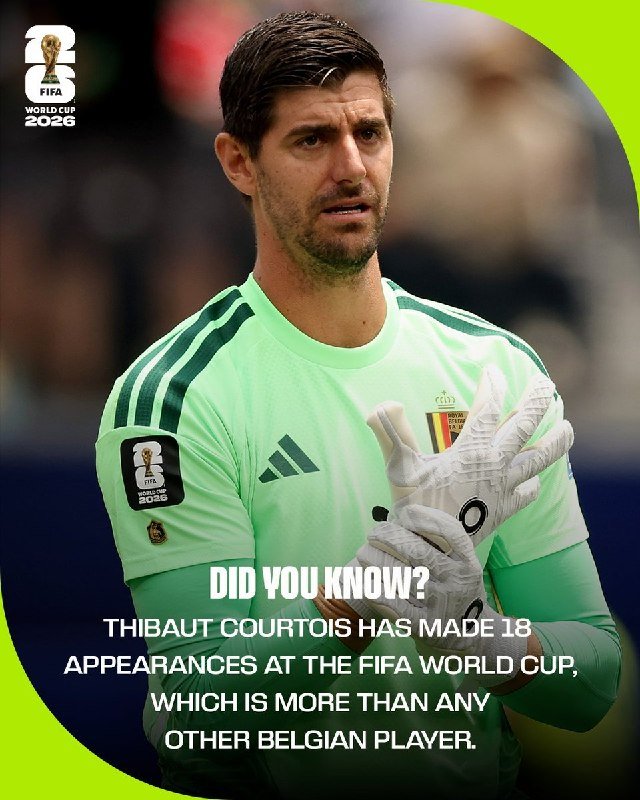
The opening round of the 2026 World Cup is in the books, and the first 90-minute sample has already done what sample sizes in this tournament are supposed to do: surface the teams that look like themselves, and embarrass the ones that do not. By 18 June 2026 every nation in the field has played exactly one match, and the data tables have begun to settle into something resembling a hierarchy — one in which Argentina, holders and pre-tournament favourites, are no longer at the top.
This is a tournament now decided in three-game increments, where one result rearranges a bracket and one performance rearranges a reputation. The first week's numbers, taken seriously, matter less for what they prove and more for what they suggest about the next ten days.
The shot count and the noise around it
Total shots is the stat that travels fastest, because it requires no context. BBC Sport's first-week review, published at 12:00 UTC on 18 June, runs the rankings end to end: which side has peppered the goal, which side has parked the bus, which side has barely crossed halfway. Volume of attempts, however, is not the same as volume of danger, and the early rounds of any World Cup are famous for bloating the shot tallies of teams that have spent 70 minutes chasing a game they have already lost.
The more telling figure, buried two clicks down in the same piece, is expected goals. That is where the first-week story starts to bite. Teams that dominated possession in their own half can post impressive shot counts against deep blocks; teams that created two clear chances and scored with one look modest in the column that counts attempts and very different in the column that counts threat. Read those two tables together and the picture sharpens: a handful of sides have imposed themselves on opponents, and a handful have been imposed upon.
Hydration breaks, surprise results, and the talking points the broadcasters are not using
BBC Sport's midweek talking-points piece, filed at 11:13 UTC on 18 June, dwelled on two themes that will dominate the second-week broadcast cycle whether or not they deserve to. The first is logistics. Hydration breaks in hot kick-off slots have been booed by travelling supporters, who read a stoppage as a sign the competition is being staged in the wrong places. The complaint is not new — the 1994 World Cup in the United States produced the same grumbling — but the volume is new, because the geography of this tournament, spread across three host nations, has produced more early kick-offs in humid conditions than any previous edition.
The second is the upsets themselves. A defending champion struggling to a draw in its opener is a familiar story; that the same defending champion was held by a side ranked outside the top twenty is not. The result has been read variously as a warning sign for Argentina, a coronation for the underdog in question, and a referendum on the depth of South American qualifying. All three readings contain a grain of truth and a larger portion of overreach. One match is a data point, not a verdict, and the second-game sample will tell us whether the holder's performance was a slow start or the first sign of decline.
Best to worst, and what the BBC's ranking really measures
The most-watched feature of the opening week was the BBC's team-by-team ranking after one game, published at 04:28 UTC on 18 June and updated through the day. Argentina's slide from first to mid-table in a panel ranking is the kind of small crisis that the holders always invite by winning the previous edition: the bar is set at the level of their last tournament, and any performance below that level is read as collapse rather than regression to the mean.
The ranking is, by construction, a snapshot. It weights result heavily, performance lightly, and reputation almost not at all. That weighting is exactly right for round one and exactly wrong for round three, which is why these tables will be reprinted in twelve days' time and read in the opposite order. Treat the current ordering as a measure of how well each side has translated expectation into execution in a single ninety-minute window. The teams near the top have done so cleanly. The teams near the bottom have ninety minutes, starting this weekend, to begin climbing back.
What the next ten days will actually decide
The structural lesson of an opening round is the same in every World Cup: the table after game one correlates with the table after game three only loosely, and the correlation weakens further when the tournament reaches the knockouts. What the first round does correlate with — strongly — is fixture difficulty in round two. Sides that won ugly now face opponents who must attack them. Sides that won beautifully now face opponents who have watched the tape and adjusted. The holders, who drew, now face the specific pressure of needing a result against a side that will sit deep and wait for the counter.
The numbers after one game are not a prediction. They are a thermometer. What they currently read is a tournament in which the margins between elite and very good are thinner than the pre-tournament odds suggested, and in which the difference between the round-of-sixteen and the group-stage exit will be made by the third goal in a tight game rather than by the first. Read the tables, but read them the way the broadcasters do not: as a forecast of volatility, not a forecast of winners.
The Monexus desk reads the BBC's first-week stat sheets as a starting condition, not a verdict. Where wire outlets treat the post-game-one rankings as a leaderboard, this publication treats them as a snapshot of how cleanly each side has converted expectation into execution — a snapshot that will look very different in ten days' time.