The Ali al-Tahir fight: a southern Lebanon front that refuses to stay quiet
Israeli forces tried to push into the Ali al-Tahir heights near Nabatieh on 19 June 2026. Hezbollah met them with rockets, roadside bombs and the kind of prepared defensive fire that has defined this border for nearly two years.
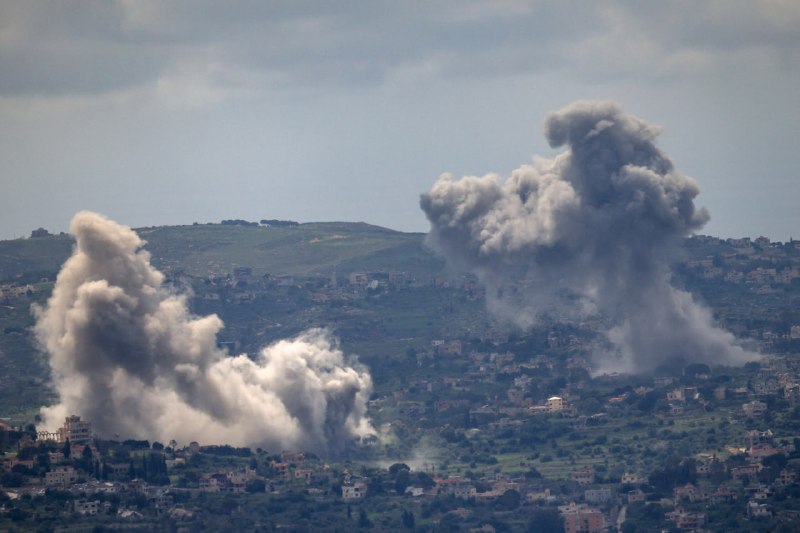
The hills southeast of Nabatieh — the Ali al-Tahir ridge and the network of dry-stone terraces and abandoned farm tracks running off it — have been written off, in Western wire copy and in Israeli security commentary, as a quiet sector. The morning of 19 June 2026 did not cooperate with that framing. Between roughly 17:30 and 20:57 UTC, four separately sourced accounts — from Iranian state media, the Tehran-aligned Tasnim and Mehr wires, and a Telegram channel that aggregates open-source intelligence from the frontier — described a coordinated Hezbollah response to an Israeli ground attempt to push up onto the ridge. The accounts disagreed on tactics; they converged on the basic fact that the advance did not succeed.
This is what the front looks like when a ceasefire is technically in force but the air is not silent: one side probes, the other side has prepared, and a long evening of rocket, mortar and counter-routine fire follows. It is also a useful test of the information environment around the Israel–Lebanon border, where the dominant Western wire frame has thinned out and the bulletins that travel fastest are the ones published in Farsi and Arabic from Beirut's southern suburbs, Tehran and the pro-Hezbollah diaspora.
The shape of the day
The first widely circulated report, at 19:43 UTC on 19 June 2026, was a single-sentence Tasnim English wire: Hezbollah had detonated a roadside bomb during what Tasnim called "the Israeli occupation army's attack on Ali al-Tahr area in southern Lebanon." The wording matters. Tasnim's English desk is a state-aligned outlet of the Islamic Republic, but on tactical reporting from the south Lebanon front it has been, in this phase of the war, one of the faster first-pass channels — a function less of editorial independence than of the fact that its correspondents in the southern suburbs of Beirut file in near real time from sources adjacent to Hezbollah's media operation.
About an hour later, an open-source intelligence channel, @rnintel on Telegram, reported that Hezbollah was firing multiple rocket salvoes at Israeli units attempting to advance on Ali al-Tahir, and that the IDF had responded with phosphorus illumination munitions — the bright, lingering flares used to expose an ambush line at night. That single Telegram post is the most granular tactical bulletin of the four, and it is also the one with the thinnest institutional backing.
By 20:41 UTC, Tasnim's Farsi service had escalated the frame: "Failure of the Zionists to advance towards the 'Ali al-Tahr' region under Hezbollah's rocket fire," with reported "intense clashes between Hezbollah fighters and the forces of the Zionist occupation." Fourteen minutes after that, at 20:57 UTC, Mehr News — the Iranian state news agency — used almost identical language to describe a bombardment of the heights "with phosphorous bombs" and "an attempt to advance." The two Iranian wires carried the same claim in the same window, which is itself a tell about the sourcing chain: both are amplifying the same Hezbollah-aligned field account.
Three things are present in all four accounts. First, an Israeli ground attempt to move on or through Ali al-Tahir. Second, Hezbollah combat activity — rockets, an improvised explosive device, anti-armour or anti-personnel engagements — that prevented the advance from consolidating. Third, the use of illumination or phosphorus-type munitions by the IDF, described in a way that Iranian-aligned channels are reliably going to foreground, partly because munitions of that class are politically sensitive, and partly because "phosphorus" is shorthand in this reporting for "Israel doing something inflammatory on a hill we control."
The most contestable element is the failure claim. Tasnim and Mehr both assert that the Israeli advance was repulsed. The open-source intelligence channel reports rockets fired but does not claim a tactical result. No Israeli military briefing, no UNIFIL statement, no Western wire dispatch appears in the immediately available record on the 19 June engagement. As of 20:57 UTC, the dominant frame is the one the Iranian-aligned outlets want it to be.
Why Ali al-Tahir, and why now
Nabatieh is a provincial capital roughly 12 kilometres from the Blue Line. Ali al-Tahir is a name that appears in frontline dispatch whenever the IDF has tried to push southeast out of the Litani corridor — the broad, agriculturally rich lowland that has functioned as the operational rear for Hezbollah's south Lebanon formations for most of this century. The ridge sits on the line of sight between the coastal road and the Litani's upper tributaries. A force that holds Ali al-Tahir in daylight can observe the main axis from the coast into the Beqaa. A force that is shelled off the ridge does not.
The 19 June attempt looks, in shape, like the kind of limited-objective raid that has characterised Israeli ground activity in south Lebanon for the past year and a half: a small combined-arms push, often under cover of air and artillery, intended to fix Hezbollah units, to confirm or deny the presence of prepared ambush positions, and to gather targeting data. It is not, on the available reporting, the start of a deeper operation. The Hezbollah response — a roadside IED followed by rocket fire and then persistent counter-fire — is the standard layered defence that the group has refined since the 2023–24 exchanges: detonate on the lead element, mass-fire to suppress, keep firing through the night so that extraction is expensive.
What is unusual is the volume of advance notice in the open record. Normally, the first public report of a south Lebanon raid is a Hezbollah martyrdom notice several hours after the engagement, or an Israeli Arabic-language statement from a rear-area spokesperson. The 19 June timeline, with three separately authored reports inside ninety minutes, suggests either a faster Hezbollah media pipeline than is typical, or — equally plausible — a routine engagement in which both sides expected coverage to be high and pre-positioned their messaging accordingly. The phosphorous framing is doing work for Tehran: it puts the IDF on the back foot on the "weapons of choice" question that has followed the Israeli military into every previous phase of cross-border operations since 2023.
The information layer
The single most important fact about the 19 June reports is that the loudest voices in the first hour were not the ones that usually dominate English-language coverage of this border. Reuters, AFP, AP and the BBC have not, on the public record, run a dedicated dispatch on Ali al-Tahir for the 19 June engagement; the New York Times and the Washington Post have not, on the public record, updated their south Lebanon maps in response to the day's reports. The default English-language audience, if it sees this story at all, will see it via a Telegram screenshot in a diaspora account, or via an aggregator pulling from Tasnim English, or via a Hezbollah-aligned outlet such as Al-Mayadeen retranslating the Mehr and Tasnim wires.
This is a structural feature of the current information environment, not a temporary distortion. The Western wire presence in south Lebanon is the thinnest it has been in two decades. Press access is restricted; embed journalism has been intermittent; most major outlets depend on Israeli military briefings, on UNIFIL, and on a small number of Beirut-based stringers for their baseline. When an engagement happens on a Friday evening Beirut time, with no Israeli press pool on the ridge, the first credible voice to publish is going to be a Hezbollah-adjacent one, and the frame — "Zionist advance repelled under rocket fire" — is going to set the day's terms.
That frame is not necessarily wrong. Hezbollah's tactical reports from the south Lebanon front, in this phase of the war, have been, by the standards of an active conflict zone, more accurate than the counter-claim record from the IDF's own rear-channel briefings. The roadside IED claim, in particular, is the kind of detail that a partisan source is unlikely to invent at random: a detonation is either observed by a media operative in a position to hear it, or it is not reported, because the consequence of a fabricated IED claim is operational and political.
The phosphorous claim is a different category. The four reports all describe the use of illumination-type munitions on the ridge. Phosphorus is a class of munition, not a single weapon, and "phosphorous bombs" in Iranian state media usage is a recurring framing device for any air-dropped flare, smoke or illumination munition, and sometimes for white-phosphorus incendiary use that meets the threshold of a serious international-law concern. The bulletin from @rnintel is the most precise on this point, naming "multiple phosphor illumination bombs"; the Mehr and Tasnim wires use the broader framing. Without independent verification — by UNIFIL, by a Western wire stringer, by an open-source investigator with the right geolocated imagery — it is not possible to confirm from the public record what was actually used. It is also not possible, on the available record, to dismiss the claim.
What we do not know
The ledger of what is and is not verifiable from the 19 June bulletins is short and worth writing out plainly. We do not have an Israeli military confirmation that a ground operation was attempted on Ali al-Tahir on the day in question. We do not have a casualty count from either side. We do not have an independent geolocation of the alleged IED detonation or of the rocket-launching positions. We do not have confirmation that the munitions used were white phosphorus, rather than conventional illumination flares, smoke markers, or the cluster of multi-purpose pyrotechnic devices that are standard in mechanised infantry operations at dusk.
We also do not know — and this is the harder unknown — whether the 19 June engagement is a discrete event or the leading edge of a renewed push. South Lebanon's pattern since 2024 has been long, low-intensity sequences separated by short, sharp escalations. A single afternoon of fighting on one ridge, even one that produces a Hezbollah field bulletin, does not by itself make a campaign. It does, however, reset the information baseline. The next several days of reporting on south Lebanon will, in English and in Farsi, be written over the frame that 19 June established: a Hezbollah force that is still present in the highlands southeast of Nabatieh, willing to fire into a daylight advance, and capable of producing an effective media account of having done so within the hour.
Stakes, in plain prose
The political stakes of the 19 June engagement are not on the ridge. They are in three capitals: Beirut, where a government that has spent eighteen months trying to keep the south from re-igniting now has to absorb another evening of rockets and counter-rockets on a border that is supposed to be the calmer of the country's two active fronts; Jerusalem, where a military operation that does not consolidate position on day one is, by the standards of the last two years, a liability rather than an asset; and Tehran, for whom a clean Hezbollah tactical win, even one on a 300-metre ridge, is useful counter-evidence to the dominant Western frame that the group's military capability in south Lebanon has been substantially degraded.
The information stakes are larger. The faster Tehran's wires file, the less time the Western wires have to set their own frame, and the more the public record of south Lebanon is written in Farsi. That is not, on its own, a distortion — it is a shift in who sets the day's first terms, and it is the kind of shift that persists after a particular engagement is over. The 19 June reports are, in this sense, less a story about a ridge and more a story about the front that runs through the wires that covered it.
Desk note: Monexus treated the 19 June Ali al-Tahir reports as a sourcing problem first and a military story second. The four bulletins that arrived inside ninety minutes are all from Iranian state media or from channels that amplify Hezbollah-adjacent field accounts; we have flagged that fact in the lead rather than burying it. The Western wire presence in south Lebanon is thin enough that the first credible bulletin of a Friday-evening engagement is, by structural necessity, going to be a partisan one. We have reported the tactical claims where they are consistent across sources and labelled them as claims where they are not.
Wire provenance
This editorial synthesis draws on the following public wire/social posts:
- https://t.me/mehrnews/
- https://t.me/JahanTasnim/
- https://t.me/rnintel/
- https://t.me/tasnimnews_en/