Beirut's red lines, Israel's expanding air war: Aoun's ceasefire complaint and the slow collapse of the November 2024 arrangement
Lebanon's president has publicly accused Israel of expanding strikes in the country's south and Bekaa Valley, accusing Jerusalem of violating the ceasefire. The complaint lays bare how thin the November 2024 framework has become.
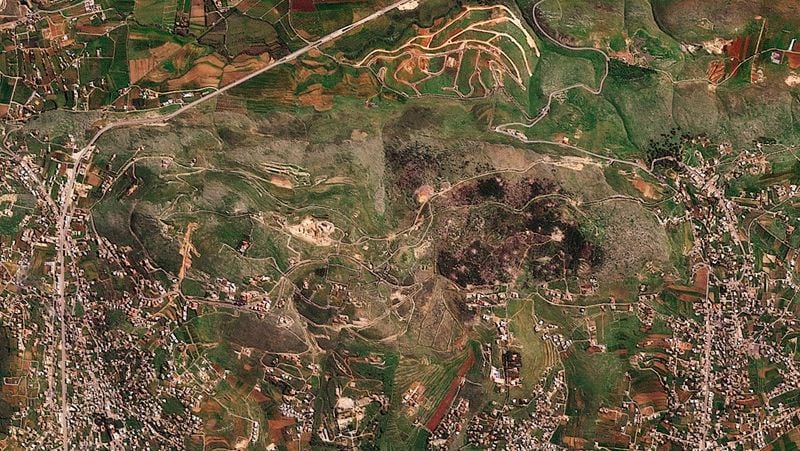
On 19 June 2026, Lebanon's President Joseph Aoun broke the studied neutrality that Beirut has tried to maintain since the November 2024 ceasefire, issuing a public statement accusing Israel of "expanding attacks" in the country's south and the Bekaa Valley and warning that the pattern constitutes "a dangerous and continuing violation" of the arrangement. The complaint, relayed at 11:38 UTC by the Lebanese outlet @wfwitness and amplified by The Cradle Media, marks the most pointed public challenge from the Lebanese presidency in months — and lands at a moment when the framework that ended the 2023–24 war is visibly fraying under the weight of near-daily Israeli air activity inside Lebanese territory.
The complaint is, on its face, a procedural one: a co-signatory to a ceasefire accusing the other of breaking the terms. Read more broadly, it is a signal that the diplomatic architecture built around the November 2024 deal — brokered by the United States and France, guaranteed in part by a UNIFIL-monitored mechanism, and sold to Lebanese audiences as a hard-won restraint on Israeli bombing — is approaching the limits of what Lebanon's elected institutions are willing to absorb without comment. Aoun's statement does not threaten a return to war. It does something subtler: it names the pattern, on the record, in language Beirut's Western partners will have to either answer or ignore.
What Aoun actually said
The president's statement, as carried by @wfwitness on 19 June 2026 at 11:38 UTC, frames the present moment in unusually direct terms. Aoun describes "expanding Israeli attacks" in the south and the Bekaa and a "further killing and destruction" he characterises as a dangerous and continuing violation of the ceasefire. He calls on the guarantors of the arrangement to compel compliance — a pointed reference to the US and French roles, though neither is named.
The complaint is procedural in form and political in substance. A Lebanese presidency publicly calling out Israeli ceasefire violations places a weight on the diplomatic record that private protest channels cannot. It is the kind of statement that, once on the public record, becomes a baseline against which subsequent Lebanese and international silence is measured.
The geographic scope of Aoun's language matters. By referring to both the south — the historic theatre of the Hezbollah-Israel confrontation, and the area covered most directly by the November 2024 arrangement — and the Bekaa, the Lebanese presidency is implicitly contesting the Israeli framing of the post-ceasefire period. Israeli spokespeople have, since late 2024, distinguished between strikes the IDF describes as targeting Hezbollah infrastructure in the south and a narrower set of operations in the Bekaa; Aoun's statement collapses that distinction, treating the two theatres as a single, expanding Israeli air campaign.
The November 2024 arrangement, and what it actually required
The ceasefire deal that paused the 2023–24 war was never a peace agreement. It was a sequenced arrangement: an immediate halt to IDF offensive operations in southern Lebanon, a pullback of Israeli ground forces from a defined strip of border territory, a parallel commitment from Hezbollah-aligned forces to withdraw north of the Litani River, and a monitoring mechanism involving the Lebanese Armed Forces, UNIFIL, and a US-French oversight committee.
In the months that followed, the arrangement held in its narrowest sense: large-scale ground operations did not resume, and a devastating full-war replay was avoided. In its broader sense, it never held at all. The Israeli air force continued to fly above Lebanese territory, periodically striking what the IDF characterised as Hezbollah arms depots, weapons convoys, and — increasingly — individual operatives. Lebanese authorities catalogued these strikes, and the civilian-casualty figures that accompanied some of them, in formal complaints to UNIFIL. In private, Lebanese officials told Western intermediaries that the spirit of the deal was being eroded even as its letter was technically observed.
Aoun's 19 June statement is the public version of that private conversation, almost two years into the post-ceasefire period.
Why the statement landed now
Three pressures appear to be converging on the Lebanese presidency. First, the cumulative civilian toll of continuing Israeli strikes in the south and Bekaa has reached a level at which silence becomes politically untenable. Lebanese civil society, the families of victims, and a press corps that has documented specific incidents have built a domestic constituency that expects the presidency to speak. Second, the Lebanese government is engaged in a longer negotiation with the IMF and with Gulf donors over the country's economic stabilisation; the optics of an executive branch that cannot publicly name violations on its own territory are unhelpful in those talks. Third, the guarantors — the US and France — have been sending mixed signals. Public statements of support for Lebanese sovereignty coexist with a quiet acceptance, in capitals, of the Israeli air posture as a de facto feature of the regional security architecture.
Aoun's statement forces a clarification. Either the guarantors treat Israeli strikes as a violation requiring correction, or they acknowledge that the post-2024 arrangement has been amended, in practice, to accommodate a continuing Israeli air campaign. Neither clarification is comfortable, and that is presumably the point.
The Israeli frame, and what it leaves out
Israeli security sources have, since the ceasefire, justified continuing air activity as the targeted elimination of Hezbollah rearmament and the disruption of reconstitution efforts. The argument, in its strong form, holds that the 2024 arrangement bought time for Israeli intelligence to dismantle a residual Hezbollah threat that conventional ground operations could not have reached in the available window. By that reading, strikes are not ceasefire violations; they are the residual security work that the ceasefire was designed to permit while large-scale operations remained suspended.
The argument has internal logic. It also has an external limit. A doctrine of pre-emptive targeting, applied to a country with which Israel has a monitored ceasefire and a recognised government, tends to erode the political standing of the arrangements that contain it. Each strike that the Lebanese presidency does not condemn becomes, by diplomatic precedent, a strike it has accepted. Aoun's 19 June statement pushes back against that drift — naming the accumulation and demanding that the guarantors treat it as a single pattern rather than a series of isolated incidents.
What the guarantors have to do with this
The US and French role in the November 2024 arrangement was always more political than operational. Neither country maintains a standing military monitor on the line. The mechanism is diplomatic, in the sense that its enforcement depends on the willingness of the guarantors to call violations by name in private and in public, and to attach consequences — diplomatic, financial, or military — to breaches.
The 19 June statement, by a co-signatory to the arrangement, demanding compliance from the other co-signatory through the guarantors, is a test of whether that enforcement exists. The Lebanese presidency is, in effect, asking whether the November 2024 deal is a document with a mechanism or a communiqué. The answer will not come in a single press conference; it will come in the pattern of strikes over the weeks that follow, and in the willingness of the guarantors to translate their public commitments into a private position that the Israeli government can hear.
What remains uncertain
The publicly available record does not specify the number, location, or casualty count of the Israeli strikes Aoun is characterising as an expanding pattern. The Lebanese press has reported individual incidents in the south and Bekaa over the months preceding the statement, but the presidency's complaint appears to aggregate these into a political claim rather than a forensic one. The Israeli government has not, in the sources available, responded to the Aoun statement in detail. The guarantors — Washington and Paris — have likewise not, as of the time of writing, issued formal responses.
Two readings of the statement are available. The first is that Aoun is registering an accumulation that has crossed a domestic political threshold, and that the diplomatic response will be a quiet intensification of private pressure on Jerusalem. The second is that the statement marks the formal Lebanese recognition that the November 2024 arrangement, as a binding constraint on Israeli behaviour, has lapsed — and that Lebanon is preparing its public posture for an extended period in which Israeli air activity is treated as a fact of regional life rather than a violation to be protested. The 19 June statement does not yet decide between these readings. It is, however, the point at which that decision has to begin to be made.
Stakes
For Lebanon, the stakes are political and material. A presidency that cannot publicly name ceasefire violations loses standing with the Lebanese public, with the Arab and Gulf donor governments whose financial support is contingent on Beirut's reform and stability credentials, and with the European Union whose border assistance programmes depend on Lebanese institutional capacity. A presidency that names them and is ignored loses differently, and arguably faster.
For Israel, the stakes are doctrinal. A continuing air campaign against targets in a country with which Israel has a monitored ceasefire is sustainable only as long as the diplomatic frame around it does not collapse. Aoun's statement does not collapse the frame. It does make the frame's fragility visible, in a way that Israeli, American, and French diplomats will now have to manage.
For the guarantors, the stakes are credibility. The November 2024 arrangement was sold, in three capitals, as a durable cessation of major hostilities. A pattern of Israeli strikes that the Lebanese presidency is willing to call a violation in public is the kind of evidence that, over time, makes the original selling harder to repeat.
The complaint is one statement on one day. It is also the visible edge of a longer argument about what the post-2024 arrangement actually is, and what it is for. That argument is now on the record, and it is the guarantors' turn to speak.
— Monexus is treating this as a long read rather than a wire re-cut because the Aoun statement is best understood as a political inflection point in a longer erosion, not as a discrete news event. The complaint's significance depends on what the guarantors do next, and on whether the Israeli air posture changes in response. The editorial line, consistent with Monexus's coverage of the wider Middle East, gives equal weight to Israeli security framing and to documented civilian harm, and treats Lebanese and Israeli official sources as primary, with regional outlets such as The Cradle and @wfwitness cited where they carry Lebanese governmental statements not yet picked up by the major wires.
Wire provenance
This editorial synthesis draws on the following public wire/social posts:
- https://t.me/wfwitness/18831
- https://t.me/thecradlemedia
- https://t.me/wfwitness/18831
- https://t.me/thecradlemedia
- https://en.wikipedia.org/wiki/2024_Lebanon_ceasefire
- https://en.wikipedia.org/wiki/UNIFIL
- https://en.wikipedia.org/wiki/Joseph_Aoun_(Lebanese_Army_commander)
- https://en.wikipedia.org/wiki/South_Lebanon_governorate
- https://t.me/wfwitness/18831
- https://t.me/thecradlemedia
- https://t.me/wfwitness/18831
- https://t.me/thecradlemedia
- https://en.wikipedia.org/wiki/2024_Lebanon_ceasefire
- https://en.wikipedia.org/wiki/UNIFIL
- https://en.wikipedia.org/wiki/Joseph_Aoun_(Lebanese_Army_commander
- https://en.wikipedia.org/wiki/South_Lebanon_governorate