Beqaa under fire: what 60 airstrikes in a few hours actually tells us
Israeli warplanes have struck dozens of targets across the Beqaa Valley in hours, while an Israeli channel counts 23 soldiers killed since April's supposed ceasefire. The numbers point to a war that never paused.
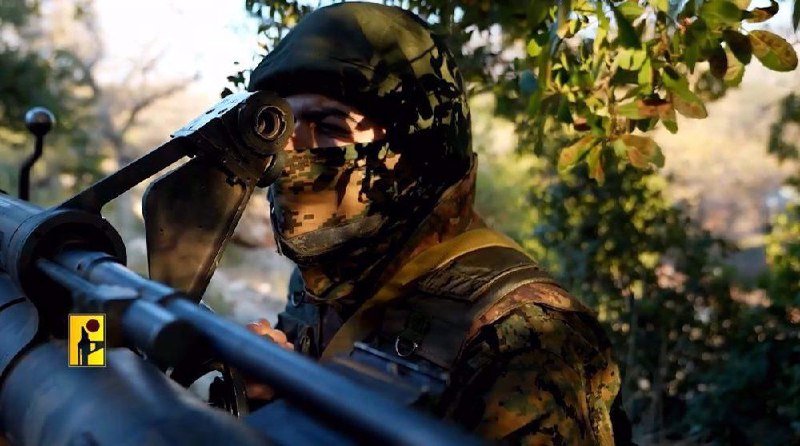
Within a few hours on the morning of 19 June 2026, Israeli warplanes carried out at least sixty airstrikes inside Lebanon — extending as far north as the outskirts of Baalbek in the Beqaa Valley, killing two people and wounding three, according to regional monitoring channels. The Beqaa regional council issued an emergency warning to residents to stay clear of what it called "target sites" as Israeli jets entered its airspace. By mid-morning, additional airstrikes on southern Lebanon had reportedly killed more than twenty-three people, most of them women and children, per Press TV's reporting on the strikes. The scale is unusual even by the rhythm of the past year of cross-border exchanges, and it lands on the same day that an Israeli broadcaster put a hard number on what the much-celebrated 8 April ceasefire has actually delivered.
The honest reading is uncomfortable for everyone. A war that was supposed to have stopped in April is, on the ground, continuing — and on 19 June it visibly accelerated.
A ceasefire that is doing no ceasefire work
Israel's Channel 12 reported on 19 June 2026 that twenty-three Israeli officers and soldiers have been killed inside Lebanon since the ceasefire agreement supposedly reached on 8 April. The figure, cited by The Cradle Media on its Telegram channel, is striking not only for its size but for what it implies: the diplomatic instrument announced in the spring has not produced the operational pause it promised. If twenty-three dead on one side alone are being tallied two and a half months after the deal, the agreement is functioning, at best, as a piece of political theatre — useful for declarations in Washington and Beirut, less useful for the conscript on the ground in the Beqaa foothills.
That reading is reinforced by the air picture on the morning of 19 June. Two Israeli airstrikes hit the Beqaa in quick succession; a wider pattern of strikes followed across southern Lebanon; the regional council scrambled to warn civilians. The combination — Israeli airpower operating freely, an Israeli military casualty rate that has not gone to zero, and a Lebanese civilian toll mounting — is not the picture of a ceasefire holding. It is the picture of a ceasefire that exists on paper while the underlying contest proceeds.
What sixty strikes in hours actually signals
The number matters less as a headline and more as a tempo. Sixty strikes in a few hours, extending the reach north to Baalbek, indicates that the Israeli air force has been given — or has taken — a wider target set in the eastern valley. The Beqaa has long been the strategic spine of Hezbollah's missile and drone logistics; Israeli commanders have openly discussed degrading that infrastructure for years. What 19 June shows is the operational translation: a single morning's air tasking order can now reach the valley's heart, the regional council must treat its own airspace as contested, and civilians are being asked to identify "target sites" so they can stay away from them.
For Israel, the logic is straightforward: if the political agreement is not producing the disarmament or withdrawal that was its stated purpose, the air force can be expected to do the disarming itself, one target set at a time. The Israeli security concern is real — cross-border fire, hostage risk, and a hostile state-adjacent network on the northern border are not manufactured threats, and the duty to protect Israeli towns from rocket and drone attack is legitimate. That duty does not, however, sit in a vacuum. It is being executed in a country whose government signed an agreement in April, and whose civilian population is now being told by its own regional authority to clear the airspace in their heads.
The counter-read, and where it strains
A plausible counter-narrative holds that the Israeli operations are reactive, that they are responding to specific Hezbollah repositioning, and that the casualty figures on the Lebanese side cited by Iranian-aligned outlets such as Press TV are inflated or conflate combatant deaths with civilian ones. That caveat belongs in the file. Press TV is Iranian state media and its reporting on the Arab-Israeli theatre should be read with the same care one would apply to any state outlet covering a war in which it is a regional protagonist — useful as a wire of battlefield claims, not as a stand-alone factual record. The same applies, in the opposite direction, to any Israeli government statement about the strikes being surgical, precise, and proportionate. The structural fact remains: sixty strikes in hours, in a country with which Israel signed a ceasefire ten weeks ago, is a pattern, not a glitch.
The deeper counter-read is geopolitical. Western and Israeli framing tends to treat the northern front as a single-file dispute: rockets in, strikes back, the occasional negotiation. The reading from Beirut, and from much of the regional press, treats the Beqaa campaign as one front in a wider attrition being run against an Iranian-aligned axis, with Gaza, the West Bank, and Syria as the other theatres. Both readings are partly true. The honest version of 19 June admits that Israel is striking a country with which it has a nominal ceasefire, that Lebanese civilians are paying the visible price, and that twenty-three dead Israeli soldiers is the price paid for the failure to make that ceasefire hold.
What the next ten days look like
The most likely near-term trajectory is more of the same: continued strikes inside Lebanon, continued Israeli casualties at a low but non-trivial rate, and a diplomatic track that produces communiqués rather than restraint. If the 8 April framework was meant to convert a war into a negotiation, by 19 June it has converted a war into a war with communiqués. That is the structural change worth naming: the instrument has decoupled from the field. Sooner or later, one side or the other will have to choose between restoring the instrument's authority or admitting it is dead. The longer the choice is deferred, the more Baalbek's civilians become the place where the deferral is felt.
The remaining uncertainty is small but real. The thread sources do not specify whether the 19 June air tasking was a one-day surge or the opening of a sustained new campaign; they do not say whether any specific Hezbollah leader or weapons convoy was targeted, and they do not name the Lebanese government or the international ceasefire sponsors publicly on the morning of the strikes. The full operational picture will be clearer when Western wires and Israeli military briefers add their account of the day. For now, the numbers we have — sixty strikes, twenty-three Lebanese dead, twenty-three Israeli dead since April, a Beqaa council warning its own residents to clear the sky — are enough to make the central point. A war that was declared over is, in the only way that ultimately matters, still being fought.
— Monexus framed this story against the dominant wire line, which treats the 8 April agreement as a live diplomatic achievement. On the ground, the casualty ledger says otherwise, and the Lebanese civilian toll is given equal weight to the Israeli military toll.
Wire provenance
This editorial synthesis draws on the following public wire/social posts:
- https://t.me/presstv/1
- https://t.me/rnintel/1
- https://t.me/rnintel/2
- https://t.me/thecradlemedia/1
- https://t.me/presstv/2