Beirut's ceasefire condition: what Berri's demand for an Israeli commitment actually shifts
Lebanon's parliament speaker is publicly demanding a written Israeli ceasefire commitment before Hezbollah declares its position — a sequencing that puts the political cover back on Washington and Tel Aviv.
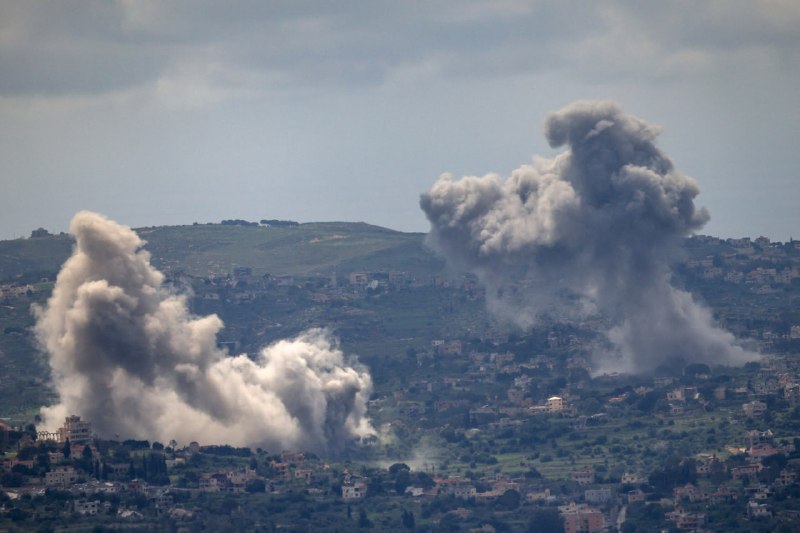
On the afternoon of 19 June 2026, the choreography of the Lebanon file shifted in a way that matters more than the headlines suggest. Lebanese Parliament Speaker Nabih Berri, the long-serving Amal movement leader who functions as Hezbollah's primary interlocutor with Arab and Western capitals, told Al-Jadeed television that any Hezbollah posture on a renewed ceasefire would have to follow — not precede — a clear US statement carrying an Israeli commitment to halt fire. The same line was relayed within minutes by Reuters via separate Israeli and Hezbollah officials, who told the wire that an arrangement had in principle been agreed, and that the public disagreement was over who moves first, and on whose undertaking.
Berri's demand is small in words and large in consequence. It places the burden of political exposure on Washington and Tel Aviv rather than on the armed party, and it forces a sequencing question that has dogged this file since late 2024: who declares what, in what order, and on whose signature. The reporting on the afternoon of 19 June suggests the substantive content of a deal is closer than the public messaging implies. What remains contested is the diplomatic furniture around it — the form of the American statement, the binding character of the Israeli commitment, and the political price each side pays for being seen to climb down first.
What Al-Jadeed actually reported
Al-Jadeed, the Lebanese satellite channel affiliated with the Lebanese Forces political orbit but widely read across confessional lines, framed Berri's intervention in unusually procedural terms. The speaker, the channel said, "insisted on the necessity of a clear US declaration that includes an Israeli commitment to a ceasefire before Hezbollah announces its position." The wording matters. Berri is not asking for an Israeli announcement; he is asking for an Israeli commitment, mediated and certified by Washington. The distinction tracks a pattern familiar from previous Lebanon negotiations, in which the legal and political weight of any halt to fire has rested on the external guarantor rather than on the parties on the ground.
Reporting from War and Frontline Witness channels and from The Cradle Media on the same day reproduced the Al-Jadeed framing and added their own emphasis on the sequencing question. None of the threads reviewed in preparing this article disclosed the operational terms of a prospective arrangement — no buffer-zone geometry, no enforcement mechanism, no timeline for Israeli withdrawal from positions in southern Lebanon. What they described, uniformly, was a public posture negotiation in which the parties are closer to agreement than their statements imply, but in which the order of declarations has itself become the deal.
The Reuters read: a deal in principle, a fight over the unveiling
Within hours of the Al-Jadeed broadcast, Reuters reported, via officials on both sides, that a renewed ceasefire had been "agreed upon." The same wire dispatch — relayed through the Open Source Intel channel and consistent with reporting carried by War and Frontline Witness — noted that the understanding was the product of contacts in which Berri had been a central figure. The Israeli side, the wire's officials said, was prepared to halt operations; the Hezbollah side, the same officials indicated, was prepared to stand down its fire.
Reuters' framing is itself a piece of the negotiation. A deal that the wire reports as "agreed" but that the principals have not yet announced is, in the language of ceasefire diplomacy, a deal that one or both parties reserve the right to walk back from until it has been publicly claimed by the other. The Israeli officials who spoke to Reuters did so on background; the Hezbollah officials did the same. Neither has put the arrangement on the record in their own voice. Until either does, the agreement exists in the conditional tense, and Berri's demand for sequencing is, in effect, a demand for the agreement to be made unconditional.
Why Berri is the broker, and why that matters
Berri has held the speakership of the Lebanese Parliament since 1992 and has functioned as the channel through which external powers — Syrian, Iranian, Saudi, French, and American — manage the parts of the Lebanese file that cannot be handled through formal state institutions. His authority inside the Shia political ecosystem is not unchallenged. Hezbollah's own decision-making sits in Qard al-Hassan-linked structures that do not pass through the speaker's office. But on questions of ceasefire, prisoner exchange, and the diplomatic interface with Israel, Berri is the only Lebanese figure with the standing to speak in a way that the party's media organs will not immediately contradict.
That standing is the reason his demand carries operational weight. A Hezbollah declaration made without an Israeli commitment in hand would be, in the speaker's own framing, a unilateral restraint without reciprocal cover. An Israeli declaration made without a Hezbollah response would be, in the Israeli government's framing, an exposure without return. Berri's proposal — that Washington certify the Israeli commitment before Hezbollah declares — is the only sequencing that allows both sides to claim they moved in response to the other rather than in advance of it. The proposal is, in short, an answer to a question of face as much as a question of substance.
What stays unresolved
Three things remain genuinely contested on the public record, and on each the threads reviewed here do not provide a definitive answer. The first is the binding character of the US statement Berri is asking for. Reporting does not specify whether Washington is being asked for a presidential-level undertaking, a State Department readout, or a private assurance relayed through an envoy. The second is the Israeli political authorisation for any halt. A formal Israeli commitment requires either a cabinet decision or a written order from the defense minister, and neither has been reported. The third is the position of actors outside the channel of talks — Iran, the Houthi file, the Syrian border, the UNIFIL mandate, and the cluster of Palestinian factions in the Lebanese camps. The sources do not address how, or whether, a Lebanon-only arrangement would be insulated from pressure originating in any of these.
Stakes and what to watch next
If Berri's sequencing is accepted, the substantive content of the arrangement is likely to land within days rather than weeks. The diplomatic price — a US statement carrying an Israeli commitment, made before Hezbollah declares — is a price the Biden-era Lebanon framework anticipated, and the diplomatic infrastructure to deliver it is largely in place from the November 2024 arrangement. If the sequencing is rejected, the parties will continue to drift in a public posture war in which the only operative fact is the absence of an operative fact. The Reuters line, that a deal has been agreed, will then be tested by the calendar: an arrangement that is not announced within a working week is, in this file, an arrangement that has been overtaken.
For Washington, the political cost of certifying an Israeli commitment is real but bounded. For Tel Aviv, the cost of moving first is contained by the fact that the second mover — Hezbollah — has spent the past eighteen months signalling willingness to halt fire on terms. For Beirut, the cost of brokering is borne almost entirely by Berri, who will be the visible name on the deal if it holds and the visible name on the collapse if it does not. The 19 June intervention is, in that sense, the speaker putting his standing on the line in public, in a language that obliges Washington and Tel Aviv to answer in kind.
This publication's framing treats the 19 June reporting as evidence of a substantive arrangement whose diplomatic furniture is still being negotiated, rather than as the start of a new diplomatic crisis. The distinction is editorial, not partisan: a file in which both sides have agreed in principle and disagree only on the order of declarations is, on the historical record of the Lebanon track, closer to resolution than to rupture.
Wire provenance
This editorial synthesis draws on the following public wire/social posts:
- https://t.me/TheCradleMedia
- https://t.me/wfwitness
- https://t.me/osintlive
- https://t.me/thecradlemedia
- https://en.wikipedia.org/wiki/Nabih_Berri
- https://en.wikipedia.org/wiki/Amal_Movement
- https://en.wikipedia.org/wiki/Al_Jadeed
- https://en.wikipedia.org/wiki/2024_Lebanon_ceasefire