Burnham's Makerfield landslide lands, and Labour's centre of gravity moves with it
A Greater Manchester mayor wins a Westminster seat by a margin that has not been seen in a byelection in more than six decades, and the prime minister is already answering questions about his own future.
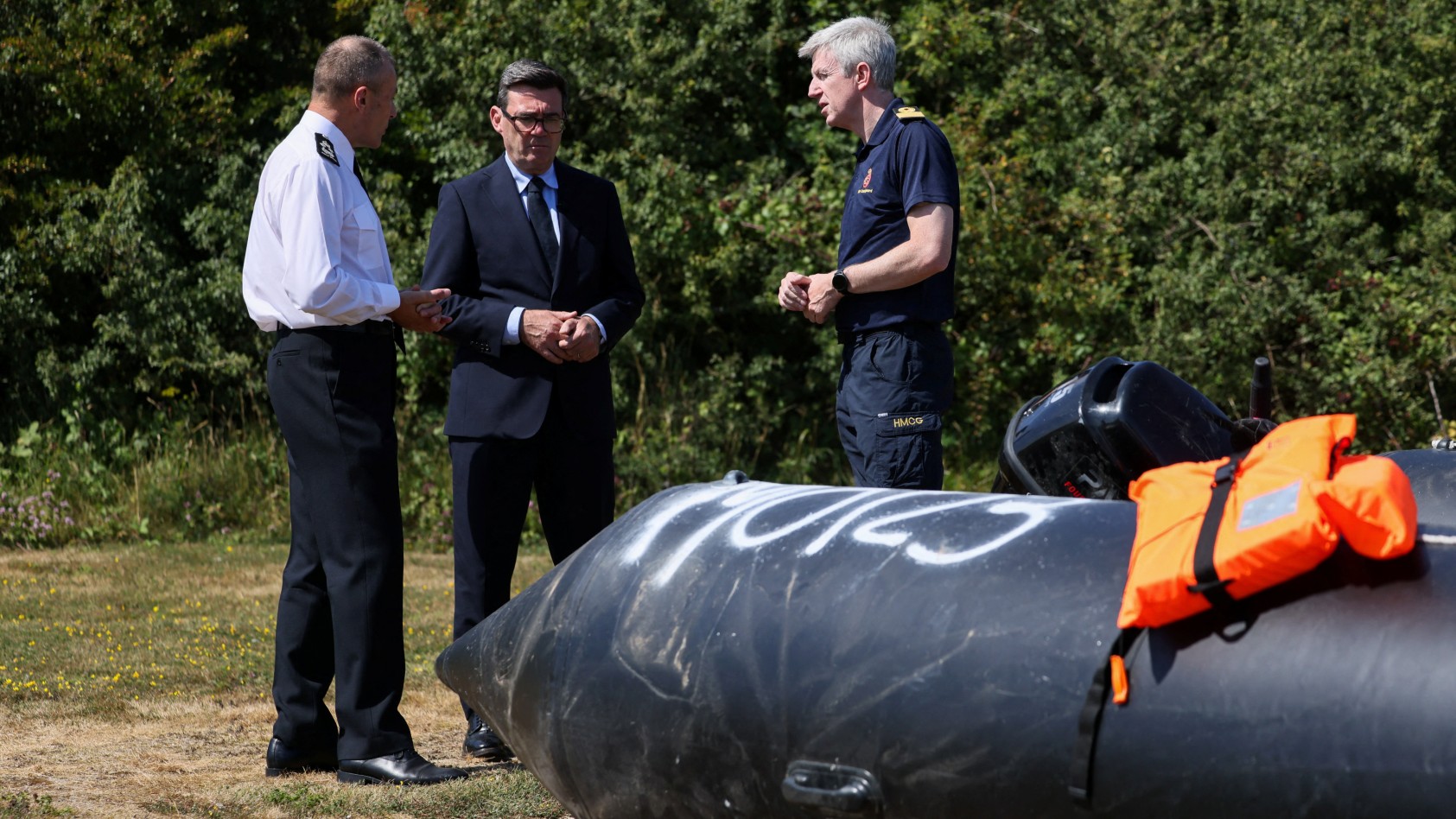
Andy Burnham is, as of 16:30 UTC on 19 June 2026, no longer merely the mayor of Greater Manchester. He is now the member of Parliament for Makerfield, returned in a byelection whose scale Reuters and The Guardian's video desk describe in almost identical terms: seismic, the most consequential such contest in more than six decades. The prime minister he sat down to face a few hours later, Keir Starmer, used the occasion to say he will stand if there is a Labour leadership contest — a sentence that, in normal politics, is the kind of thing one does not need to say out loud.
This is the story the wires are telling: a popular regional figure with a national mandate, elected to Westminster on a programme of lower water bills, lower energy bills and lower rail fares, has just altered the geometry of the governing party. The harder question — what that geometry now means, and for whom — is the one the wires have not yet answered.
The arithmetic of a "seismic" win
Makerfield is the sort of seat that usually produces quiet, modest majorities. It is a Greater Manchester constituency, post-industrial, anchored in Wigan, and the kind of place where the conventional wisdom is that nothing much changes between elections. The framing from Reuters on 19 June — "New lawmaker Burnham calls for fundamental change in Britain" — treats the result as a hinge moment rather than a routine mid-term protest vote. The Guardian's video desk, reporting from the count at 13:10 UTC, frames the victory as "our last chance" to change Britain, in Burnham's own words to supporters.
What the sources do not specify, and what will become the most fought-over number of the next 48 hours, is the precise swing, the turnout, and the share of the vote that went to candidates other than Labour and the Conservatives. A byelection that prompts a sitting prime minister to publicly pre-commit to defending his leadership is, by definition, not a normal one. The fact that the wires are choosing to describe it as the most consequential in 60-plus years is itself an editorial signal — it is the framing they want to lock in before the cold, hard data arrives.
Starmer's tightrope
The 11:02 UTC video clip of Starmer congratulating his rival tells the other half of the story. The prime minister is reported to have said he will stand if there is a leadership contest, an unusually defensive formulation from a sitting leader. It is, in effect, a declaration that the contest may already be underway in everything but name. Whether Starmer's calculation is that pre-empting a challenge freezes the plotters, or that getting out in front of the story buys him time, is the kind of Westminster reading that will dominate the next round of broadcast interviews.
The counter-narrative, the one the Labour high command will want to keep alive, is that Burnham's appeal is regional, not parliamentary, and that a mayor with three million constituents in a metropolitan region is not automatically a winner in the more sober, slower-moving game of a Commons campaign. There is some evidence for that read: Burnham's political brand was built on visible, proximate delivery — bus reform, homelessness, devolution — which is a different muscle from legislative horse-trading.
What Burnham is actually offering
Strip the rhetoric away and the policy offer at the Wigan count is a cost-of-living package: lower water bills, lower energy bills, lower rail fares. It is a deliberately un-ambitious programme by the standards of a transformational political moment, and that is the point. Burnham is pitching himself as the candidate who will return to the kitchen-table politics that delivered Labour its 2024 majority, against a government whose central economic message has not yet landed with the voters who matter most to its own re-election.
The structural frame here is plain enough. A governing party that wins on cost-of-living competence and is then hit by an above-inflation stretch in regulated bills is, by definition, vulnerable to a challenger who promises the same competence more aggressively. The wires have not yet quantified the squeeze on household budgets that Burnham is exploiting; the Office for National Statistics' regular releases on real disposable income will, in due course, be the data this argument turns on.
Stakes, and what the sources cannot tell us
If the trajectory holds, the winners are the cost-of-living voter in the marginal seat and the Labour left-institutional wing, which has been waiting for a plausible standard-bearer. The losers are the chancellor's fiscal headroom, the prime minister's authority at the despatch box, and the broader market view that the UK political cycle is boringly predictable. The time horizon is short: leadership challenges move on the order of weeks, not months, once the numbers from a byelection like this are digested.
The honest ledger is this. The sources tell us clearly that Burnham won big, that he framed the win as a last chance to change Britain, and that Starmer responded with a public pre-commitment to defend his leadership. They do not tell us the exact margin, the turnout, or how the smaller parties performed. They do not tell us whether Burnham intends to return to City Hall or to trigger a contest. They do not tell us whether the parliamentary Labour Party, which is not the same animal as the Greater Manchester Labour Party, shares the Wigan count's enthusiasm. On those questions, the evidence has not yet arrived.
This publication treats the Makerfield result as a structural event in the Labour Party's internal politics, not as a one-day news spike. The wires are right to call the scale seismic; they are premature to call the destination.
Wire provenance
This editorial synthesis draws on the following public wire/social posts:
- http://reut.rs/3SSk23t