Havana's Market Turn Has Less to Do with Ideology Than with Cash Flow
Cuba's National Assembly has ratified a sweeping package of market-oriented reforms. The Cuban state insists the doctrine is intact; the Cuban economy suggests the doctrine is being quietly redrawn around it.
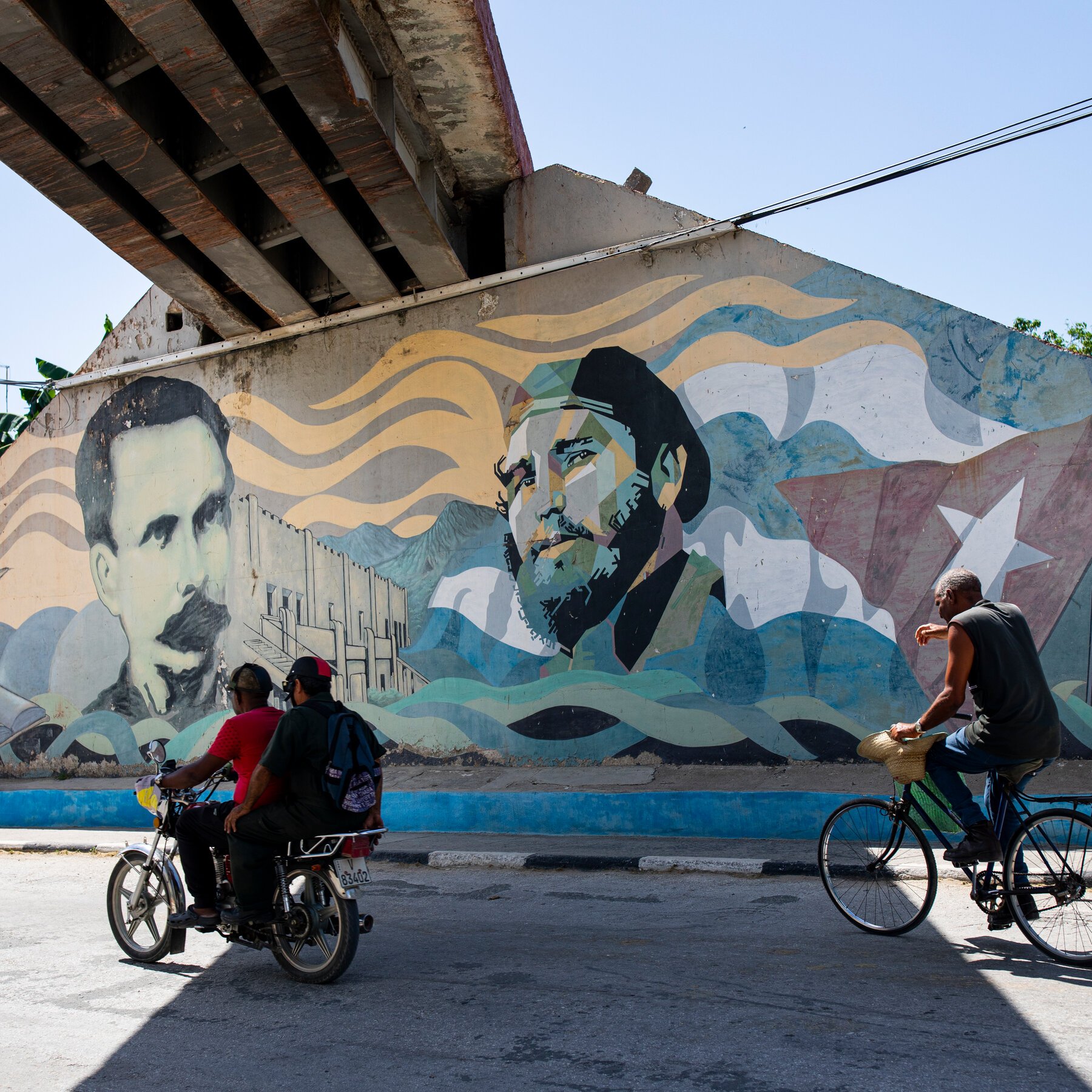
On 19 June 2026, the Cuban National Assembly ratified a package of "approved economic transformations" that, taken together, amount to the most consequential opening of the post-1959 economic model in a generation. State media outlet CubaDebate, publishing the official list of measures in the early hours UTC, framed the changes as a recalibration, not a renunciation. The actual content reads closer to an admission of stress.
The reforms, as enumerated by CubaDebate in a series of dispatches beginning at 02:08 UTC and running through 04:01 UTC on 19 June 2026, ratify social ownership over the fundamental means of production while explicitly opening the door to non-state management of those same means. State and private companies will be allowed to make financial investments, and new financial instruments for the capitalization of companies have been authorised. Agricultural cooperatives will be freed to import and trade fuel, export and import directly, manage external financing, and operate on a market-facing management model. The package also directs the design of state and private financing lines for renewable energy and an energy transition, alongside tax reductions for investment in that sector.
What the doctrine still says
The official framing insists nothing has changed at the level of principle. Social ownership of the means of production is reaffirmed. The state, in this telling, remains the architect and the regulator. The new space for non-state actors is a concession to operational reality, not a doctrinal retreat.
That framing is worth taking seriously on its own terms. Cuba's leadership has a long history of distinguishing between ownership and management, between the strategic direction of the economy and the day-to-day decisions of any given enterprise. The new measures can be read as a continuation of that distinction, pushed further than at any point since the Special Period. Nothing in the CubaDebate text abolishes the centrally planned architecture; everything in it admits the architecture has been operating with one engine for some time.
What the economy has been saying
The harder reading is that the package responds to conditions the doctrine did not anticipate. Chronic fuel shortages, recurrent blackouts, a foreign-currency position that has required ad-hoc external support, and a productive base that has struggled to convert central planning into delivered output have all imposed their own discipline on the room for ideological manoeuvre. The decision to allow cooperatives to import and trade fuel directly, and to design financing instruments for renewable energy, is not the language of a system confident in its near-term capacity to supply its population from internal production.
Sceptics will note that earlier rounds of Cuban economic liberalisation have been announced, partially implemented, and then partially walked back when the political weather shifted. The 2010s opening under Raúl Castro, the unification of the currency, the experiment with the self-employment sector, the more recent promotion of MSMEs — each was presented as a structural adjustment and each has been re-tightened to varying degrees. The credibility of the 2026 package will depend on whether the new financial instruments and the new import-export rights survive the next external shock.
The geopolitics of a small opening
The reforms arrive in a regional and global context that makes the timing legible. Latin American and Caribbean economies are repositioning around US–China competition, supply-chain reshoring, and a renewed push for renewable-energy investment. Cuba's decision to design financing lines specifically for the energy transition, and to cut taxes for investors in that sector, reads as an attempt to align the island with the direction of capital flow in the wider region rather than to swim against it.
That is not a surrender to Washington or to Beijing; it is a recognition that the cost of standing outside the energy transition is rising in real time. Caribbean neighbours, including those with their own complicated relations with international finance, have moved on offshore renewables, grid modernisation, and private generation. A Cuban system that refused to permit any of the financial plumbing required for such investment would be choosing, in effect, to age out of the regional conversation.
What remains uncertain
The CubaDebate dispatches do not specify the size of the new financial instruments, the exact tax schedule, the implementation timetable, or the criteria for which cooperatives and which private actors will be permitted to participate. They do not name the officials responsible for execution. They do not address how the new rights interact with the existing dual-currency architecture or with the regulatory role of GAESA, the military holding company that controls large segments of the external sector.
A serious read of the package, in other words, requires waiting to see who implements it, on what scale, and on what timeline — and whether the measures that survive into the operating economy of 2027 are the ones on the official list or a smaller, more politically manageable subset. The doctrine may be intact. The cash flow is doing the talking, and it usually has the last word.
This publication frames the Cuban package as an economic event first and a doctrinal event second; the wire coverage to date has been sparse, with the official list distributed almost entirely through Cuban state-aligned channels.
Wire provenance
This editorial synthesis draws on the following public wire/social posts:
- https://t.me/cubadebate/
- https://t.me/cubadebate/
- https://t.me/cubadebate/
- https://t.me/cubadebate/