Europe's World Cup record since 2002: the numbers behind FIFA's pushback
FIFA's Telegram feed is full of debut goals and history-makers. The federation's pushback against the Europe-still-wins narrative is real, but the methodology behind it is not in the public record.
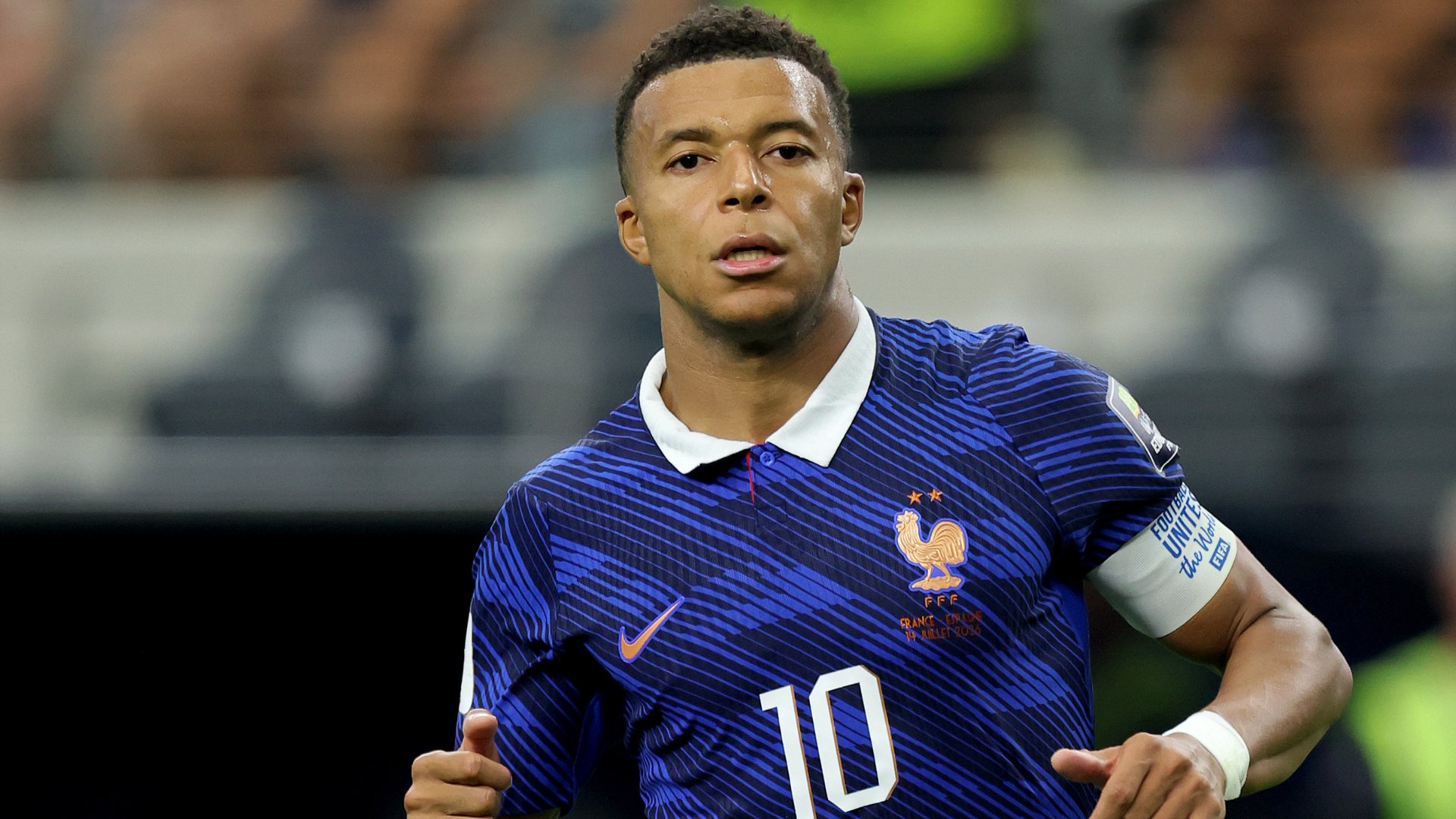
Cape Verde's Ryan Mendes or someone in a blue shirt struck the ball into the back of a Major League Soccer net in Los Angeles on Sunday evening, and the FIFA Telegram channel declared a piece of history. "Cabo Verde make history!" the post read at 22:40 UTC. "They've scored their first-ever FIFA World Cup goal." The match was still loading on the feed an hour earlier. By kickoff, the federation's account was already circulating voting links for the Michelob Ultra Superior Player of the Match.
The moment is the kind FIFA likes to package: a small federation's first goal, a hashtag, a sponsor, a prompt to vote. It is also the kind of moment the federation has been using, with increasing volume, to push back against a narrative it plainly dislikes: that European teams are no longer dominating the World Cup. FIFA's communications apparatus, which during this tournament has leaned hard into a multiplicity of "firsts" and "history-makers," is not just cheering. It is curating a counter-statistic. The gap between what the federation celebrates and what the historical record actually shows is the story.
The starting point is the 2002 tournament, the last World Cup won by a non-European side. Brazil beat Germany in the final in Yokohama, and since then the trophy has gone to Italy, Spain, Germany, France, and Argentina. The post-2002 period is, by that measure, a quarter century in which the World Cup has mostly returned to Europe, with two South American interruptions. FIFA's argument is not about who lifts the trophy. It is about who competes, who scores, and how often a small federation gets to write a line into its own history book.
The pushback runs through the Telegram feed. Cabo Verde's first World Cup goal. Egypt vs. New Zealand on Sunday, with both teams "on a point," as CBS Sports framed it, and both capable of advancing with a win. Iran goalkeeper Alireza Beiranvand winning a Superior Player of the Match vote. Spain picking up "their first win at the #FIFAWorldCup." Lamine Yamal, 19, scoring his first World Cup goal for Spain. The Athletic's 23:31 UTC post on the tournament's "history-making debut goalscorers." None of these are European-versus-the-rest data points. They are stories about presence, about firsts, about a 48-team field that is, by construction, more crowded than the 32-team version that ran from 1998 through 2022.
That construction is the elephant in the federation's statistics. The 2026 tournament is the first with 48 teams, up from 32, and the 2030 edition, awarded to a Morocco-Portugal-Spain hosting arrangement, will expand the field again in practical terms through a one-off six-confederation format. The number of debuts, of first-goals, of first-points, of "shared points in LA," is a function of the slot count as much as of any redistribution of footballing power. Cape Verde did not suddenly become a serious football nation. It qualified, and FIFA made room for it to qualify. That is not a complaint. It is a description. The expansion is a choice, and the choice produces the data the federation now circulates as evidence.
European performance in the same period is the mirror image the federation would rather not photograph. In the 2006 final, Italy beat France. In 2010, Spain beat the Netherlands. In 2014, Germany beat Argentina. In 2018, France beat Croatia. In 2022, Argentina beat France. European teams have also filled out the latter rounds: a 2002 semifinal lineup of Germany, South Korea, Brazil, and Turkey, followed by 2006's four European sides plus the usual, and 2010's European-dominated bracket. The losses have not been catastrophic. They have been a slow redistribution of knockout-stage share, with the 2022 final the cleanest signal: a European side, France, losing to a South American side, Argentina, on its own continent. The "Europe still wins" headline is harder to write each cycle. The "Europe is falling behind" headline is also harder to write. The truth is somewhere quieter: Europe is being forced to share a tournament that, structurally, has more seats and is being filled, increasingly, with teams from confederations that have historically been parked in the lobby.
The wire treatment of the federation's communications, from CBS to the BBC, has largely amplified the celebration. BBC Sport on Sunday reported on UK government proposals to keep "crown jewel" sports free on streaming, including the World Cup, a story whose subtext is that the tournament's audience is widening faster than the broadcast-rights market can comfortably price. The Athletic's 23:31 UTC package on "history-making debut goalscorers" reads as a content play, with the music-video link folded into a highlight reel. Even the SportsLine prediction pieces on Egypt vs. New Zealand, framing the match as a "21-9 run" for the expert, treat the smaller-federation matchup as a market. The 48-team format is also a marketplace, and the federation's job is to fill it with stories worth packaging.
What the wire does not do, almost never, is ask the federation to produce the underlying numbers behind its narrative. How many debut teams have scored in their first-ever World Cup match this cycle, versus 2018 or 2022? How many of the 48 are appearing for the first time? What proportion of group-stage goals at the 2026 tournament have been scored by teams outside UEFA's traditional top eight? These are answerable questions, and FIFA has the data. Until the federation releases the methodology, the claim that the World Cup has become a genuinely multipolar competition in the post-2002 period rests on anecdote, firsts, and hashtags. The anecdotes are real. The Cape Verdeans who watched the ball hit the net in Los Angeles on Sunday will remember it for the rest of their lives. The data is the federation's job to publish, and until it does, the most newsworthy thing about the pushback is what's missing from the spreadsheet.
The next 72 hours of the group stage will write more lines. Egypt and New Zealand play for advancement on Sunday. Spain has its first win, and Lamine Yamal has his first goal, and a Belgium side the federation's feed calls "Belgium's finest" plays next. Each of these will produce a celebratory post, a Superior Player of the Match vote, a hashtag. The federation will keep packaging history. The interesting question is whether, at some point, it also publishes the table.
Sources
- https://t.me/FIFAcom
- https://t.me/TheAthletic
- https://en.wikipedia.org/wiki/2026_FIFA_World_Cup
- https://en.wikipedia.org/wiki/2030_FIFA_World_Cup
- https://www.bbc.com/sport (BBC Sport, 2026-06-21 21:33 UTC, crown-jewel streaming proposals)
- https://www.cbssports.com (CBS Sports, 2026-06-21, Egypt vs. New Zealand, Uruguay vs. Cape Verde)
- https://www.espn.com (ESPN, 2026-06-21 19:37 UTC, Conceição on Ronaldo)
Desk note: The wire treatment of FIFA's post leaned on the federation's own framing. Monexus treats the figure as a claim to be tested, not a conclusion, and flags the missing methodology as the story's most newsworthy gap.