On her way out, Gabbard declassifies Wuhan-lab allegations aimed at Fauci
On her last day as Director of National Intelligence, Tulsi Gabbard released documents claiming Anthony Fauci directed US funds to gain-of-function work at the Wuhan lab — a parting shot that puts a contested scientific dispute back on the political front page.
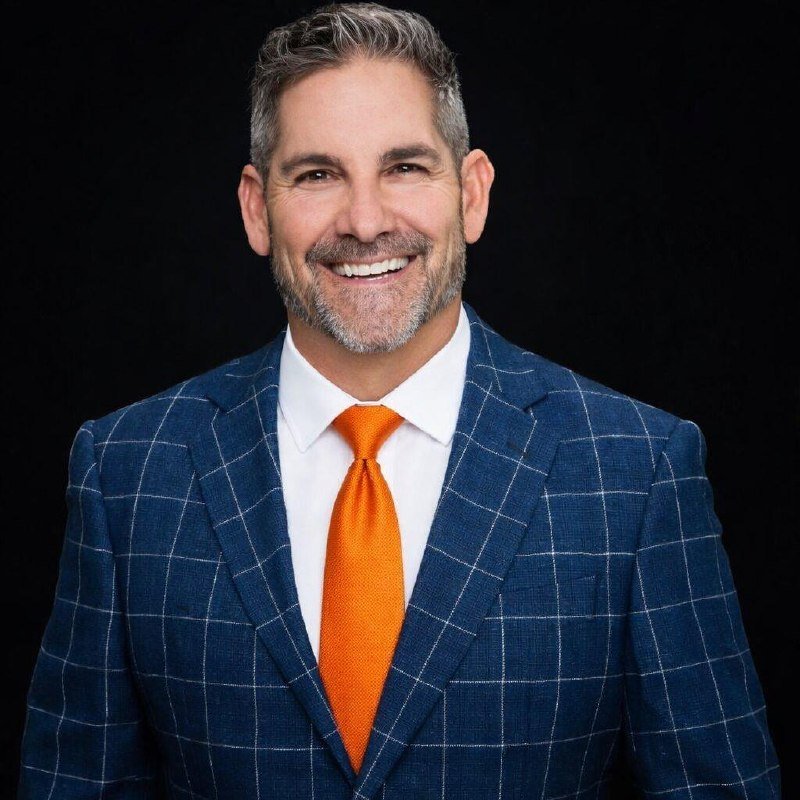
On 19 June 2026, the United States' outgoing Director of National Intelligence, Tulsi Gabbard, used her last day in office to release a tranche of declassified material alleging that former NIAID director Anthony Fauci directed US taxpayer dollars to fund dangerous gain-of-function research on bat coronaviruses at the Wuhan Institute of Virology. The release — announced on X at 03:40 UTC and amplified through Indian Express wire coverage by 12:52 UTC — is a parting political act that reopens the most contested question in pandemic-era science: whether American money helped light the fuse of Covid-19.
What Gabbard is offering is not a settled finding. It is a curated cache of documents, presented on a deadline of her own choosing, with no accompanying intelligence-community assessment attached. Her own framing, captured in a video statement at 12:57 UTC, goes further than the documents appear to: "An American scientist had a hand in the COVID outbreak in 2020," she said, naming Fauci. That is a stronger claim than the underlying material supports on its face, and the gap between the two is where the political fight will live.
The release, and what is actually in it
Gabbard's announcement frames the package as proof that Fauci "provided millions of dollars to fund dangerous gain-of-function research on bat coronaviruses at the Wuhan lab" and misled Congress about it. The Indian Express wire summarised the cache as "secret files" alleging both the funding claim and the alleged misleading of Congress.
The contested factual terrain is familiar. The US government — through NIH subgrants routed via EcoHealth Alliance — did fund coronavirus research at the Wuhan Institute of Virology. How much, for what purpose, and whether any of it crossed the regulatory line into "gain-of-function" research of concern has been litigated in congressional hearings, NIH letters, and intelligence-community assessments since 2021. A declassified tranche dropped on a single afternoon does not adjudicate a five-year argument; it relocates it.
Why the timing matters
Gabbard leaves office the same day the documents appear. A sitting DNI releasing politically charged material on her way out the door is structurally different from the same release issued by an incumbent with a full term ahead. There is no follow-on accountability mechanism built in: no clarifying press conference, no Senate briefing cycle, no expectation of further releases under the same authority. The recipient of the leak is the press, not the oversight committee.
This pattern — late-tenure, unilateral, broadcast-first declassification — has a history on the American right, from the politicised intelligence dumps of the 2016 cycle forward. It also has a constituency. A non-trivial slice of the American public, polled consistently since 2022, has favoured the lab-leak hypothesis over a natural zoonotic origin for SARS-CoV-2. Gabbard's release is addressed to that audience as much as to any committee room.
The counter-read, and what it gets right
The mainstream scientific and intelligence position has held, for most of the period, that the lab-leak hypothesis is plausible but unproven, and that the available evidence does not single out the Wuhan Institute of Virology as the origin point. The US intelligence community's own 2023 update stopped short of a definitive attribution; the Chinese government's cooperation with origin investigations has been, by the WHO's own accounts, incomplete. Both of those facts are inconvenient to Gabbard's framing.
A fair reading of the cache has to acknowledge three things at once. First, the funding relationship between US agencies and the Wuhan lab was real, even if smaller in dollar terms than the political rhetoric often implies. Second, "gain-of-function" is a regulatory category with a specific legal definition, and whether the funded work crossed that line has been the subject of a formal NIH review that reached one conclusion and a Republican-led congressional review that reached another. Third, even if every claim in Gabbard's release is factually correct, it would not by itself prove that SARS-CoV-2 escaped from the Wuhan lab rather than emerging through a natural spillover pathway that US-funded surveillance work happened to be studying.
Stakes, and what to watch next
The immediate effect is reputational and political, not scientific. Fauci is no longer in government; the institutional cost of the allegation falls on a private citizen with limited formal channels to rebut a coordinated intelligence-community release. The longer-term stakes run through two tracks. The first is journalistic: whether established outlets treat Gabbard's release as a primary document to be verified against the underlying records, or as a political event to be reported around. The second is diplomatic: how the Chinese government — whose cooperation Gabbard's framing implicitly attacks — responds, and whether allied intelligence services in the UK, Australia and Canada choose to corroborate, contest or simply decline to engage with the US framing.
A reasonable epistemic posture is to hold three claims separately. That US funds reached the Wuhan lab through intermediary grants — supported. That the work funded met the legal definition of gain-of-function research of concern — genuinely contested, and the new documents will need to be read against the prior NIH and GAO reviews to settle. That the SARS-CoV-2 pandemic began with a laboratory incident — still unproven, and Gabbard's video statement goes materially further than the underlying cache appears to support. Confusing those three claims is how a partisan release becomes a settled historical narrative, and how a settled historical narrative becomes a bad policy basis.
Gabbard's release arrived as raw material, not as a verdict. This publication will treat the underlying documents as the primary text and the video statement as political commentary on top of them.
Wire provenance
This editorial synthesis draws on the following public wire/social posts:
- https://x.com/polymarket/status/2034418861854986300
- https://x.com/boweschay/status/2034488945186005000