Hezbollah signals retaliation as Israel presses operations in southern Lebanon
A Hezbollah leadership source told Al Jazeera on 19 June 2026 that any Israeli move outside the framework of a comprehensive ceasefire will be met with a response, hours after an Israeli outlet said Israel would retaliate if Hezbollah tried to block advances in southern Lebanon.
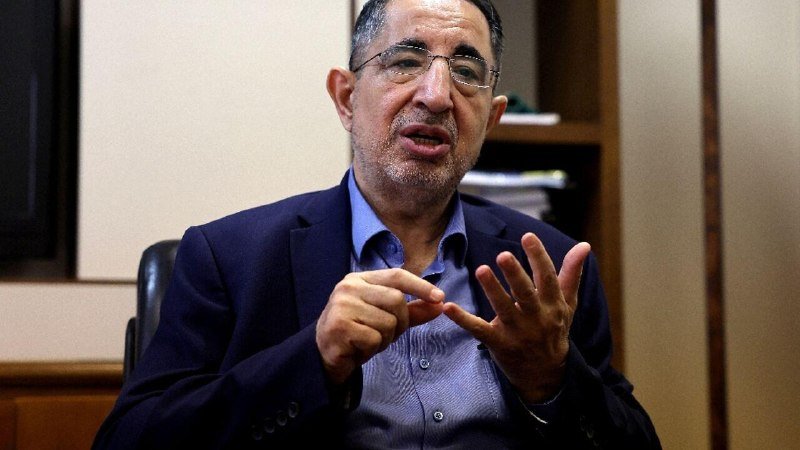
A senior Hezbollah official told Al Jazeera on 19 June 2026 that "any Israeli move outside the framework of a comprehensive ceasefire will be met with a response," in the strongest public signal yet from the Lebanese group that the post-November truce arrangement is fraying at the edges. The remarks, carried by Al Jazeera and circulated by outlets including Fars News and The Cradle, came within hours of an Israeli Channel 15 framing that left little ambiguity about Jerusalem's own posture: "If Hezbollah tries to stop Israeli advances in southern Lebanon, we will defend ourselves and retaliate."
The exchange matters less for the rhetoric — both sides have spent months trading similar language — than for the timing. Roughly seven months after the ceasefire that paused open hostilities, two adversarial red lines are being drawn in near-real-time, and each is being broadcast through the other's preferred media infrastructure: Hezbollah's threat travels through Al Jazeera and Iranian-aligned wires; Israel's deterrent message travels through domestic Hebrew-language television and aggregator accounts. The structural question is whether the framework itself, brokered under US and French pressure in late 2025, still functions as a binding constraint, or has degraded into a talking point both sides invoke while preparing for the next round.
A ceasefire under stress
The original arrangement, concluded in November 2025, called for a phased Israeli withdrawal from positions in southern Lebanon, a Hezbollah pullback north of the Litani River, and the deployment of Lebanese Armed Forces alongside UNIFIL to monitor the buffer. By the spring of 2026, reporting from multiple outlets indicated that Israeli forces had continued limited operations in border villages and that Hezbollah-linked units had conducted reconstruction and presence-keeping activities in areas nominally off-limits to the group. Both sides accused the other of violations; both framed the violations as defensive.
The 19 June messages land on top of that steady drip. The Hezbollah source quoted by Al Jazeera accused Israel of "continuing to violate the ceasefire agreement," language that aligns with a longer Iranian-press pattern of documenting alleged Israeli infractions case-by-case. Channel 15's framing of "advances in southern Lebanon" — language the outlet itself used, rather than language imposed by a wire — is the more telling tell. Israeli public discourse has progressively shifted from "operations against infrastructure" toward open acknowledgement of "advances," a vocabulary shift that suggests the political ceiling on the campaign has moved.
Two media channels, two red lines
What is unusual about this exchange is not its content but its routing. Hezbollah chose Al Jazeera Arabic — a pan-Arab platform with deep penetration across Lebanon, the Gulf, and the diaspora — as the primary vehicle. That choice buys regional legitimacy and signals that the warning is intended for Arab and international audiences, not for Israeli decision-makers directly. Iranian outlets, including Fars News International and Tasnim, amplified the Al Jazeera quote within minutes, a coordinated pattern consistent with how the Tehran–Beirut media axis has handled previous escalations.
Israel, for its part, relied on Channel 15, a Hebrew-language commercial outlet, for the matching warning. That channel is read primarily inside Israel; the message is calibrated for a domestic audience already debating the costs and benefits of a renewed push. The structural point is that neither side is talking to the other. Each is performing for its own political market, and the ceasefire's principal sponsors — Washington, Paris, and UNIFIL — are not visibly mediating in real time.
What the sources actually say, and what they do not
Across the items circulating on 19 June, the factual core is narrow. There is a Hezbollah threat, delivered through Al Jazeera. There is an Israeli deterrent message, delivered through Channel 15. There is an Iranian-aligned echo of the Hezbollah framing. There is no reporting in the immediate thread of a specific triggering incident — no border clash, no strike, no casualty figure, no third-party verification from UNIFIL or the Lebanese Armed Forces. The sources do not specify which Israeli action the Hezbollah source was reacting to, nor do they quantify the scale of any "advances" in southern Lebanon.
That thinness matters. The pattern of escalating rhetoric without an associated kinetic event is itself a phase — the phase in which each side uses the other's words as evidence that the other is preparing to break the arrangement, while neither takes the irrevocable step. It is the phase that historically ends either in a quiet reaffirmation of the framework by mediators, or in an incident that closes the door on reaffirmation.
Stakes and forward view
If the framework holds, southern Lebanon settles into a contested, low-intensity equilibrium: Israeli units in a handful of villages, Hezbollah reconstruction networks visible but constrained, UNIFIL and the LAF patrolling the seams. That outcome is the one the ceasefire's sponsors, including the United States and France, are publicly invested in. It is also the outcome that requires continuous diplomatic maintenance, and there is no visible evidence of that maintenance occurring in the 19 June cycle.
If the framework breaks, the next round is unlikely to resemble the last. Hezbollah has spent the ceasefire period rebuilding command depth and reconstitution capacity in areas north of the Litani; Israel has spent it digesting operational lessons and pre-positioning fires. The asymmetry is real on both sides. A renewed escalation would impose heavy costs on Lebanese civilians in the south and on Israeli border communities simultaneously, and it would re-open a diplomatic front the Biden-then-administration and the Macron government worked through most of 2025 to close.
For now, the most defensible reading is the unsatisfying one: the ceasefire is technically still in force, but the political will to enforce it is visibly thinner than it was six months ago, and both sides are publicly signalling, in their own media, that they are preparing for a contingency they would prefer not to use.
Desk note: Monexus framed this as a stress test of an existing framework rather than as a breaking event, in line with the source material's narrow factual core. The Hezbollah warning and the Israeli deterrent are reported on their own terms through the outlets that carried them, with explicit sourcing caveats for Iranian-aligned amplifiers.
Wire provenance
This editorial synthesis draws on the following public wire/social posts:
- https://t.me/thecradlemedia
- https://t.me/farsna
- https://t.me/FarsNewsInt
- https://t.me/Middle_East_Spectator
- https://t.me/JahanTasnim