Sixth attempt in two days: IDF pushes again for Ali al-Taher as Hezbollah IEDs and white phosphorus define the battle for the Nabatieh axis
Israeli ground forces made a sixth attempt in roughly 48 hours to seize the Ali al-Taher Hill overlooking Nabatieh, drawing Hezbollah IEDs, counter-rockets and a reported white phosphorus strike on the town itself.
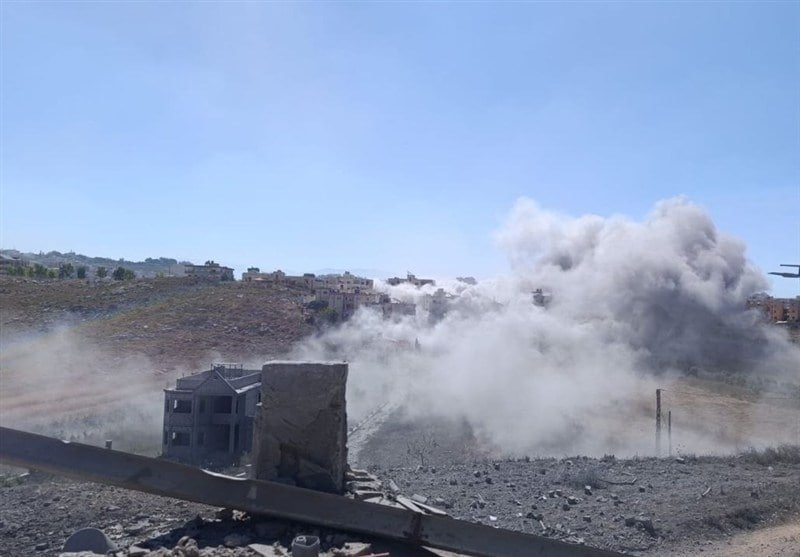
On the evening of 19 June 2026, Israeli ground forces made their sixth attempt in roughly 48 hours to seize the Ali al-Taher Hill overlooking the southern Lebanese city of Nabatieh, according to regional Telegram channels tracking the fighting in real time. The push — first flagged at 19:37 UTC by AMK Mapping and corroborated through 20:19 UTC by wfwitness, Middle East Spectator, rnintel and DDGeopolitics — produced a Hezbollah-planted IED detonation against an advancing Israeli vehicle, Hezbollah rocket fire at the Israeli evacuation force attempting to recover the casualties, and Israeli artillery shelling onto Ali al-Taher itself in preparation for what the channels framed as another ground assault.
What is unfolding on the Nabatieh–Kfar Tebnit axis is not a border skirmish. It is a grinding contest for a single piece of high ground whose loss, for Hezbollah, would expose the southern approach to one of south Lebanon's most consequential cities; and whose loss, for the IDF, would mean a sixth visible tactical failure in two days. The pattern — repeated IED strikes, repeated Israeli resets, repeated cycles of preparation fire — is itself the story.
The shape of the day
The day's sequence is unusually well documented. At 19:37 UTC, AMK Mapping reported that the IDF had "begun a new attempt at capturing the strategic Ali al-Taher Hill overlooking the city of Nabatieh, southern Lebanon," characterising the operation as a violation of a "new ceasefire agreement." By 20:03 UTC, DDGeopolitics and rnintel were reporting that Hezbollah had detonated an IED against Israeli forces advancing on the same axis, southeast of Nabatieh. By 20:08 UTC, wfwitness confirmed a second IED detonation on an Israeli force moving toward Ali al-Taher, and DDGeopolitics reported that Israeli forces had struck the town of Nabatieh itself with white phosphorus munitions. By 20:09 UTC, Middle East Spectator described one of the Israeli vehicles as having "completely exploded" and called the incident the "6th attempt by the IDF to capture Ali Al-Taher hill in southern Lebanon in 2 days."
By 20:19 UTC, AMK Mapping and wfwitness were reporting two developments in parallel: Hezbollah rockets targeting the Israeli evacuation force that had been sent to recover casualties from the IED site, and Israeli artillery shelling onto Ali al-Taher Hill ahead of what both channels said was a further ground push on the Ali al-Taher–Kfar Tebnit axis. The traffic pattern across these channels — five distinct accounts converging on the same sequence within roughly 40 minutes — is unusual for this kind of fighting, where fog-of-war claims typically arrive in isolation.
What the dominant framing gets right — and what it leaves out
The mainstream Israeli framing of operations in southern Lebanon centres on the dismantlement of Hezbollah infrastructure close to the border and the protection of northern Israeli communities from rocket fire. That framing is coherent. Hezbollah's continued possession of prepared positions within striking distance of Israeli towns is a legitimate security concern, and the IDF's stated objective of pushing those positions back is intelligible on its own terms.
What that framing leaves out is the asymmetry visible in the day's reporting. The IDF is on the offensive, attempting to take ground; Hezbollah is on the defensive, using IEDs and short-range rockets to disrupt and attrit that advance. When Israeli forces strike the town of Nabatieh with white phosphorus — as DDGeopolitics reported at 20:08 UTC — the civilian cost is borne by a populated municipality rather than by an empty ridgeline. The use of white phosphorus in or near civilian areas is a distinct legal question that wire reporting has historically been slow to scrutinise; the Telegram layer is, in this instance, ahead of the wire layer on the question of what is actually being fired.
The structural frame: a ceasefire that exists on paper
The most consequential phrase in the day's traffic is the one AMK Mapping used at 19:37 UTC: "in violation of the new ceasefire agreement." That language suggests a formal cessation framework is nominally in force, even as Israeli ground forces conduct repeated offensive operations against a fixed Hezbollah position. The structural pattern — a declared ceasefire under which one party continues to attempt territorial gains while the other responds with IEDs and rockets — is not new in this conflict. It is, however, an honest description of how the file has been moving for months.
For Hezbollah, the Ali al-Taher position is also a test. A successful defence of the hill against six Israeli attempts in two days is, in the group's own narrative economy, a strategic outcome worth the cost of the IEDs and rockets expended. For the IDF, each failed approach burns armour, manpower and the political capital of an operation whose stated purpose is the protection of Israeli border towns. The hill is small. The arithmetic of repeated failure is not.
Stakes and what to watch next
If the trajectory of 19 June continues, three outcomes are plausible in the short term. First, an Israeli force may eventually take the hill, at a cost in vehicles and personnel that the Telegram layer is already documenting; the political effect inside Israel would be partial, given the visible attrition. Second, Hezbollah may successfully defend the position, with corresponding effect on the group's domestic standing in Lebanon and on the deterrent calculation of the Israeli northern command. Third — and this is the under-reported option — the operation may continue to oscillate without resolution, with each side expending resources for marginal territorial movement, while the civilian population of Nabatieh and surrounding villages absorbs the cost of the white phosphorus and artillery fire.
What remains genuinely uncertain is the status of the "new ceasefire agreement" that AMK Mapping referenced at 19:37 UTC. The thread sources do not name the agreement, the parties that negotiated it, the date it entered into force, or whether any third-party guarantor is involved. Wire outlets had not, as of the thread's last item at 20:19 UTC, published a confirmation or denial of the framing. Until that picture clarifies, the most defensible reading is that the day's fighting happened, that it was costly on both sides, and that the diplomatic architecture nominally governing the border is not, at the moment, governing very much.
This article leans on the Telegram reporting layer — AMK Mapping, wfwitness, Middle East Spectator, rnintel and DDGeopolitics — because wire coverage of the specific Ali al-Taher engagement sequence had not, by 20:19 UTC on 19 June 2026, caught up to the granular on-the-ground claims. Monexus treats those channels as research scaffolding pointing to verifiable events; the named incidents here are sourced to those channels in real time and will be re-checked against wire and IDF/Hezbollah official statements as those statements are issued.
Wire provenance
This editorial synthesis draws on the following public wire/social posts:
- https://t.me/s/AMK_Mapping
- https://t.me/s/wfwitness
- https://t.me/s/Middle_East_Spectator
- https://t.me/s/DDGeopolitics
- https://t.me/s/rnintel