Drone strike in southern Lebanon wounds IDF reserve officer, four others overnight
An explosive drone strike in southern Lebanon early Friday wounded a reserve officer seriously and four other soldiers lightly, the IDF said, the latest in a slow-burn drone campaign that has complicated Israel's northern front.
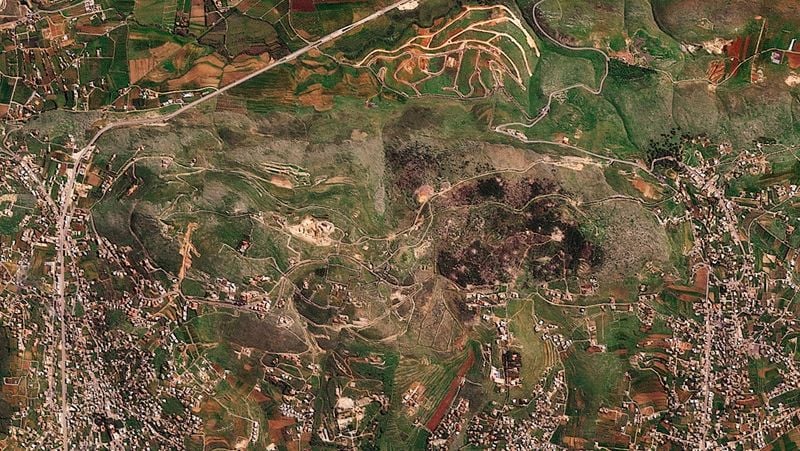
Overnight between Thursday and Friday, 19 June 2026, the Israel Defense Forces said a reserve officer was seriously wounded and four other soldiers — three reserve NCOs and one career NCO — were lightly wounded in an explosive drone strike in southern Lebanon. The IDF Spokesperson's Unit relayed the initial account through multiple Telegram channels in the early morning hours UTC, with the earliest version of the notice timestamped 06:59 on 19 June and subsequent confirmations from other official IDF-facing channels following within minutes. The soldiers were evacuated for medical treatment, the spokesperson added.
The strike is the latest data point in a pattern that has quietly reshaped Israel's defence posture along the northern border: low-cost, slow-flying drones — increasingly the signature weapon of non-state and state-adjacent actors across the region — penetrating areas where manned aircraft and short-range rockets have traditionally dominated. The IDF's overnight notice does not name the operator of the drone. Israeli officials and Western wire reporting have, in past incidents of this kind, attributed similar strikes to Hezbollah or to Iran-aligned militia formations operating from Lebanese territory; the IDF's own wording here is narrower, limiting itself to the location and the casualty list.
What the IDF disclosed
The four near-identical Telegram posts published by the IDF Spokesperson's Unit between 06:59 and 08:12 UTC on 19 June 2026 carry the same operational facts: an explosive drone impacted in southern Lebanon, a reserve officer was seriously wounded, and three reserve NCOs and a career NCO were lightly wounded. All five were evacuated for treatment. The IDF framing — appearing on the official @idfofficial channel, the @amitsegal channel associated with the office's Hebrew-language messaging, the @abualiexpress channel that republishes English-language IDF material, and the @englishabuali channel that mirrors the same bulletin — is consistent in casualty count and language. None of the four posts attribute the strike to a specific actor, and none describe the platform type beyond calling it an "explosive drone."
That restraint is itself notable. In earlier episodes on this front, the IDF Spokesperson's Unit has been quick to attribute blame in the initial bulletin when confidence is high. The narrower overnight language suggests either that identification work is still in progress or that operational sensitivities — a casualty investigation, a pending retaliatory action, or coordination with diplomatic back-channels — counsel against premature attribution.
The northern-front context
Southern Lebanon has been the geographic centre of Israel's campaign against Hezbollah infrastructure since hostilities escalated in late 2023. The Israeli Air Force has conducted sustained strikes against what it describes as Hezbollah command nodes, rocket-launch positions, and drone-assembly sites in the Beqaa Valley and along the Litani corridor. Ground operations, when they have occurred, have typically been carried out by formations holding the northern border sector.
The casualty pattern in this incident — a reserve officer seriously wounded, four others lightly wounded — is consistent with the IDF's published medical-evacuation protocols for low-signature events. A drone impact that detonates near a small unit can produce a single serious casualty from blast or fragmentation while leaving personnel a few metres away with injuries classified as light. The IDF's classification of "lightly wounded" is a clinical designation, not a comment on operational risk.
What the sources do — and do not — say
What the four Telegram notices establish with high confidence: the incident happened overnight between 18 and 19 June 2026 in southern Lebanon; an explosive drone was the vector; five IDF personnel were injured, one seriously and four lightly; and the soldiers received medical treatment. What the notices do not establish: the precise location inside southern Lebanon, the identity of the operator, the drone's origin point (a launch site in Lebanon, a payload released from a manned aircraft, or an airframe that crossed from a neighbouring jurisdiction), and whether the strike triggered a wider operational response from IDF ground or air units.
Those gaps are not unusual for an overnight notice published within hours of an event. They will likely narrow within 24–48 hours as Israeli military correspondents — typically Channel 12, Channel 13, and Kan — file follow-up reporting, and as international wires (Reuters, AP, AFP) consolidate the Israeli account with regional coverage. Until then, the verifiable record is the casualty list, the weapon class, and the location string.
The structural read
Drone warfare on Israel's northern border has been a slow-burn story for three years, not a crisis-of-the-week headline. The strategic question that Friday's incident sharpens is the same one Israeli defence planners have been working through since 2023: how to defend a perimeter in which the most economical attacker tool — a small explosive drone — costs an order of magnitude less than the cheapest reliable countermeasure. Air-defence interceptors, electronic-warfare jamming, and directed-energy systems all have role to play, but each has limits against low, slow, fibre-optic-guided airframes.
A single overnight strike producing one serious and four light casualties is not a strategic event on its own. Read across the year, however, these incidents accumulate. They drive rotation cycles for reserve formations, raise insurance and operational-tempo costs, and create the conditions in which escalation ladders tighten more quickly than they would otherwise. The structural story is the slow compounding of low-cost attrition against a high-cost defender.
Stakes
For Israeli military planners, the immediate stakes are tactical: closing the route of approach the drone followed, refining point-defence protocols for staging areas in southern Lebanon, and ensuring that the medical-evacuation chain performed as the IDF Spokesperson described. For Israeli diplomacy, the stakes are presentational — the framing of attribution in the coming 48 hours will shape how the incident is read in Washington, Beirut, and Tehran. For the residents of northern Israel who live within drone range of the border, the stakes are the same as every previous incident of this kind: another data point in the campaign that has made parts of the Galilee a target zone for low-cost aerial attack.
Monexus frames this incident as a casualty event first, a strategic event second. The wire will lead with attribution once it firms up; Monexus waits for that attribution to be sourced before naming an operator.
Wire provenance
This editorial synthesis draws on the following public wire/social posts:
- https://t.me/englishabuali/4700
- https://t.me/abualiexpress/4120
- https://t.me/amitsegal/5985
- https://t.me/idfofficial/5230