The $300 Billion Iran Question: How Reconstruction Money Becomes a Geopolitical Lever
Reconstruction financing for Iran is being designed right now, and the architecture of who pays whom will outlast whatever peace deal produces it.
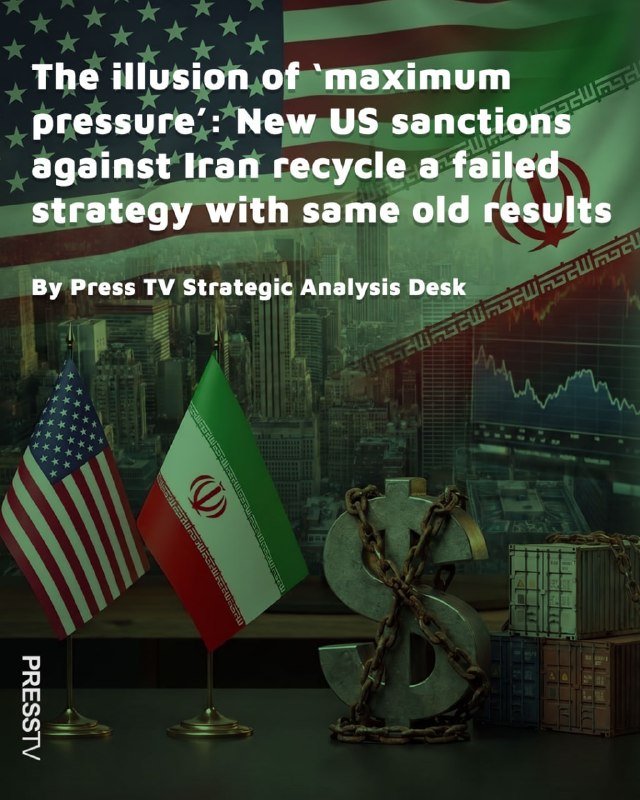
Two numbers, both reported by the Financial Times in mid-June, now anchor every conversation about a post-conflict Iran: roughly $300 billion the United States estimates Iran will need to rebuild, and the $6 billion in frozen Iranian funds tied up in a sanctions-release architecture that has never quite delivered what it promised. The first is a reconstruction cheque; the second is a precedent. Whoever controls the routing of that money, in what currency, through which engineering contracts, will shape Iran's industrial base, its energy mix, and its foreign-policy alignment for a generation. That is why a line item in a development-bank spreadsheet is now being read as a geopolitical instrument.
The $300 billion figure, as cited by the FT, is not a budget. It is an opening bid in a contest over who gets to define the reconstruction itself: how much of it is rebuilding existing hydrocarbon capacity, how much is a pivot to renewables, how much is the social infrastructure a battered population will demand before any government is stable. Each of those choices routes money to a different political constituency inside Iran and to a different external contractor ecosystem outside it.
The $6 billion frozen-funds precedent
The smaller number has already done its work. The roughly $6 billion in Iranian funds frozen in South Korean accounts and released, under a 2023 arrangement reported at the time by the Wall Street Journal, via a sanctions pause in Qatar, set the template. The money did not move freely. It was confined to humanitarian channels, monitored, and consumed by bureaucratic friction as much as by purchase orders. The lesson Tehran drew, according to regional reporting, is that unfreezing money is harder than freezing it, and that the architecture of release matters as much as the headline figure. The $300 billion reconstruction question inherits that architecture.
Why the wording matters
Coverage of the reconstruction gap routinely uses the language of "investment," "partners," and "modernisation." Each word is a choice. "Partners" obscures whether the counterpart is a Gulf state, a Chinese state-owned enterprise, a European export-credit agency, or a private US engineering firm operating under a Treasury licence. The FT's reporting, on the public record, does not name those partners; that ambiguity is itself the story. A reconstruction financed by Gulf petrodollars underwritten in yuan is a different geopolitical outcome from one routed through the World Bank's project lending in dollars, even if the final cement and steel are the same.
The oil-price and currency overlay
The macroeconomic backdrop is not neutral. Reuters' 19 June 2026 wires reported fresh moves in oil and yen pricing on the same day the reconstruction figures circulated, a reminder that any deal will be struck against a moving tape. Reconstruction financing priced in a weak yen or in a surplus oil market is one thing; the same commitments under a tighter oil regime and a stronger dollar become a different contract. The reconstruction envelope is denominated in dollars, but the political risk premium is denominated in credibility: in whether Tehran believes Washington will honour a multi-year drawdown schedule, and whether Washington believes Tehran will route the proceeds through sanctioned banks.
Where the leverage actually sits
Reconstruction money is leverage because it arrives later. By the time a turbine is commissioned, a port dredged, a refinery restarted, the political arrangement that enabled the financing is the one already in place. That is the lesson of the $6 billion precedent: the architecture of release, not the headline number, is what survives. The question for policymakers in Washington, in the Gulf, in Beijing, and in Tehran is not how much Iran needs to rebuild. It is whose engineers, whose auditors, and whose central-bank clearing arrangements are sitting in the room when the first tranche is approved.
Sources
- Financial Times, reporting on the $300 billion Iran reconstruction estimate and the $6 billion frozen-funds architecture (June 2026).
- Wall Street Journal, reporting on the sanctions-pause mechanism for the release of the roughly $6 billion in frozen Iranian funds (2023).
- Reuters, 19 June 2026 wires on oil and yen price moves (
- Reuters wire, 19 June 2026: oil and yen price action surrounding Iran reconstruction reporting.
- Financial Times, June 2026 coverage of the $300 billion reconstruction estimate and the precedent set by the $6 billion frozen-funds architecture.
- Wall Street Journal, 2023 reporting on the sanctions-pause mechanism governing the release of approximately $6 billion in Iranian funds.
Desk note
Monexus treats the $300 billion figure and the $6 billion frozen-funds figure as reported by the Financial Times, with the sanctions-pause detail attributed to the Wall Street Journal. The oil-price and yen moves are sourced to Reuters' 19 June 2026 wires. Where the FT's reporting does not specify the identity of "regional partners," this publication has said so rather than guess.