A 60-day ultimatum and a Tehran warning shot: the Iran deal is still being written in public
JD Vance met Iranian officials on Sunday under a 60-day ultimatum the Trump administration set in June, even as the president publicly threatened to resume the war the interim deal was meant to pause.
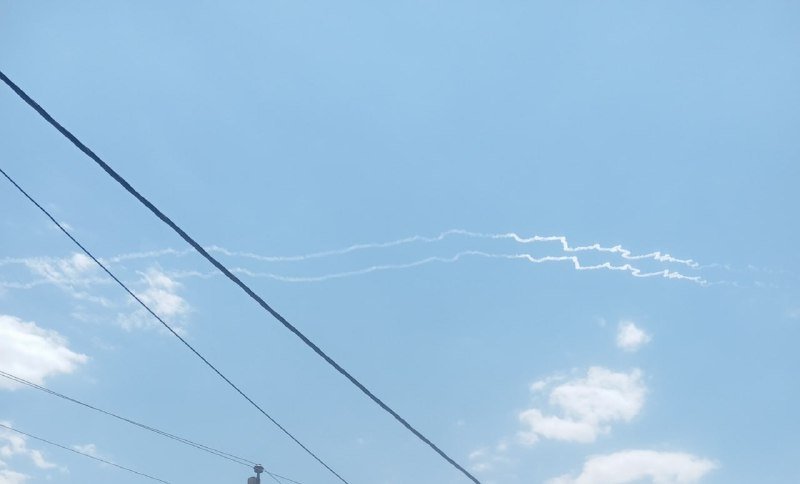
JD Vance sat down with Iranian officials on Sunday for the first direct US-Iran technical talks under the interim peace deal, even as Donald Trump publicly threatened to restart the war that the accord was meant to pause. The dual posture, a negotiating table in one room and a war footing in the next, captured the strangeness of a diplomatic process that began with the Strait of Hormuz reopened and the guns only half-silenced.
Iran's delegation "is still present and the talks are continuing," an American official told Al Jazeera late in the evening, after earlier reporting had suggested the Iranians might have walked out. Tehran, for its part, framed the meeting in martial terms. President Masoud Pezeshkian said Iran had "no fear of defending its legitimate rights," language the IRNA wire carried almost verbatim across Persian and English feeds within the same hour.
A deadline and a warning, in the same news cycle
The June 19 Washington deadline that forced this round of talks was, in effect, a 60-day ultimatum on Iran's nuclear file: comply, or face a resumption of strikes that the Trump administration has never quite conceded ended in defeat. The New York Times reported that the US campaign in Iran had failed on its own terms; the president hit back at the paper as "corrupt," a charge that, whatever its merits, signalled the domestic political stakes of any deal that looks like a climbdown.
That is the lens through which Vance's softer language has to be read. The vice president called Iran "a driver of regional instability" but said he now saw "a future where everybody can work together to promote peace and prosperity." The phrase is the standard Geneva-accent English of interim agreements: a paragraph of condemnation followed by a paragraph of possibility, designed to let both sides sign without appearing to forgive each other.
Tehran's parallel messaging
Iranian state outlets spent Sunday running two clocks simultaneously. Tasnim and Fars carried IRGC Major General Rezaei's demand that "America must be held accountable for the aggression of the Zionist regime in Lebanon," tying the diplomatic track to a regional file the interim deal explicitly brackets. PressTV ran the football result, Iran holding Belgium to a goalless draw in Los Angeles, as a soft-power narrative of resistance under siege. IRNA delivered the negotiating line: rights will be defended, but talks continue.
The economic signal was harder to ignore. TankerTrackers, relayed by wfwitness, reported that Iran had exported 36 million barrels of crude since 15 June, with roughly the same volume still floating in Iranian waters. That is the visible benefit of the ceasefire: barrels are moving again, and Tehran's leverage in the room rises with every cargo loaded.
What the framework says, in plain terms
Interim deals live or die on what they leave unfinished. The Geneva accord, judged by Sunday's reporting, is built on three moving parts: a paused rather than terminated military campaign, a sanctions and export regime that Iran is already exploiting, and a nuclear question whose resolution has been punted into a later, harder round. Each of those parts contains its own contradiction. A pause can become a precedent or a prelude. Revenue flows can either buy confidence in the process or fund the next escalation. And a deadline-driven nuclear track that produces a 60-day clock on the next 60 days is not a settlement; it is a recurring crisis.
The Iranian messaging is calibrated to that structure. By keeping the talks nominally alive, Tehran holds open the channel through which the oil revenue keeps flowing. By insisting in parallel that "America must answer" for regional actions by Israel, Iranian outlets preserve the option of treating the deal as cover for a wider confrontation the moment it becomes inconvenient.
The durable unsettlement to watch
The open question, and the one the wire today cannot resolve, is how the Geneva architecture lands on the US congressional question. A deal signed only by the executive can be unwound by the next one; a deal that requires Senate sign-off will carry a different durability, and a different political price. Iran's negotiating position, observe Tehran-based analysts, is partly a bet on that distinction.
Watch Friday's signing ceremony in Geneva. Watch whether the text is published, in full or in part, and whether any sanctions relief is described as temporary or structural. The interim peace deal is being written, as the headline says, in public. The question is not whether the next deadline arrives. It is whether, when it does, anyone is still at the table.
Sources
- Reuters on X, Trump threatens to restart war as Vance meets Iranian officials, 2026-06-21
- Middle East Eye, Vance: "a future where everybody can work together to promote peace and prosperity", 2026-06-21
- Middle East Eye live blog, US and Iran confirm peace accord signing set for Friday, Geneva
- IRNA English (Telegram), Pezeshkian: Iran has "no fear" of defending legitimate rights
- Tasnim News (Telegram), Major General Rezaei on US responsibility for Israeli actions in Lebanon
- Tasnim Plus (Telegram), US official to Al Jazeera: Iranian delegation still present, talks continue
- Witness / TankerTrackers via Telegram, 36 million barrels exported since 15 June
- OANN via Telegram, Trump blasts NYT over Iran conflict reporting
Desk note: Monexus is reading the 19 June Geneva round as a single negotiation, not two parallel stories. Where the eventual text lands on the US congressional question is not knowable from today's open sources; we have flagged it as the durable-unsettlement to watch.
Follow the event.
These dated source records provide context. They do not retrospectively verify this archive article.
Separate what the nuclear watchdog reported from what it could not determine after the June 2025 strikes.