Tehran's 60-Day Strait of Hormuz Gambit: A Managed Crisis or the Opening Move?
Iran's foreign ministry says it will draft a new regional mechanism for the Strait of Hormuz within 60 days and suspend any fees during that window — a calibrated signal that reads either as de-escalation or as the setup for a more durable arrangement Tehran controls.
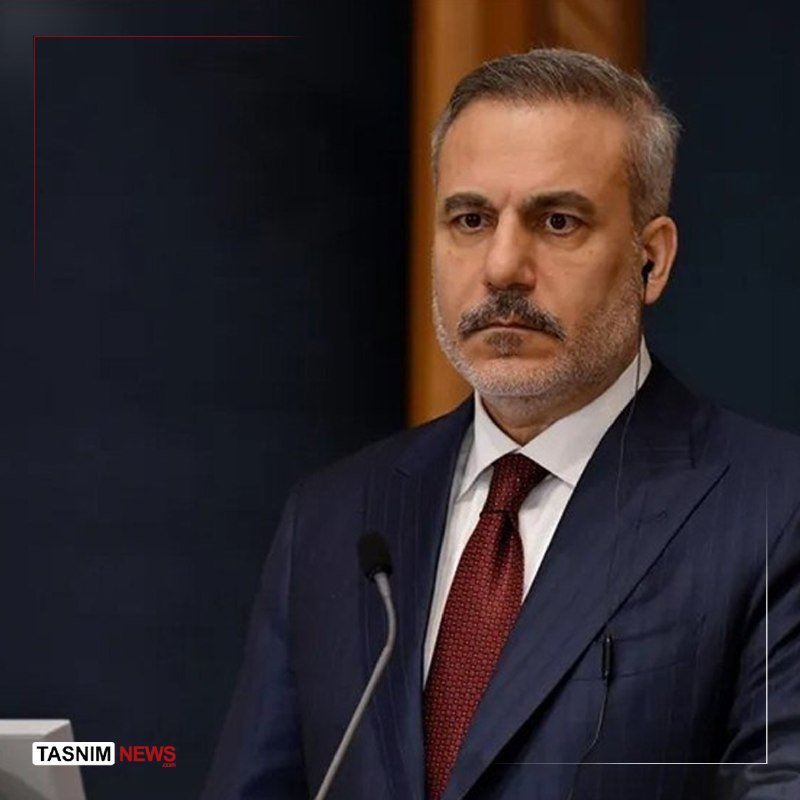
On 19 June 2026, in a sequence of statements carried by Iran's Arabic-language state outlet Al-Alam, foreign ministry spokesperson Khatibzadeh laid out a four-part posture on the Strait of Hormuz that the region's shipping insurers, Gulf monarchies, and back-channel negotiators are now scrambling to read. The message was specific: Iran will draft a new regional mechanism to manage the strait within 60 days; it will not impose transit fees during that window; navigation services will be coordinated with the Sultanate of Oman under international law; and a memorandum of understanding already in hand calls for the immediate implementation of five items. Tehran, in other words, is not threatening to close the world's most consequential oil chokepoint. It is threatening to administer it.
The framing matters. Roughly one-fifth of seaborne crude and a comparable share of liquefied natural gas transits the 21-mile-wide shipping lane between Iran and Oman. Any Tehran-led management scheme that survives the 60-day window reshapes a corridor that has, for decades, operated under a tacit US-led maritime-security umbrella. The announcement lands as diplomatic traffic between Tehran, Muscat, and Gulf capitals has visibly thickened — and as Iranian and American negotiators have edged closer to language on nuclear constraints in exchange for sanctions relief.
What Tehran is actually offering
Strip the rhetoric and the proposal has three working parts. First, the timeline: 60 days to draft, and presumably to consult with, a "new mechanism" governing the strait. Second, the financial signal: no fees during the drafting period, an explicit acknowledgement that unilateral tolling would torpedo any regional buy-in. Third, the operational hand-off: navigation services delivered in coordination with Oman, the one Gulf state with a long-established diplomatic channel to Tehran and a coastline that actually borders the shipping lane.
The five-item memorandum Tehran references is the procedural spine. It is the kind of document that, when implemented, locks in on-the-water coordination — pilot services, traffic separation, incident response — and quietly displaces the patchwork of bilateral arrangements that have governed the strait since the 1980s tanker-war era. The phrase "immediate implementation" is doing serious work in the original; it converts a political signal into an operational fact on a fast clock.
The counter-read: a delay, not a concession
The Western and Gulf-Arab capitals that have spent two decades arguing that the strait must remain a multilateral commons will hear something different in this package. The 60-day window is, in their reading, a managed pause. No fees today does not mean no leverage tomorrow; a regional "mechanism" drafted in Tehran and Muscat is a mechanism in which Washington, Riyadh, and Abu Dhabi are stakeholders without a seat. The phrase "in accordance with international law" is doing the same heavy lifting here that "self-defence" does in other foreign ministries' communiqués — present, reassuring on its face, and ultimately unfalsifiable.
There is also a tactical case to be made that Tehran gains more from a slow, multilateral process than from a dramatic closure. A closed strait would trigger a US naval response and unify a Gulf coalition currently divided over post-war regional architecture. A negotiated strait puts Iran in the room as a manager, not a saboteur, and converts a security problem into a diplomatic one — exactly the kind of problem Iran's diplomatic service has spent forty years learning to play.
What 60 days buys and what it costs
For shipowners and refiners, the next two months will be a hedging exercise. Insurance premiums for VLCCs transiting Hormuz will price in a tail risk that did not exist a week ago. Refiners in Asia, who took roughly 80% of Gulf crude flows in 2025, will weigh the option of pre-stocking and rerouting around the Cape of Good Hope. For Oman, the announcement is an opportunity to consolidate its position as the indispensable Gulf mediator — a role Sultan Haitham's government has quietly cultivated for five years and one that Gulf petrodollars and Western aid can now both reinforce.
For Tehran, the costs are subtler. The 60-day clock is also a credibility clock. If the mechanism is not drafted, or is drafted and rejected by regional powers, the strait reverts to its earlier contested status — and Iran loses the diplomatic capital it has spent the past quarter building. The four-part package reads, in that sense, like a confidence-building measure aimed at two audiences simultaneously: the negotiators in the room and the hardliners at home who want a more confrontational posture.
The structural read
Whatever the diplomatic choreography, the underlying shift is structural. For two generations, Hormuz has been a chokepoint the United States Navy policed as a global public good. Tehran's announcement — whether it materialises or not — is the opening move in a longer argument that the policing of that public good should be regionalised, with Iran at the table as a rights-holder rather than a disruptor. It is the maritime analogue of a wider argument Tehran has been advancing across the Caucasus, the Levant, and the Indian Ocean: that the security architecture built in the 1970s is no longer the only architecture on offer.
That is the part of the story the daily headlines will miss. A 60-day mechanism is not, on its own, a crisis. It is, however, the first time in this decade that a sitting Iranian government has put a formal, dated, written proposal on the table for the governance of a corridor that the world economy cannot do without. The next two months will tell us whether that paper becomes a settlement or whether it becomes the document Iran cites when it imposes its own rules anyway.
What remains unresolved
The Al-Alam statements do not name the other parties to the memorandum, do not specify the five implementation items, and do not indicate whether the 60-day clock is the same 60 days referenced in parallel Iran-US nuclear talks. The sources available to this publication do not specify casualty figures, financial figures, or specific cargo volumes affected. Whether Oman's foreign ministry has issued a parallel confirmation, whether the GCC secretariat has been formally briefed, and whether Tehran has shared the draft text with Washington remain open. Those are the data points that will decide whether the package is a confidence-building measure or a countdown.
This article draws exclusively on Iranian state-media statements carried via Al-Alam. Monexus will treat parallel confirmation from Oman's foreign ministry, the GCC secretariat, and Western wire services as the evidentiary threshold for any follow-on reporting.
Wire provenance
This editorial synthesis draws on the following public wire/social posts:
- https://t.me/alalamarabic
- https://t.me/alalamarabic
- https://t.me/alalamarabic
- https://t.me/alalamarabic
- https://t.me/alalamarabic