Iran's Strait of Hormuz transit regime takes effect, but the underlying deal remains undisclosed
Tehran has formalised a transit-permission system for the Strait of Hormuz, citing an Islamabad memorandum — without publishing the text — as tanker traffic through the world's most consequential oil chokepoint enters a new regulatory phase.
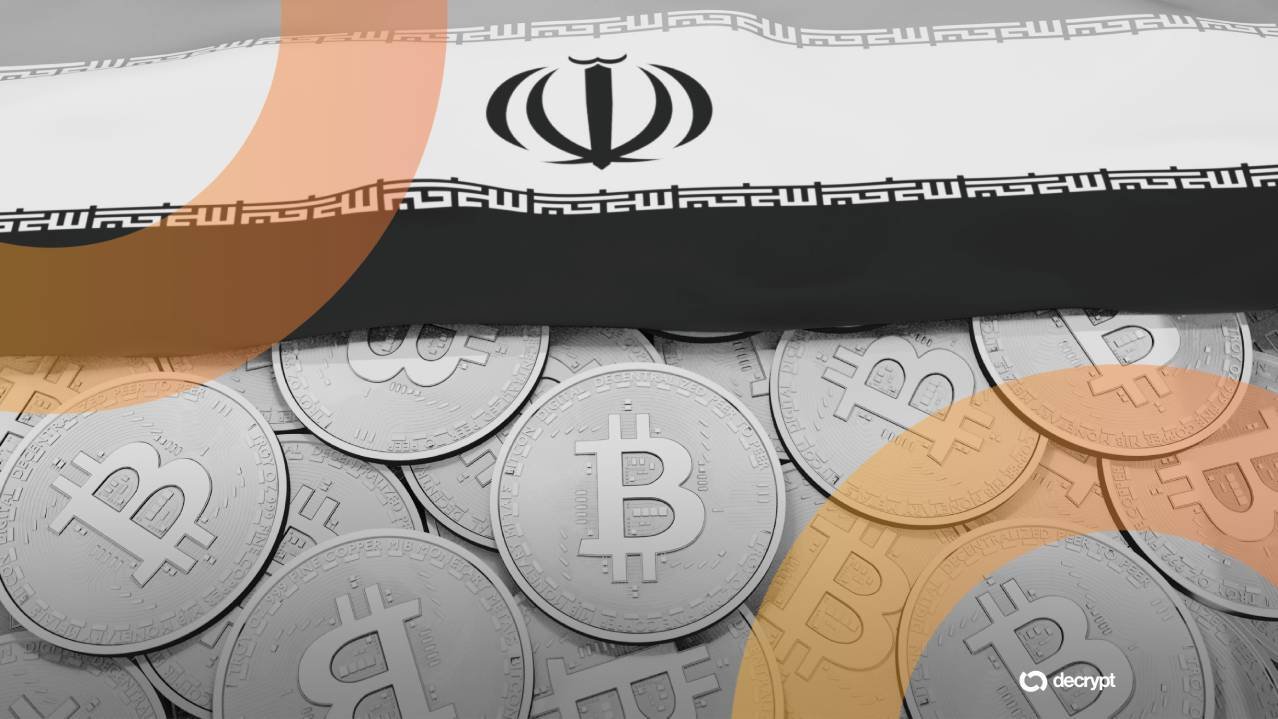
Iran's Strait of Hormuz Management Authority moved on Friday, 19 June 2026, to formalise a transit-permission regime for one of the world's most economically vital waterways. According to Telegram channel @alalamarabic, which posted an urgent bulletin at 12:24 UTC, vessels that "submit transit requests and adhere to the requirements will be allowed to pass," a phrasing that recasts a free-transit corridor as a discretionary service administered from Tehran.
The same bulletin invokes an "Islamabad memorandum" as the legal-political basis for the reopening — a document no outlet has yet published, and one whose existence rests, for now, on assertions from Iranian and Iranian-adjacent channels rather than on the diplomatic record. The channel @wfwitness, posting at 13:06 UTC, described "new navigation procedures" requiring ships to "coordinate passage requests through Iranian authorities and follow designated inbound" corridors, a structure that effectively turns the strait into a permit zone rather than an international passage.
Taken together, the three wire items — two Telegram posts from Iranian and Iranian-aligned accounts and one X post from @sprinterpress announcing the "reopening" — describe a single event: Iran has converted a tactical disruption risk into an institutionalised regulatory regime, and has done so under cover of an unreleased diplomatic text.
What was actually announced
The substance of the 19 June announcement is procedural, not punitive. Vessels that lodge a transit request and accept Iranian routing will be permitted to cross; vessels that decline the process risk the same fates — delay, diversion, or boarding — that have shadowed the strait through every escalation cycle since 2019. The @sprinterpress X account framed the move as a "reopen[ing] to approved shipping," language that flatters the Iranian position while obscuring the fact that, for many operators, "approved" will mean the only available option.
The announcement does not specify which flag states, classes of vessel, or cargo categories fall under the regime, nor does it describe sanctions-compliance screening, insurance treatment, or the penalties for non-compliance. Iranian state media has historically used these gaps as leverage — each ambiguous clause becomes a future bargaining chip — and Friday's bulletin contains the same productive vagueness.
The Islamabad memorandum and the absence of proof
The new procedures are explicitly grounded in an "Islamabad memorandum" whose text has not been published. Iranian channels refer to it as a fait accompli; the framing suggests a Pakistani-mediated agreement between Tehran and an unnamed counterparty, almost certainly Washington, brokered outside the formal JCPOA architecture that has governed — or failed to govern — Iran's nuclear file since 2018.
The diplomatic provenance matters. A memorandum with a published text would carry the weight of a treaty-equivalent instrument, would invite third-party compliance, and would impose reciprocal obligations on Iran. A memorandum cited by the regulating party alone is a unilateral declaration dressed as bilateral consent. Until the document is produced — and the entities that negotiated it identified — the procedural regime in Hormuz is best read as Iranian policy by other means, not as the implementation of an external deal.
Structural frame: chokepoint as leverage
Roughly a fifth of the world's seaborne crude — and a comparable share of liquefied natural gas — transits the strait. Any institutional layer that sits between a tanker and that transit route is, functionally, a tax on global energy supply. Iran's regime does not invent the leverage; the geography does. What it does is convert latent leverage into a standing revenue-and-compliance instrument, much as a processor's fee sits invisibly on top of every card transaction.
The structural pattern is familiar from other contested corridors: a state with geographic veto power formalises a permission system, pairs it with a diplomatic narrative that confers legitimacy, and then extracts compliance from operators whose only alternative is to absorb the cost of refusal. The Strait of Hormuz is the highest-stakes case of this template because no realistic bypass exists. Pipelines from the Gulf run at a fraction of seaborne capacity; the overland routes through Saudi Arabia and the UAE do not connect to the same crude streams; the Cape route adds weeks and substantially more fuel burn. Tehran is selling access to something the world cannot easily rebuild.
Stakes and the forward view
For Tehran, the regime offers three things at once: a revenue and licensing apparatus, a sanctions-evasion channel under state control, and a tripwire for any future escalation — the moment any party attempts to challenge the procedural rules, the strait becomes a defensible crisis rather than an open waterway. For Gulf producers, the regime converts their own exports into hostages of Iranian administrative discretion, raising the political cost of any posture Tehran finds objectionable. For major importers — China, India, Japan, South Korea, and the European Union — the regime imposes an unpriced compliance burden that will, over time, be priced into freight, insurance, and crude differentials.
The unresolved question is what the Islamabad memorandum actually contains. The Iranian bulletins describe a deal; the absence of a published text and the silence of Western and Gulf counterparts leave that description unsubstantiated. It is plausible that a quiet US-Iran understanding exists, in which Washington accepts Iranian administrative primacy in the strait in exchange for de-escalation on nuclear deliverables and the release of detained Western nationals. It is equally plausible that Tehran is moving unilaterally and naming a non-existent accord to dress up the move. The next forty-eight hours — whether the US Navy's Bahrain-based Fifth Fleet issues an operational directive of its own, whether Saudi and Emirati authorities publish parallel guidance, and whether any third-party government confirms it was a signatory — will determine which read holds.
What is already clear is that the regulatory texture of the Persian Gulf has changed. The waterway is open. It is also, for the first time, administered.
— Desk note: Monexus treated the 19 June bulletins as Iranian-source material; where the announcements claim a bilateral memorandum, the desk flagged the absence of published text rather than treating the claim as confirmed. Where @sprinterpress framed the move as a "reopening," the desk retained the framing but distinguished it from the Iranian framing of a "new procedural regime" — the distinction matters for how operators, insurers, and governments will price compliance in the days ahead.
Wire provenance
This editorial synthesis draws on the following public wire/social posts:
- https://t.me/wfwitness
- https://t.me/alalamarabic
- https://t.me/alalamarabic