Iran walks back from Switzerland as Israeli strikes in southern Lebanon freeze the US-Iran track
Tehran has shelved the first round of US-Iran talks in Switzerland hours after Israeli operations in southern Lebanon, leaving the deal's 60-day clock effectively frozen and the regional track in renewed suspense.
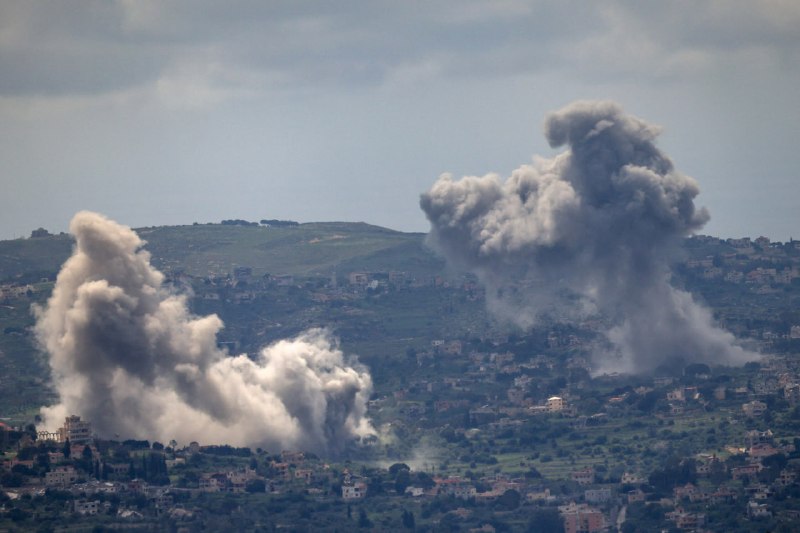
Iranian negotiators were due in Switzerland on Thursday 18 June 2026 for the opening round of indirect talks with the United States. By 22:27 UTC, that trip was off. According to a Cointelegraph wire carried over Telegram, citing the Iranian side, the delegation had been suspended "following ongoing Israeli military operations in southern Lebanon." Within minutes, Middle East Eye's live blog confirmed the delay: the headline read, simply, "Iranian negotiators delay Switzerland talks trip after Israeli strikes in southern Lebanon." A separate, parallel account from the Cointelegraph channel described the move as the suspension of Iran's "60-day negotiation process with the U.S.," triggered by what Tehran characterised as a violation of the agreement's first clause.
The cancellation is more than a logistical hitch. It reopens a fault line that had been papered over by a fragile diplomacy: the gap between the bilateral US-Iran track, which Washington has been trying to keep on rails, and the regional track, where Israel and Iran-linked forces are still trading blows. The 18 June freeze suggests that the two tracks can no longer be decoupled — and that the cost of holding them apart is now being paid in real time.
A security incident, kept quiet
The trigger was reported in Israeli media in the most cautious possible terms. At 23:02 UTC on 18 June, the Telegram channel DDGeopolitics relayed an Israeli press item: "A complex and difficult security incident in southern Lebanon — details under censorship." No casualty figures, no weapon system, no target. Israeli practice in such cases is to withhold operational detail while an incident is still active, and then to publish a fuller account — usually through the IDF Spokesperson or a senior officer — within hours. As of the latest available reporting, that fuller account has not yet been released.
What can be said with the sourcing available: an operation of sufficient scale occurred on 18 June in southern Lebanon for the Israeli press to be operating under a military censor's restrictions, and for the event to be invoked by Iran as a material breach of the negotiating framework. The framing on the Iranian side — that Israel had violated "the first clause" of whatever arrangement preceded the talks — is a political reading, not a confirmed legal finding. The reporting simply establishes the sequence: Israeli action first, Iranian walk-out second.
The 60-day clock, and what suspending it actually means
The Cointelegraph-cited Iranian framing refers to a "60-day negotiation process." That figure is consistent with a framework that has been reported, in fragments, since the spring: a two-month window in which Washington and Tehran would attempt to convert a de-facto pause in escalation into a more durable arrangement, with sanctions relief on the US side and verifiable constraints on the Iranian nuclear file as the centre of gravity. The mechanism was always aspirational. Neither side had signed a binding text; both sides were operating under understandings, intermediaries, and a shared interest in avoiding a return to open confrontation.
Suspending the clock does not kill the process. It does, however, do three things at once. It signals, to a domestic Iranian audience, that Tehran will not be seen to negotiate under fire. It hands Washington a problem: Steve Witkoff's envoy team had been working the channel from the US side, and an empty chair in Geneva is a more visible setback than a slow walk. And it raises, for Israel, the cost of further operations inside Lebanon in the near term — every strike now has a diplomatic multiplier, whether the Israeli government wants it or not.
The structural point is plain. Diplomacy between adversaries who do not recognise each other runs on parallel confidence-building measures. When the regional track produces a shock, the bilateral track inherits the damage. There is no technocratic fix for that; there is only a political decision to restart, or to let the clock run out.
The regional track: what is being hit, and by whom
Southern Lebanon is not an abstract theatre. It is the operational hinterland of Hezbollah, the Iran-aligned Shia movement whose armed capability has been degraded but not dismantled over the past two years of intermittent conflict. Israeli operations in the area are a standing item on the regional agenda, both because of the rocket threat to northern Israel and because the territory sits inside the wider contest between Israel and the Iran-aligned axis. To describe the strikes as disconnected from the US-Iran track is to misread the architecture. The strikes are, in effect, a third-party veto on the diplomacy the Americans are trying to construct.
This is not a new dynamic. The previous round of US-Iran negotiations, run through Omani and Qatari intermediaries, repeatedly stalled when Israeli action in Syria or Lebanon produced an Iranian response. The pattern is consistent: the parties to the bilateral channel can agree on a text; the parties to the regional track can prevent that text from being implemented. What is new this week is the timing — the suspension landing on the day the delegation was meant to fly — which gives Tehran a clean domestic justification for staying home.
The other new element is the explicit invocation of a "first clause." That phrasing implies there is a written or quasi-written understanding, with a hierarchy of provisions, and that the Iranian side believes one of them has been crossed. Whether that clause covers sovereignty of negotiations, a tacit ceasefire in the region, or something more specific is not yet visible in the open-source reporting. The Iranian move is best read as a deliberate ambiguity: a public hook on which a future return to the table can be hung, with Iran's reputation for resolve intact.
Counter-narrative: a tactical delay, not a collapse
The Western wire line on this story is, broadly, that the Iran-US track is in trouble. That is the obvious read. The plausible alternative is that the suspension is a managed delay — a cooling-off window during which both sides can claim to be defending their red lines while preserving the architecture. Iran's foreign policy apparatus has used walk-outs before, in 2019 and again in 2023, as a lever to extract adjustments from the US side. The 60-day clock, if it is paused rather than cancelled, can resume from the same point.
The reason the dominant framing is more convincing than the alternative is the regional context. The Israeli operation in southern Lebanon is not framed, in any of the reporting, as a one-off; it sits inside a continuing campaign. A tactical delay works when both sides want the talks to survive. The current Israeli tempo suggests the Israeli government has not, at least in the short term, calibrated its operations to protect the diplomatic channel. That is the variable that turns a walk-out into a crisis.
A second counter-narrative — that Iran is using the incident as a pretext to abandon a process it had already decided to leave — is harder to assess from open sources. The Iranian statements on record describe the move as a response to a violation, not a withdrawal. The framing is recoverable, which suggests the channel is being paused, not closed.
Stakes and forward view
For Washington, the immediate cost is reputational: the channel the administration had been selling as proof of its crisis-management competence has, for the second time this year, been interrupted by events outside its control. The next seventy-two hours will determine whether the US team can hold the frame together by remote means — calls, intermediaries, a rescheduled date — or whether the Iranian side chooses to let the suspension harden into a refusal.
For Iran, the cost is paid in leverage. The 60-day window was, on the Iranian reading, a chance to lock in partial sanctions relief before any further US administration took office. That window is now shorter, regardless of how the next move is staged. The Iranian decision to invoke a "first clause" also commits Tehran to a defined standard: if the talks resume, Iran will be expected to demonstrate that the cited violation has, in fact, been reversed.
For Israel, the stakes are different. Operations in southern Lebanon have been conducted on the Israeli security logic that residual Hezbollah capability must continue to be degraded. The diplomatic cost — a frozen US-Iran channel, a more exposed Saudi and Gulf track, a European Union with limited appetite to absorb more regional shocks — is real but diffuse. The security benefit, on the Israeli calculation, is concrete and immediate. The internal Israeli debate over how to balance the two is not visible in the open reporting, but it is plainly live.
For Lebanon, the country hosting the operation, the picture is grimly familiar. Each cycle of southern Lebanese operations deepens the country's political crisis, weakens state authority along the border, and adds to a displacement burden the central government cannot absorb. The reporting does not yet include Lebanese official statements on the 18 June incident, and that absence is itself a data point: the Lebanese state is not, in the current architecture, a party to the conversation that produced this week's suspension.
What the sources do not yet tell us
Several important elements remain unverified or simply out of the open record. The scale of the Israeli operation in southern Lebanon is not yet disclosed by the IDF Spokesperson; the casualty figures, if any, are not in the thread; the specific "first clause" that Iran claims was violated is not in the public reporting; the role, if any, of Omani, Qatari, Swiss, or Chinese intermediaries in the 60-day framework is not visible in the materials available to this publication. The sources also do not specify whether the US side has, in the hours since 22:27 UTC, formally requested a resumption, or whether the channel is being held in deliberate silence.
What can be said with confidence is the sequence: an Israeli security incident in southern Lebanon, under media censorship; a delay in the Iranian delegation's travel to Switzerland; and a public framing on the Iranian side that ties the two together. Beyond that, the architecture of the story is being built in real time, and the next data points — an Israeli briefing, a US State Department read-out, a return flight to Geneva — will do most of the work of determining whether 18 June 2026 is remembered as a hiccup or a turning point.
This article draws on Telegram-channel and Middle East Eye reporting published on 18 June 2026. Where the open record is silent, the text flags the gap rather than infer it. Monexus will update as the Israeli censor's restrictions are lifted and as the US-Iran track clarifies its next move.
Wire provenance
This editorial synthesis draws on the following public wire/social posts:
- https://t.me/DDGeopolitics
- https://t.me/megatron_ron
- https://t.me/Cointelegraph
- https://t.me/cointelegraph
- https://t.me/s/megatron_ron
- https://t.me/s/DDGeopolitics
Follow the event.
These dated source records provide context. They do not retrospectively verify this archive article.
Separate what the nuclear watchdog reported from what it could not determine after the June 2025 strikes.