A Fragile Calm: Israel, Hezbollah, and the Day a Ceasefire Began With a Strike
A ceasefire between Israel and Hezbollah took effect on 19 June 2026, only for an Israeli airstrike to hit Kfar Rumman within minutes. The sequence tells a story about deterrence, ambiguity, and the limits of US-brokered deals.
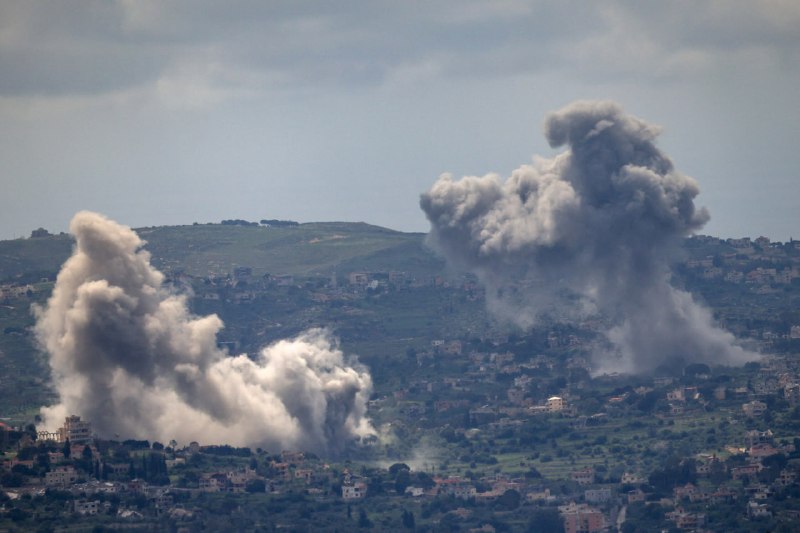
At 13:07 UTC on 19 June 2026, a channel affiliated with regional conflict monitoring reported two sentences that, taken together, captured the entire paradox of the day. The first read: the Hezbollah-Israel ceasefire has begun. The second read: Israeli airstrike on Kfar Rumman, southern Lebanon. The two messages arrived inside the same post, separated only by an emoji. Within minutes, Prime Minister Benjamin Netanyahu had made clear, in remarks relayed by the English-language aggregator @englishabuali at 13:12 UTC, that Israel "will not tolerate attacks on our soldiers or on our territory, and it will exact a very heavy price from Hezbollah for these attacks," and that "the IDF will act to thwart any thre[at]." The choreography was unmistakable. A diplomatic instrument had come into force; a kinetic instrument was being used to define its boundaries.
The story of this ceasefire is not, in the end, a story about who fired last. It is a story about who decides what counts as firing, and on whose authority. Below the surface of the wire alerts lies a layered negotiation in which the United States has reportedly told Iran that Israel will not further escalate military action in Lebanon — a message delivered, according to instant-news reporting circulated at 12:46 UTC, to keep nuclear talks on track. The architecture is familiar. The piece on the board in Lebanon is a holding pattern; the prize is somewhere else entirely.
A ceasefire that begins with a strike
For a ceasefire to mean anything, both sides must agree on what is permitted in the minutes and hours after it takes effect. On 19 June, the air over southern Lebanon offered an early test. The strike on Kfar Rumman, reported in real time by open-source intelligence accounts, came inside the window in which the new arrangement was supposed to be most fragile and most binding. Reporting on the strike did not specify what had been hit, what the casualty toll was, or whether the target was a Hezbollah position, a launch site, or a residential structure — a gap that mirrors the larger gap in publicly available detail about the negotiations that produced the arrangement itself.
Netanyahu's statement, transmitted within minutes of the strike, did not directly address Kfar Rumman. It addressed the principle. Israel, the Prime Minister said, would exact "a very heavy price" for attacks on soldiers or territory, and the IDF would act to prevent threats. The formulation is significant precisely because it is not a denial. It is a description of doctrine, applied to a moment in which a strike had already occurred. The line between "the ceasefire has begun" and "the IDF will thwart any threat" is, in practice, drawn by the side with the air force.
The pattern is not new. In previous rounds of Israel-Hezbollah fighting, ceasefires have been punctuated by strikes and counter-strikes in their opening days, each justified by the launching party as a response to the other's provocation. The new wrinkle is the explicit public framing: the Israeli Prime Minister is no longer waiting to be asked whether the strike is consistent with the ceasefire. He is stating, in advance, that a strike is the implementation of policy.
The American channel, and what it is buying
The second thread of the day, quieter and more consequential, ran through Washington and Tehran. According to instant-news reporting aggregated at 12:46 UTC, the United States has informed Iran that Israel "will not further escalate military action in Lebanon," and that the message was delivered in an effort to keep nuclear talks on track. The framing positions Lebanon as a managed theatre and the Iranian file as the main event. Hezbollah's rocket and drone capability, in this read, is treated as a pressure valve on a much larger negotiation; the ceasefire is a way of turning that valve to the closed position without breaking the pipe.
The arrangement is plausible, but the evidence is thin. The reporting is single-source in the thread context, framed as an American message to Iran rather than as a formal commitment, and there is no published text of any such assurance. If the US is indeed holding Israel to a non-escalation line in Lebanon, it is doing so off-camera, in a channel that has historically been used for precisely this kind of unbundling — tactical restraint in one arena in exchange for movement in another. The question is not whether the channel exists. The question is whether Tehran believes it.
There is a counter-narrative worth taking seriously. The Israel-Hezbollah ceasefire, on this reading, is not a confidence-building measure on the way to a nuclear deal. It is a confidence-building measure on the way to a recognition that no such deal is coming, and that both Washington and Tehran need to lower the temperature in Lebanon before the autumn political calendar — US midterm positioning, Iranian leadership transitions, and Israeli coalition arithmetic — imposes costs neither side can afford. The strike on Kfar Rumman, on this reading, is not a violation; it is the price of admission, paid in Lebanese real estate rather than in Iranian nuclear facilities.
Deterrence, doctrine, and the politics of the last strike
Israeli security doctrine, as articulated in public by successive governments, treats ambiguous ceasefires as deterrence laboratories. The purpose of a strike in the first hours of a calm is not to break the calm. It is to set the threshold at which the calm will be broken. Netanyahu's statement — that Israel will exact a heavy price — is the public form of that doctrine. The strike on Kfar Rumman is the operational form. Together, they communicate the same message to two different audiences: to Hezbollah, that any test of the new line will be met with force; to a domestic Israeli audience, that the government has not traded security for a diplomatic convenience.
Hezbollah's public position has not been delivered through the channels cited in this thread, and the absence is itself information. When a side that has historically broadcast its own operations in real time is silent, the silence is usually coordinated. It is consistent with a leadership that wants the ceasefire to hold long enough to be useful to its Iranian patron, and that is willing to absorb a strike in the opening hours rather than escalate into a fresh round that would foreclose the larger arrangement. The strategic logic is cold. The arithmetic is Israeli airpower, and the limits of Iranian escalatory tolerance, weighed against the cost of an open-ended southern front at a moment when the nuclear file is in play.
The pattern fits a longer arc. Each round of Israel-Hezbollah fighting in recent years has ended not with a peace agreement but with an understanding, enforced by the implicit threat that the alternative is worse. The understandings have held for months or years at a time, then frayed under the pressure of secondary conflicts — in Syria, in Gaza, in the Iranian-backed axis more broadly. The current arrangement enters that lineage with an unusually heavy load of unresolved business stacked behind it.
What the wires do not yet say
A reader working only from the reporting in the public thread of 19 June cannot answer several questions that a serious assessment of the ceasefire requires. How many civilians, if any, were killed or wounded in the Kfar Rumman strike? Was the target a Hezbollah military position, a residential building, or infrastructure? Has the Israeli military published a formal statement on the strike, or is the Prime Minister's office the only authoritative voice? Has Hezbollah, formally or through affiliated media, accepted the ceasefire, rejected it, or conditioned it on reciprocal Israeli behaviour? Is the US message to Iran on non-escalation in Lebanon a single diplomatic communication, a standing understanding, or aspirational framing by one side of a conversation? The thread context, by design, captures the moment. It does not capture the next 72 hours, and the next 72 hours are usually when ceasefires are either ratified in practice or quietly abandoned.
The honest framing, then, is that on 19 June 2026 at approximately 13:07 UTC, a ceasefire that may or may not hold began, and an airstrike that was not a ceasefire violation, or that was, depending on who you ask, landed in a Lebanese village whose name most readers will encounter for the first time today. The larger architecture — the US-Iran channel, the Israeli doctrine of calibrated strikes, the Lebanese territory in which the two meet — is plausible, is consistent with how similar arrangements have been built and broken in recent years, and remains, for the moment, more asserted than documented. The day is not over. The story is not finished. The flag over Kfar Rumman is the same one that has flown there for as long as anyone can remember, and the weight on it is heavier than it was twelve hours ago.
This publication framed the day's events as a single architecture — Lebanese territory as a managed theatre, Israeli doctrine as the operational language, and the US-Iran channel as the strategic frame — rather than as two unrelated news items. The wire services lead with the strike; the diplomatic read is that the strike is the point.
Wire provenance
This editorial synthesis draws on the following public wire/social posts:
- https://t.me/englishabuali
- https://t.me/rnintel
- https://t.me/osintlive
- https://t.me/osintlive
- https://en.wikipedia.org/wiki/Israel%E2%80%93Hezbollah_conflict_(2023%E2%80%93present)
- https://en.wikipedia.org/wiki/South_Lebanon
- https://en.wikipedia.org/wiki/Israel%E2%80%93United_States_relations
- https://en.wikipedia.org/wiki/Iran%E2%80%93United_States_relations
Follow the event.
These dated source records provide context. They do not retrospectively verify this archive article.
Separate what the nuclear watchdog reported from what it could not determine after the June 2025 strikes.
- https://t.me/englishabuali
- https://t.me/rnintel
- https://t.me/osintlive
- https://t.me/osintlive
- https://en.wikipedia.org/wiki/Israel%E2%80%93Hezbollah_conflict_(2023%E2%80%93present
- https://en.wikipedia.org/wiki/South_Lebanon
- https://en.wikipedia.org/wiki/Israel%E2%80%93United_States_relations
- https://en.wikipedia.org/wiki/Iran%E2%80%93United_States_relations