Israel, Iran, and the United States: a ceasefire under three pressures
Vice President Vance has told Israel it has 'no other ally' left in Washington as Israeli airstrikes resume in southern Lebanon and US-Iran talks slip. The arrangement that ended the war is now being tested by all three of its signatories.
Vice President JD Vance used a public appearance on Friday 19 June 2026 to deliver what amounted to a closing argument of the Trump administration's Middle East posture: that Israel, having lost patience with the Iran arrangement Washington signed, retains only one reliable partner in the United States, and that partner is the White House itself. The framing was pointed. It was also, by day's end, contradicted by the facts on Israel's northern border, where the Israeli military struck targets in southern Lebanon and announced the deaths of four soldiers. Eighteen people were reported killed in those strikes by Lebanese authorities, according to France 24 reporting on the same day.
The shape of the moment is unusual. The United States has just concluded a memorandum of understanding with Iran to end the war that began after the June 2025 Israeli strikes on Iranian nuclear and military sites and the subsequent US entry. That document is now operating as a ceasefire under live stress. The Israeli government has criticised it. Iran has, through state-aligned commentary, dismissed the US side's reassurances to Israel as 'childish gibberish.' And the US negotiating team has postponed the next round of talks. What was sold as a settlement is functioning, for the moment, as a holding pattern.
This publication argues that the Vance line, the Israeli action, and the Iranian counter-reading are not three separate stories. They are the same story viewed from three capitals, and the trajectory matters: a ceasefire held together by a single patron, a single client, and a single adversary is structurally fragile. The question is whether the architecture can absorb the pressures its own signatories are now applying to it.
The Vance frame
Vance's argument, as carried by Middle East Eye on 19 June 2026, is that the Israeli criticism of the agreement reflects a misreading of Washington's strategic position. Israel is 'your only ally' left, he said — a remark that reads, in plain text, as a private warning issued in public. The implication is twofold. First, that Israel's room to manoeuvre inside Washington has narrowed to a single occupant of the White House. Second, that the administration intends to be the guarantor of the deal it has signed, and will not allow Israeli revisionism to reopen the file.
The line also repositions a familiar alliance. For two decades the standard American line on Israel has stressed shared values, shared democracy, and a bipartisan congressional consensus. Vance's framing is transactional and narrower: you have us, you do not have many others, and the cost of testing that proposition is rising. That is a meaningful shift in tone, even if the underlying policy instruments — arms deliveries, diplomatic cover, intelligence sharing — remain in place.
It is also a frame that the Israeli political system can hear. The criticism the vice president is pushing back against has come from within the Israeli cabinet and from security-establishment voices who regard the MoU as having conceded too much on enrichment, missile stockpiles, and the question of Iranian proxies on Israel's borders. Vance is telling those critics, in effect, that the deal is the deal, and that the patron has decided.
The Israeli action
The same Friday, the Israeli military struck targets across southern Lebanon. France 24 reported 18 killed in those strikes by Lebanese authorities, and the Israeli military announced the deaths of four of its own soldiers in the same theatre. The strikes came as the negotiating calendar between Washington and Tehran was being reset. The signal is hard to miss.
Israel's northern border has been a continuous pressure point since Hezbollah opened a front in support of Hamas in late 2023. The 2024 arrangement pushed most Hezbollah heavy formations north of the Litani. The 2025 war disrupted the group's command structure and much of its rocket inventory. What remains is a residual capability, a border zone, and an Israeli doctrine that treats any armed presence north of the border fence as a casus belli. The strikes on 19 June sit inside that doctrine.
The complication is that the MoU Washington has signed does not, on the public record, give Israel a free hand on the Lebanese front. To the extent that the document addresses Iran's regional proxies, it does so in general terms. An Israeli action that kills 18 people in southern Lebanon on the day talks are postponed will be read in Tehran as either a spoiler or as a covered Israeli lane. The Vance line — you have only us — works only if Israel is, in fact, operating under American coordination. The Lebanese strikes suggest the coordination is imperfect at best.
The Iranian counter-reading
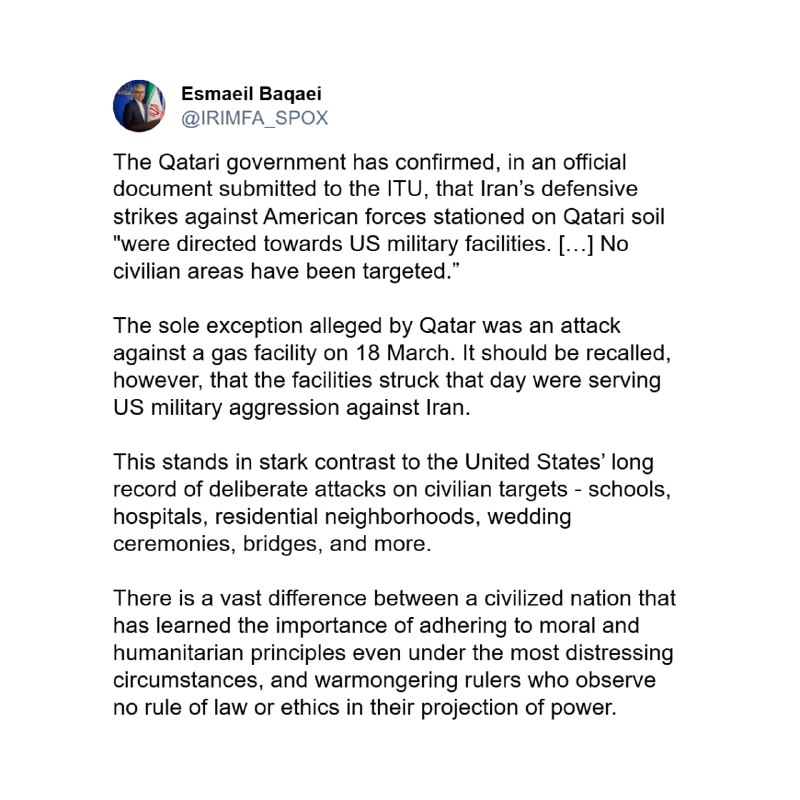
PressTV's commentary on the same Friday dismissed Trump's assurances to Israel as 'childish gibberish,' quoting analyst Barry Grossman to the effect that Israel is acting as a spoiler of the Iran-US MoU while the United States has failed to define its obligations in the event of an Israeli violation. That line matters not because it is a primary statement of Iranian state policy — PressTV is an Iranian state-aligned outlet and its framing must be weighted as such — but because it captures the counter-narrative that Iranian negotiators will carry into the postponed round.
The structural complaint is straightforward. A deal that constrains Iran's nuclear and missile programmes in exchange for sanctions relief is, from Tehran's perspective, a deal that requires the United States to deliver the sanctioning party. If Israel retains the ability to strike Iranian partners at will, and if the United States declines to restrain that ability, then Iran is buying relief with compliance and receiving neither. The PressTV framing, stripped of its polemical register, is the framing that the Iranian negotiating team will press when the talks resume.
It also points to a fault line inside the MoU itself. The document was sold as a settlement. It is now being administered as a truce. Those are different categories. A settlement produces a stable equilibrium between the parties. A truce produces a pause whose duration depends on the willingness of each signatory to keep pausing. The Iranian counter-reading is, in effect, a public declaration that Tehran is treating the document as a truce and reserving the right to renegotiate.
The architecture of the arrangement
Strip the rhetoric away and the MoU sits on three pillars. First, an Iranian commitment to constrain enrichment, centrifuge deployment, and missile production. Second, a US commitment to lift or suspend tranches of sanctions and to unfreeze certain assets. Third, a series of understandings — most of them unstated — about the behaviour of regional actors, including Israel, Hezbollah, the Houthis, and the Iraqi Shia militias. Each pillar has a different vulnerability.
The Iranian pillar is the most visible but, on the evidence of the past decade, the most enforceable from outside. Iran's nuclear and missile infrastructure is finite and inspectable. The behavioural record of Iran's negotiating teams under sanctions pressure has been, on the whole, to comply enough to keep the deal alive. The fragility is not in the compliance; it is in the political durability of any Iranian government that signs off on the constraints.
The US pillar is the most exposed to domestic politics. A second Trump administration's first-term posture was to exit the 2015 JCPOA. The current arrangement is a different document but inherits the same domestic scepticism. Israeli criticism is not the only source of that scepticism; congressional voices on both sides have questioned whether the verification regime is adequate. Vance's line on Friday is a domestic play as much as a diplomatic one.
The regional pillar is the weakest and the most under-specified. What does the MoU say about an Israeli strike on a Hezbollah position in Lebanon? What does it say about an Israeli strike on an Iranian proxy in Syria? What does it say about an Iranian transfer of missile technology to a non-state actor? The public record does not answer those questions cleanly, and the answer in each case is being made by events on the ground. The 18 killed in southern Lebanon on 19 June are, in effect, a provisional answer to the first of those questions.
Stakes and forward view
The first stake is the negotiating calendar. The talks were postponed on Friday; the question is whether they are postponed by a week, a month, or indefinitely. Each duration carries a different set of consequences. A short postponement absorbs the Lebanese flare-up and returns the parties to the table. A long postponement converts the MoU into a document of intent rather than a document of obligation.
The second stake is Israeli domestic politics. The coalition that survived the 2025 war is now being asked to absorb a diplomatic outcome that much of its security establishment regards as inadequate. Vance's framing — you have only us — is designed to reduce the political cost of acceptance. Whether it does so depends on whether the security establishment reads it as a strategic commitment or as a rhetorical flourish.
The third stake is the Iranian economy. The relief on offer is real. The question is whether it arrives on a timeline that allows the current Iranian administration to claim credit, or whether delays — produced by Israeli action, by US domestic politics, or by Iran's own negotiating posture — push the relief past the political window in which it can be sold. Iran's clerical establishment has managed sanctions before. It has not, in recent memory, managed them while holding a ceasefire arrangement that the public reads as a concession.
The fourth stake is the regional balance. A held MoU freezes Iran's nuclear trajectory, freezes Israel's freedom of action at the margins, and reduces the heat on the Gulf monarchies and on Iraq. A broken MoU returns the region to a trajectory in which all three of those conditions invert. The cost of breakage falls first on the populations of Lebanon, Syria, and Iraq, and then, with a lag, on the political systems that have to absorb the consequences.
What remains uncertain, on the evidence available at 19 June 2026 11:13 UTC, is whether the Vance framing represents a substantive American commitment to discipline its Israeli partner, or a rhetorical posture designed to keep the deal alive long enough for the next round to take place. The Lebanese strikes suggest the discipline is incomplete. The Iranian counter-reading suggests the patience is finite. The postponed talks suggest the calendar is no longer in anyone's hands.
This publication framed the Vance line as a closing argument of the administration's posture rather than as a routine alliance management statement, and treated the Lebanese strikes and the Iranian counter-reading as parts of the same stress test rather than as separate dispatches.
Wire provenance
This editorial synthesis draws on the following public wire/social posts:
- https://t.me/presstv/
Follow the event.
These dated source records provide context. They do not retrospectively verify this archive article.
Separate what the nuclear watchdog reported from what it could not determine after the June 2025 strikes.