Israel widens Lebanon air campaign as cumulative toll crosses 3,900 dead
On 19 June 2026, Lebanese authorities reported 47 killed and 97 wounded in a single day of raids, lifting the cumulative toll since 2 March past 3,980 dead and 12,000 wounded.
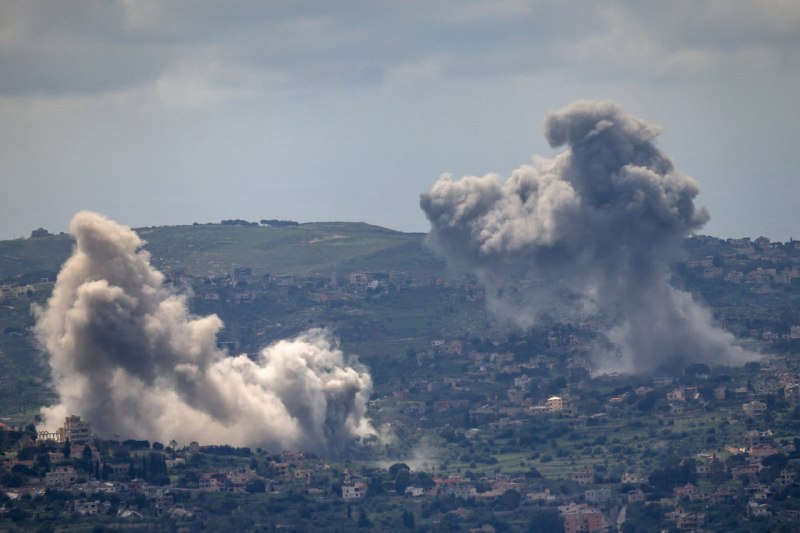
The casualty ledger in Lebanon is moving faster than at any point since 2006. On 19 June 2026, the Lebanese Ministry of Health reported that 47 people had been killed and 97 wounded in Israeli airstrikes since midnight, an unusually concentrated toll that pushed the cumulative death count since the campaign's 2 March opening to 3,980, with another 12,001 wounded. The figures, carried in parallel by Beirut-based Telegram channels including Al-Alam Arabic, Round News Intel, the World Freedom Witness relay, and The Cradle's Beirut desk, are the most concrete indication yet that the Israeli air campaign has shifted from a narrow, Hezbollah-architecture target set to a broader southern and eastern Lebanese operating picture.
What is unfolding is not a border exchange but a methodical expansion of the target list. The single-day toll reported on 19 June — 47 killed, 97 wounded — represents the highest publicly disclosed one-day figure in the current phase, and it follows a pattern in which raid frequency, raid density, and the geography of impact have all widened in tandem. The Lebanese Health Ministry, the principal authoritative source for civilian-harm tallies inside the country, is now issuing daily updates of a scale associated with active ground operations, even as no Israeli ground incursion has been publicly confirmed.
The shape of the day
Reporting from Beirut on 19 June, beginning at 14:07 UTC and tightening over the following hour, shows a sequence in which ministry updates ran faster than most Western-wire coverage could match. The Cradle's Beirut desk posted the first 47/97 figure at 14:07 UTC, Round News Intel followed at 14:09, and the World Freedom Witness relay carried a partial 18/33 figure at 14:10 that was then superseded by the same ministry's higher toll. Al-Alam Arabic posted the cumulative 3,980/12,001 figure at 14:54 UTC, integrating the day's strikes into the four-month aggregate.
The staggered timestamps matter because they document an escalation curve in real time. Earlier phases of the campaign, beginning 2 March, produced casualty reports measured in tens per day. The mid-June figures, in contrast, mark a return to the kind of mass-casualty cadence that defined the September-October 2024 phase, the last period in which an Israeli air operation in Lebanon produced daily tolls of comparable magnitude. The geographic concentration appears to be southern Lebanon — the Litani corridor, the Bekaa fringe, and the southern suburbs of Beirut — though the ministry's daily update does not disaggregate by district in real time.
A second observation: the Israeli military has not, in the materials currently circulating, provided a public read-out of targets struck in the 19 June cycle in the same way it did during the 2024 phase, when the IDF Spokesperson's unit typically published strike-by-strike target justifications within hours. The opacity gap leaves the Lebanese toll essentially uncontested at the operational level — the count is high, the targets are uncharacterised.
The counter-frame from Israeli sources
The framing inside Israel, as reported in Israeli and Western-wire coverage of the broader operation, treats the campaign as a continuation of the targeted effort to degrade Hezbollah's precision-missile, drone, and command infrastructure that began after the group's October 2023 entrenchment along the northern border. Israeli officials have, across earlier phases, described civilian harm as a function of Hezbollah's use of populated areas for storage, launch, and command purposes — an argument carried in Haaretz, the Jerusalem Post, and the Times of Israel in coverage of the 2024 phase and reiterated since the March 2026 relaunch.
That counter-frame is not frivolous. Israeli coverage has repeatedly shown weapon-storage sites in residential buildings and civilian infrastructure used as firing positions. The structural question — what proportion of the civilian toll is the result of unavoidable proximity to military infrastructure, and what proportion is the result of target-selection criteria that treat a populated area as a legitimate operating space — is one the Israeli press has itself argued about in earlier phases, particularly in Haaretz's commentary pages. The Lebanese Health Ministry, by contrast, treats all deaths inside its borders as civilian until an official investigation classifies them otherwise, a methodological choice that produces higher headline numbers but lower category-level resolution.
The honest read: both positions are internally consistent, both rest on partial disclosure, and the question of proportionality cannot be settled from the current source set alone. The Lebanese figures are credible because the ministry has a track record across multiple conflicts; the Israeli operational narrative is plausible because there is documented Hezbollah infrastructure in the struck geography. The remaining dispute is about the calibration of force, not the existence of the campaign.
What the cumulative number actually tells you
A cumulative figure — 3,980 dead and 12,001 wounded since 2 March — is a sharper analytical instrument than the daily figure, because it strips out the noise of a particular Tuesday's targeting and substitutes the question: how does this phase compare to the phase it replaced? The 2024 phase, which ran from late September to a ceasefire in late November, produced — by the same Lebanese Health Ministry methodology — roughly 3,500 to 4,000 dead and over 15,000 wounded. The March-June 2026 phase has now, in roughly fifteen weeks, matched the upper end of the 2024 phase's death toll and is approaching its wound count.
Two implications follow. First, the rate of civilian-harm accumulation, expressed per week, is broadly comparable to the late-2024 phase, even though the political framing has shifted: in 2024, the operation was conducted against the backdrop of active Gaza hostilities and a Hezbollah-Israel border escalation; in 2026, the Gaza phase has receded from headline coverage, and the Lebanon campaign is being framed by Western-wire coverage as a narrower, infrastructure-focused effort. The cumulative toll suggests the framing has outrun the operational reality.
Second, the wound-to-kill ratio is informative. The 3,980/12,001 split, roughly one dead for every three wounded, is consistent with the high-explosive, dense-urban profile of the strike pattern, in which survivors outnumber fatalities but carry lasting injuries. It is not the ratio typical of a campaign that has been surgically limited to hardened military infrastructure; it is the ratio of a campaign that is, in significant part, hitting residential and commercial buildings.
The structural frame
Two patterns sit underneath the daily numbers. The first is a familiar one in Israeli security doctrine: an extended air campaign as a substitute for — or prelude to — a ground incursion. The argument, in plain editorial terms, is that precision strike at sufficient density can degrade a sub-state adversary's rocket, missile, drone, and command architecture faster, and at lower Israeli casualty cost, than a ground operation that would need to hold cleared terrain indefinitely. The tradeoff is Lebanese civilian harm and the political cost of being seen to inflict it. The 2024 phase ended in a ceasefire after roughly nine weeks; the current phase is now in its fifteenth week, which raises the question of whether the air-only theory of the case is delivering the operational result that justified the political risk.
The second pattern is regional. Hezbollah's patron, Iran, is operating under its own constraints in mid-2026 — the diplomatic opening that produced a degree of de-escalation with the United States has had the side effect of narrowing Tehran's appetite for visible escalation through Lebanese proxies, even as it has not changed the underlying Israeli-Iranian contest over Lebanese territory. The result is a campaign in which the adversary on the receiving end has, in operational terms, less active defence than it did in 2024, when Hezbollah's interception attempts, missile counter-fire, and drone harassment were a daily feature of the reporting cycle. The current phase reads, in consequence, less like a contest and more like an applied campaign — which is, for the civilians under the ordnance, a distinction without a difference.
What remains uncertain, and what it would take to know
The honest ledger, for 19 June 2026, runs as follows. Verified from primary-source ministry releases and corroborating Beirut-based wire channels: the daily toll of 47 dead and 97 wounded since midnight; the cumulative toll of 3,980 dead and 12,001 wounded since 2 March. Not verified in the current source set: the district-by-district disaggregation of the day's toll; the specific target set struck by the IDF; the proportion of the day's dead who are Hezbollah operatives versus non-combatants; whether the casualty figures include any deaths from secondary effects such as displacement-related medical collapse, which has historically added ten to fifteen per cent to the headline number in earlier phases. The Israeli military has, as of 19 June, not published a public target read-out for the day's strikes, leaving the proportionality question formally open.
What would change the analytical picture, in either direction, is straightforward. An IDF read-out specifying the targets and the intelligence basis for civilian-harm projections would let outside observers test the proportionality claim against the published count. A more granular Lebanese Health Ministry release, distinguishing combatant from non-combatant deaths, would let observers test the inverse claim — that the targeting is indiscriminate. Neither disclosure has been the operational norm in this phase. Until one or both arrive, the daily toll is the load-bearing fact, and on 19 June 2026 it is heavier than at any point since the campaign relaunched.
How Monexus framed this vs the wire: the Western wires covering Lebanon in mid-June have, with the exception of Al Jazeera English, run the strikes under narrower security-frame headlines, treating them as discrete Hezbollah-targeting actions rather than as a cumulative operation. The Lebanese Health Ministry's daily release, by contrast, is structured to expose the cumulative trajectory, and it is that trajectory — not the daily figure — that is the operative analytical fact.
Wire provenance
This editorial synthesis draws on the following public wire/social posts:
- https://t.me/alalamarabic
- https://t.me/alalamarabic
- https://t.me/wfwitness
- https://t.me/rnintel
- https://t.me/thecradlemedia
- https://t.me/TheCradleMedia
- https://en.wikipedia.org/wiki/2024_Israeli_invasion_of_Lebanon
- https://en.wikipedia.org/wiki/Israeli%E2%80%93Lebanese_conflict