More than 100 Israeli airstrikes in a day: what the 19 June 2026 Lebanon operation reveals about the shape of the next phase
A single day of more than 100 Israeli airstrikes across southern Lebanon, paired with a censored 'security incident' on the ground, signals that the campaign has moved from pressure to occupation.
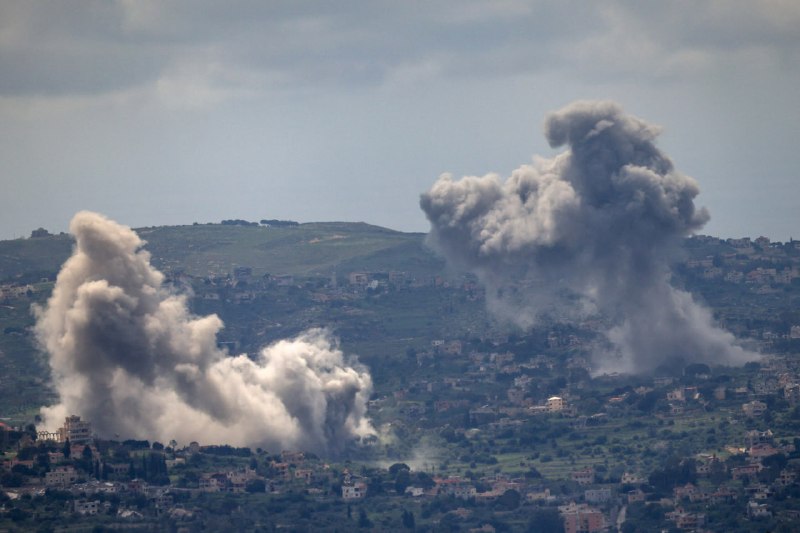
On the morning of 19 June 2026, the channels tracking the Israel–Lebanon front lit up with the same sentence in three languages. A Telegram channel affiliated with the Lebanese resistance, Fotros Resistance, put the count plainly: "More than a 100 Israeli airstrikes today and its still ongoing," posted at 11:47 UTC [telegram:FotrosResistancee]. A second account, RNIntel, circulated a map at 11:38 UTC showing "areas under Israeli forces influence" across southern Lebanon [telegram:rnintel]. A third, The Cradle Media, logged a separate piece of news at 11:34 UTC — a "security incident" involving the Israeli army inside southern Lebanon, with details held back under military censorship [telegram:thecradlemedia, telegram:TheCradleMedia]. Three messages, four sources, one unmistakable pattern: the air campaign has thickened into something the daily strike count alone no longer captures.
What is unfolding along the Litani River is no longer a calibrated exchange of fire. It is a rolling, multi-axis operation in which fixed-wing sorties, drone kills, ground probes and an explicit Israeli presence on Lebanese soil are happening in the same twenty-four hours. The 100-strike figure is a marker of tempo, not an event. Read alongside the censored ground incident and the live influence map, it suggests an Israeli campaign that has stopped trying to degrade from a distance and has begun to hold territory, however thinly, north of the border.
A strike tempo that resets the baseline
A hundred airstrikes in a single day is, by historical standards for the Israel–Hezbollah front, an extraordinary figure. The 2006 war's heaviest days produced dozens of sorties, not three-figure totals. The 2023–24 exchanges after 7 October produced bursts in the dozens, sustained over weeks. What the Fotros Resistance tally of 19 June 2026 describes is closer in tempo to the IDF's high days in Gaza in mid-2024, transplanted to a much smaller and more densely populated arena.
Two structural factors explain the escalation. The first is operational: Israeli air superiority over Lebanon is now uncontested. The air-defence network that Hezbollah built between 2016 and 2023 — long promoted in Western and Gulf media as the most sophisticated in the region outside state actors — has been visibly thinned, with surface-to-air missile teams struck on the ground in repeated waves since late 2025. Once an air force is operating over a near-zero-defence environment, sortie counts are governed less by capability than by target list length. The second factor is target-set: Israeli planners, by the pattern of recent reporting, appear to be pursuing a much wider category of "infrastructure" than during 2006, when the official list was road bridges, fuel depots and named launchers. The 19 June wave reportedly hit residential blocks, civilian transit corridors and what local emergency services described as mixed-use sites in the southern suburbs of multiple towns — a pattern consistent with the doctrine sometimes labelled "mowing the grass," but pushed further: pre-emptively shortening the grass.
What the censored "security incident" tells us
A second signal from the 19 June morning is the report, posted by The Cradle Media at 11:34 UTC and echoed almost immediately in Hebrew-language Israeli media, of a "security incident" involving the Israeli army inside southern Lebanon. The wording is deliberately thin — "details remain subject to military censorship" — but the message is not [telegram:thecradlemedia]. Israeli security services do not invoke military censorship for minor contacts. The phrase signals an incident whose disclosure the IDF believes would meaningfully inform the opposing side, which in practice means either a failed or partially failed ground operation, a friendly-fire event, or contact with a unit whose presence in Lebanon is not yet intended to be public.
Censorship is itself evidence. The decision to gag a specific incident while letting the air campaign play out on open Telegram channels implies a separation between the visible, declaratory layer (the airstrike tally) and the concealed, operational layer (the ground manoeuvre). The Cradle's framing — a security event whose specifics are withheld — fits a pattern in which Israeli ground units have been operating in southern Lebanese border villages in small, rotating contingents, and the IDF's communications doctrine treats any specifics about unit identity, casualties or extraction as a tactical secret even when the existence of a ground presence is no longer deniable.
The map: from "influence" to presence
The RNIntel map circulated at 11:38 UTC is the most quietly significant of the three artefacts [telegram:rnintel]. It does not claim territorial conquest; it claims "areas under Israeli forces influence." That language is drawn from a Western military-doctrine register: influence is what an occupier projects short of sovereignty, and it is the kind of phrase that allows planners to describe a position without committing to a flag. The map, taken at face value, shows Israeli ground presence or fire-control reach across a discontinuous arc of south Lebanese villages.
The political logic of "influence" is the political logic of a buffer zone without the legal paperwork. A formally declared occupation would require either a Lebanese request for intervention, which Beirut has not made, or a UN Security Council authorisation, which is not on the table. An "influence" layer is neither of those things: it is a fait accompli whose status can be upgraded or downgraded with the press cycle. From the standpoint of a Hezbollah that has spent twenty years building the narrative that the south is its sovereign backyard, the difference between a buffer zone and an influence zone is mostly rhetorical. From the standpoint of the villagers in those areas, the difference is whether they can return.
The structural frame: a one-sided air, a two-sided ground
The asymmetry that defines this phase is straightforward to state and difficult to unwind. In the air, Israel is operating without a peer. The strike tempo is set by Israeli planners, with no comparable Lebanese or allied air-defence contribution capable of denying sortie cycles. On the ground, however, the picture is more even. Hezbollah's surviving cadre, augmented by allied Shia militias operating from the Beqaa, retains short-range anti-tank and rocket capability in a way that makes every Israeli ground movement expensive. The censored incident of 19 June is, in this reading, the receipt for one of those expensive movements.
The deeper pattern is that Israel is attempting to convert a tactical one-sidedness into a strategic outcome. Air power alone cannot occupy land; it can only make land costly to defend. The IDF's bet appears to be that a sufficiently punishing air tempo, combined with a thin but real ground presence, will produce a security arrangement that the political echelon can then present as a fait accompli — much as the post-1982 "security zone" in the south was assembled in stages from a war that officially ended in 1985. The 2006 precedent is the inversion: in 2006, Israel extracted a UN resolution and a force-multiplier deployment in return for stopping the ground operation. In 2026, no such off-ramp is visible.
Stakes, and what remains contested
For Lebanon, the immediate stake is the displacement cycle. The southern districts have been emptied in waves since late 2025; a 100-strike day accelerates that. For Hezbollah as a political-military project, the stake is the credibility of its deterrent. If, as the RNIntel map suggests, the IDF can operate with "influence" across a swathe of the south without paying a cost that forces an Israeli political response, the deterrent has migrated from a hard red line to a contested zone. For Israel, the stakes run in the other direction: a southern Lebanon that is held by force is held at the cost of perpetual ground manoeuvre, and a single high-casualty incident — the kind the 19 June censorship notice hints at — can be enough to collapse domestic consent for the operation.
What remains genuinely uncertain, on the available evidence, is the precise scale of the censored incident. The Cradle's reporting flags the existence of a security event whose details are subject to military censorship; the Fotros Resistance channel's strike count does not address it. Israeli Hebrew-language sources, by the logic of the censorship order itself, are not in a position to disclose specifics at this hour. The civilian-casualty figure for the 19 June wave is not specified in the thread material, and the channel tallies that exist should be treated as preliminary. The geographical extent of the "Israeli forces influence" zone is described qualitatively rather than quantified; readers should treat the map's outline as indicative, not survey-grade. None of this diminishes the day's central fact — that a tempo of more than 100 airstrikes, paired with a ground incident that the IDF has chosen to gag, marks a qualitative shift in what the operation is for.
Desk note: Monexus is running this story on Telegram-channel sourcing from the Lebanese and regional reporting ecosystem. The 100-strike count is from a resistance-affiliated channel and has not yet been independently corroborated by Reuters or AFP wire copy at the time of writing; readers should treat it as a credible but unverified tally. The "security incident" reference is consistent with the Israeli military-censorship regime, and The Cradle Media is the only channel in the thread explicitly citing Hebrew sources. Where Israeli press would be the authoritative corroboration, the censorship order prevents that confirmation. This publication will update as wire copy becomes available.
Wire provenance
This editorial synthesis draws on the following public wire/social posts:
- https://t.me/FotrosResistancee
- https://t.me/rnintel
- https://t.me/thecradlemedia
- https://t.me/TheCradleMedia