Israel's Lebanon push collides with the Geneva track
Israeli strikes that killed at least 18 people across southern Lebanon overnight forced the postponement of Iran-US talks in Geneva, exposing how the battlefield and the negotiating room now run on a single clock.
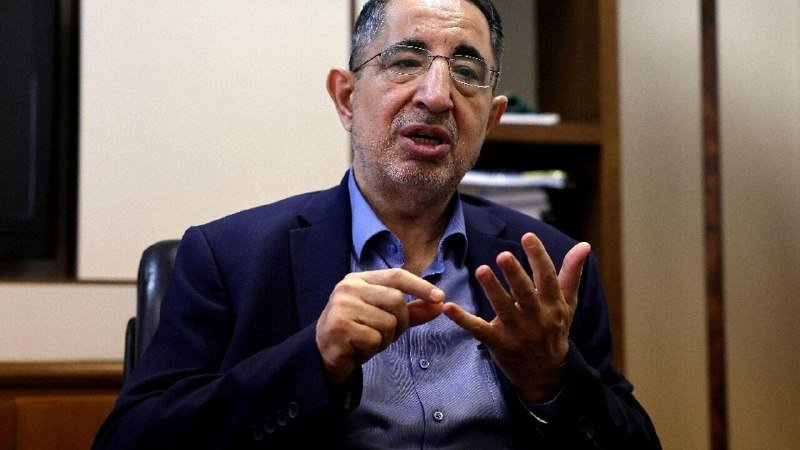
Israeli airstrikes hit targets across southern Lebanon through the early hours of 19 June 2026, killing at least 18 people and wounding others in towns including Douier, according to field dispatches circulating on Telegram by mid-morning UTC. The toll, first reported by outlets aligned with the Lebanese resistance axis, tracks with separate Israeli media accounts describing a "disaster in southern Lebanon" after Hezbollah operations killed and wounded Israeli officers and soldiers earlier the same day. The escalation has now spilled off the battlefield and into a diplomatic corridor that Tehran and Washington had been quietly trying to reopen.
The Iranian foreign ministry said that US-Iran talks scheduled in Geneva were "postponed" in response to the Israeli campaign, framing the strikes as the proximate cause of the diplomatic pause. The connection is not rhetorical convenience. Iran's negotiating posture has long been calibrated to the pressure its regional allies absorb, and the timing — strikes overnight, Geneva walk-back by mid-morning — leaves little daylight between the two events. What the postponement actually signals depends on whether one reads the move as tactical Iranian choreography or as a hard constraint imposed by events on the ground.
What happened overnight
The field picture is still partial. Telegram correspondents tracking the strikes listed Douier among the towns hit, with footage of secondary explosions and damaged civilian structures circulated by Lebanese field channels. According to The Cradle Media, at least 18 people had been killed by Israeli strikes in Lebanon since the early hours of Friday, with Hezbollah operations described as the precipitating Israeli trigger. Separately, Israeli media cited by Gaza Alanpa reported a "disaster in southern Lebanon" after Hezbollah operations killed and wounded officers and soldiers — language that, in Israeli security reporting, ordinarily signals an unanticipated tactical reversal rather than a strategic gain.
What is verifiable from the four Telegram items in circulation is narrower than the headlines suggest: confirmed strikes on at least Douier in southern Lebanon, a death toll described as at least 18, and Israeli acknowledgement of officer and soldier casualties from Hezbollah engagements the same morning. The sequence — Hezbollah action, Israeli escalation, Iranian diplomatic pause — is consistent across the accounts, even where the framings diverge.
The Geneva track and why it stalled
Iran and the United States had been working toward a Geneva meeting that both sides had an interest in not collapsing. For Tehran, the talks offered a channel to relieve sanctions pressure and to test whether Washington would entertain limits on enrichment short of zero. For Washington, the meeting was a vehicle to manage escalation risk during an election cycle and to keep the Strait of Hormuz stable. The Israeli campaign in southern Lebanon changes that calculus on the Iranian side: showing up in Geneva while allies are taking airstrikes would weaken Tehran's domestic credibility and signal to Hezbollah that diplomacy is being conducted in a separate, safer room.
The Iranian foreign ministry's framing of the postponement — explicitly blaming Israeli "brutal attacks" — is a tell. It puts the diplomatic freeze on Israel's account, not on substantive disagreement with Washington. That posture preserves the channel for resumption while extracting a domestic-political dividend inside Iran. The risk is that the postponement also signals to actors in Beirut and the Israeli security cabinet that the Iranian deterrent is, at this moment, more diplomatic than kinetic.
Reading the competing frames
Western and Israeli coverage of operations in southern Lebanon tends to centre two claims: that Hezbollah is the aggressor in any given exchange and that Israeli strikes are calibrated responses aimed at infrastructure rather than civilians. Lebanese and Iran-aligned coverage inverts the frame: it foregrounds civilian harm, characterises Israeli operations as collective punishment, and treats Hezbollah's actions as legitimate resistance to an occupying force. Neither frame is fully honest by itself.
The minimum a fair read can assert: at least 18 people have been killed in southern Lebanon since the early hours of 19 June, Israeli media has acknowledged Hezbollah-inflicted casualties on its own side, and Iran has publicly linked the postponement of US talks to the Israeli campaign. The contested ground is whether the exchange reflects an Israeli defensive operation, an expanded campaign, or a deliberate escalation timed to collapse a diplomatic track that Binyamin Netanyahu's government had reason to distrust.
Structural pressure on the negotiating room
The pattern is familiar. US-Iran diplomacy advances when the regional temperature falls; it stalls when Israel-Iran-adjacent flashpoints flare. The mechanism is not always direct — no one in these Telegram dispatches claims Netanyahu ordered strikes to derail Geneva — but the architecture of the relationship produces the same outcome regardless of intent. Israel's operational freedom in Lebanese airspace is treated by successive US administrations as a given; Iran's negotiating flexibility is treated as the variable. When those two assumptions meet, the negotiating room is the part that moves.
A counter-reading deserves weight: Iranian decision-makers may also be using the Israeli campaign as cover to slow-walk commitments they had no intention of making. Sanctions relief, enrichment caps, and the fate of detained Iranian assets are substantively contested in their own right. It is plausible that Tehran would have postponed Geneva regardless and is now credibly attributing the delay to Israel. The structural pattern and the tactical opportunism are not mutually exclusive.
Stakes over the next 72 hours
If the Geneva meeting is rescheduled within the week, the postponement reads as theatre and the underlying track survives. If it slips into July or beyond, the diplomatic cost starts to compound: snapback sanctions debates in New York, IAEA inspection windows, and renewed Gulf-state quiet diplomacy that does not include Tehran. For Lebanon, the more immediate stake is the trajectory of strikes in the south — Douier is the latest named town in what has been a sustained campaign, and the human toll accumulates regardless of which capital's calendar eventually absorbs the date.
The Israeli security cabinet, for its part, faces the question its officers were forced to confront on the morning of 19 June: whether a southern Lebanon operation that produces Israeli casualties is one it can wind down on a Geneva-friendly timeline, or one that has its own operational momentum. The honest answer, from the field dispatches now in circulation, is that the answer is not yet knowable.
What remains uncertain
The sources in circulation do not specify the exact mix of Hezbollah and civilian casualties in Douier, the precise military targets struck, or whether any of the dead were members of formal Hezbollah units. Israeli casualty figures from the morning engagements have been described in qualitative terms only ("officers and soldiers"), without numbers. The Iranian foreign ministry's postponement statement does not, in the available reporting, name a resumption date. And no major Western wire had, as of the Telegram dispatches in this thread, published an independent confirmation of the 18-person toll. Monexus treats the count as an early field figure pending corroboration, not as a final figure.
Desk note: Monexus led with the field picture and the diplomatic consequence rather than with Israeli framing or Hezbollah framing, because the postponement of Geneva is the higher-order story and because the Israeli security framing and the Iranian-aligned framing both have facts to recommend them — and both omit facts the other foregrounds. The wire at midday UTC was quieter than the Telegram field; that asymmetry is itself part of the story.
Wire provenance
This editorial synthesis draws on the following public wire/social posts:
- https://t.me/gazaalanpa/1
- https://t.me/wfwitness/1
- https://t.me/thecradlemedia/1
- https://t.me/TheCradleMedia/1
Follow the event.
These dated source records provide context. They do not retrospectively verify this archive article.
Separate what the nuclear watchdog reported from what it could not determine after the June 2025 strikes.