Israel's southern Lebanon offensive widens as US-Iran talks slip and a frontline village belt disappears
Eighteen reported killed in southern Lebanon on Friday as Israel says it will stay and strike back; postponed US-Iran talks leave a vacuum neither Washington nor Tehran seems ready to fill.
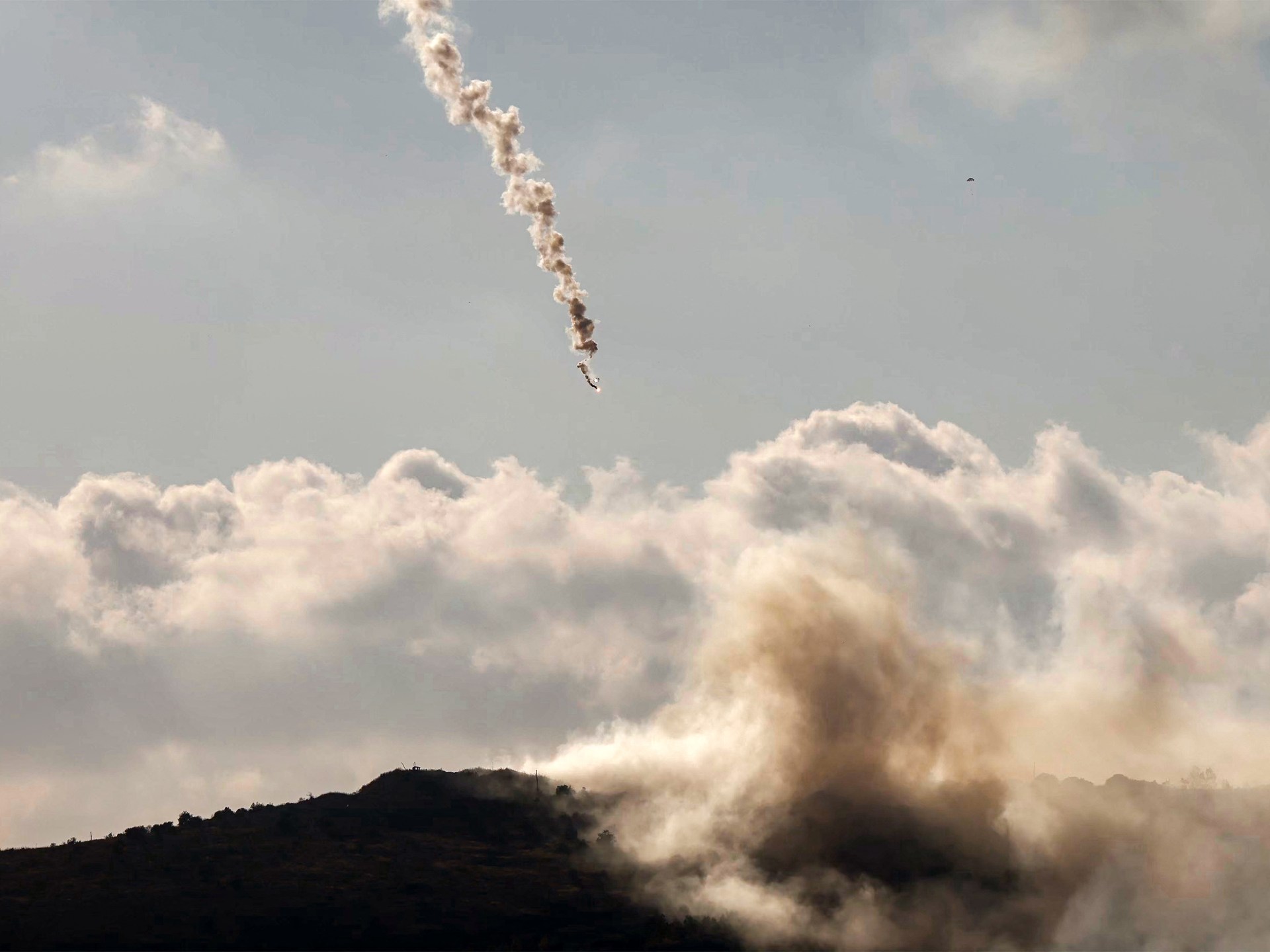
Southern Lebanon is being hit with a weight rarely seen since the 2006 war. By Friday afternoon local time, Lebanese authorities had counted 18 people killed in Israeli airstrikes across the south, while the Israeli military announced the deaths of four of its own soldiers in the same operational theatre. Israel's defence minister declared that Israeli forces would remain in southern Lebanon and would respond "with force" to any further attack. The convergence — intensified bombardment, ground presence, postponed US-Iran diplomacy — has produced the most volatile day on the Israel-Lebanon frontier of the year so far.
What is unfolding is not a single operation but a layered campaign: a stated intent to hold ground in the south, the systematic destruction of frontline villages along the Litani corridor, and a diplomatic track with Iran that has just been pushed back at the precise moment the kinetic track has escalated. Each layer shapes the others, and each one carries a different theory of how this war ends.
A Friday of declared escalation
The most concrete facts of the day are simple and grim. According to France 24's Friday 19 June 2026 reporting, fighting flared in southern Lebanon, with authorities reporting 18 killed in Israeli airstrikes across the south. Israel, in parallel, announced the deaths of four of its soldiers in the same operational area — a figure that, because it was released by the Israeli military itself, carries no doubt about authenticity but does not include wounded or missing personnel, which historically run several multiples of the killed.
The political signal arrived from Jerusalem the same morning. The Israeli defence minister stated that Israel "will remain in south Lebanon" and will "respond with force" to any attack, per the Telegram channel Insider Paper. The phrasing matters. It is not a war aim expressed as an operation; it is a posture — an Israeli presence treated as a condition of the next phase, not an interlude within it. Combined with the casualty reporting, the message is one of extended occupation under active fire, with no declared end-state beyond deterrence.
The village belt disappears
A separate thread, carried by The Cradle Media, surfaces the Israeli ground commander level with unusual directness. A quoted Israeli military figure, cited by The Cradle, states: "We have flattened the entire first line of villages in southern Lebanon, all the houses have been destroyed. The residents will never see them standing ever again." The outlet frames this as "a stark acknowledgment" of destruction in the border strip. Even discounting the source's editorial register, the operational fact is consistent with the wider reporting: a depth band of Lebanese border villages is being deliberately cleared as a buffer.
This is the part of the war that the wire services underplay. Casualty counts move on the screen minute by minute; the slow erasure of a populated strip does not. If a first line of villages has been rendered uninhabitable, the demographic displacement is not a side-effect of combat — it is a stated objective of the operation as described by its own practitioners. The Lebanese state's ability to assert sovereignty over that strip, even after a ceasefire, becomes structurally doubtful once the housing stock is gone.
Why the US-Iran track slipped, and what the gap means
The diplomatic backdrop, until recently, offered a possible exit ramp. The Friday escalation coincides with the postponement of a round of US-Iran talks that had been threaded into the wider regional de-escalation architecture. The Israel-Lebanon front is the place where that architecture meets its hardest test: Hezbollah's position in any negotiation is downstream of Tehran's, and Tehran's leverage in any negotiation is downstream of its allies' battlefield position.
A postponed round, in this context, is not the same thing as a collapsed round. Schedules slip. But the timing is structurally significant. By the time talks resume, the southern Lebanese village belt will have been further reduced, and the humanitarian case for an Israeli pullback will have become harder rather than easier to make. Each week of ground-holding narrows what a future agreement can actually restore. The diplomatic calendar and the military calendar are working against each other, and the military calendar is winning this month.
The structural pattern: buffer zones as policy
What is happening in southern Lebanon is a recognisable pattern in the modern Israeli security repertoire: the establishment of a buffer zone through the physical destruction of the settlement layer behind it. The same logic applied in varying degrees on the Golan Heights, in the Gaza periphery, and at different points along the Lebanese frontier since 1982 and again in 2006. The Israeli theory is that a depopulated depth band buys warning time against infiltration, anti-tank fire, and short-range rocket launches. The counter-theory — held not only in Beirut but in parts of the Israeli security establishment itself — is that buffer zones buy a few years of quiet and then breed a more determined adversary, because the people who were cleared from the buffer come back with the buffer still gone.
Both readings are plausible on the historical record. The honest version is that the buffer logic has produced uneven results: it has sometimes contained cross-border fire and sometimes accelerated the next war. The Israeli public, after the trauma of late 2023, is presently willing to pay the price of an extended operation in the south. The Lebanese public in the south is paying it in full now, with the houses.
What it would take to stop this, and what the next weeks look like
Three off-ramps are available in principle, and absent in practice for now. The first is a US-brokered Israel-Hezbollah arrangement that returns the front to the pre-October 2023 line in exchange for a monitored security regime. The postponement of the US-Iran round makes this harder to close, because the Iranian side uses the Hezbollah file as leverage and the Israeli side uses Hezbollah as the rationale for staying.
The second is a unilateral Israeli declaration of operational achievement and a phased pullback. The defence minister's statement on Friday points away from this; "will remain" is the opposite phrasing.
The third is an internal Lebanese political realignment that produces a government willing to negotiate the border directly with Israel under international cover. The present Lebanese state apparatus is too politically fractured, and Hezbollah's standing inside it is too strong, for that path to open quickly.
In the absence of any of these off-ramps, the default trajectory through the summer of 2026 is grinding escalation: continued village clearance, continued Hezbollah retaliation at a tempo the group can sustain rather than the tempo Israel can dictate, and a diplomatic track that reopens only after both sides have paid more than they had planned to pay. The killing of 18 people in a single Friday is the cadence, not the spike.
The honest caveat: the available reporting on Friday evening does not specify the breakdown between civilians and combatants among the 18 reported killed, does not name the four Israeli soldiers, and does not yet record Hezbollah's own casualty disclosures for the day. The Israeli ground commander's quoted statement on village flattening comes via an outlet that frames the regional security order in openly adversarial terms toward Israel, and the quote should be read as sourced through that lens even where the underlying destruction is visible to other reporters on the ground. The wider pattern — escalation on the ground, a diplomatic calendar that has slipped, a stated Israeli intent to stay — is corroborated across multiple sources and stands without relying on any single quote.
Wire provenance
This editorial synthesis draws on the following public wire/social posts:
- https://t.me/insiderpaper
- https://t.me/thecradlemedia
Follow the event.
These dated source records provide context. They do not retrospectively verify this archive article.
Separate what the nuclear watchdog reported from what it could not determine after the June 2025 strikes.