Five Minutes After the Deal: What Lebanon's 'Ceasefire' Actually Looks Like
Airstrikes hit Nabatieh within minutes of an announced ceasefire, exposing the gap between diplomatic language and what reaches the ground in southern Lebanon.
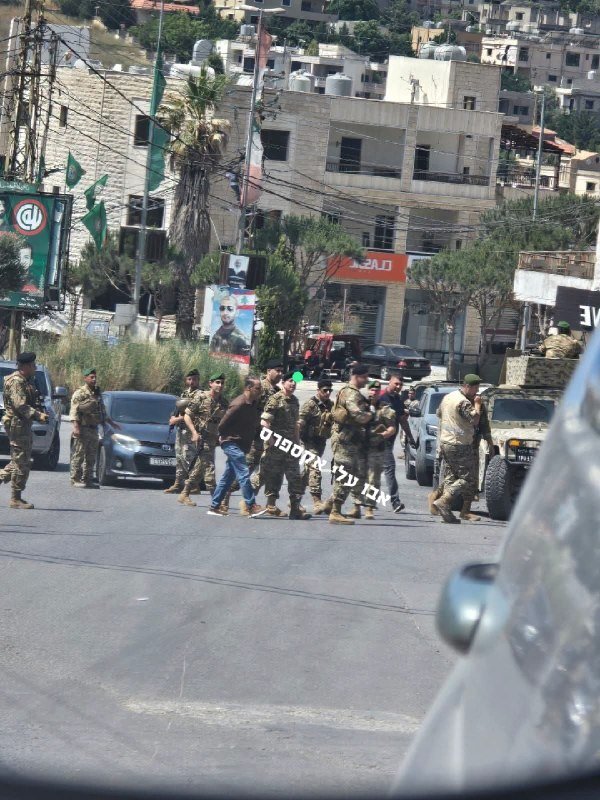
At 13:28 UTC on 19 June 2026, Iran's Fars News Agency published photographs of what it described as an Israeli airstrike on the city of Nabatieh, in southern Lebanon. According to Fars and to Al Jazeera correspondents on the ground cited by Iran's Mehr News, that strike landed roughly five minutes after a ceasefire had been declared. By 14:26 UTC, the open-source monitor AMK Mapping had logged another round of Israeli artillery fire, this time on the town of Zebdine and on Nabatieh itself. The sequence — announcement, strike, photos, more strikes — took about an hour.
The pattern matters because the diplomatic word of the day was "ceasefire," and what reached the ground in southern Lebanon did not look like one. A reporter for Al Mayadeen, the Beirut-based outlet aligned with the Hezbollah-Iran axis, told Mehr News that Israeli attacks hit "many areas" after the supposed cessation took hold. An Israeli television channel, Channel 15, offered the candid framing: if Hezbollah tries to stop Israeli advances, "we will defend ourselves and retaliate." Read together, the wires from both sides describe not a pause but a contest over what the word itself means.
What the wires actually say
The day's reporting divides cleanly. On one side, Iranian and Iran-aligned outlets — Fars, Mehr News, Al Mayadeen, Middle East Spectator — describe "continued violations" of the ceasefire, frame the strikes as evidence of bad faith, and use the term "Zionist airstrikes" rather than "Israeli airstrikes." On the other, the Israeli Channel 15 line, relayed by Middle East Spectator, treats the operation as ongoing and frames any Hezbollah response as the trigger for further escalation. Both accounts describe the same physical events: strikes on Nabatieh province and on Zebdine, with artillery as well as air assets involved. They diverge on the framing — "violation" versus "defensive advance" — and on what counts as a ceasefire in the first place.
The honest reading is that the announcement and the strikes are not in contradiction; they are in sequence. A "ceasefire" declared by mediators can coexist with operations on the ground that one side, or both, regard as defensive. That is how the term has functioned in southern Lebanon since the November 2024 arrangement ended the open war, and it is how it appears to function now.
The gap between the word and the ground
The deeper story is structural. When a ceasefire is announced without an obvious demilitarisation mechanism, without a verification regime that both sides accept, and without a public map of who is responsible for what, the word becomes a signal to financial markets and to foreign ministries, not a constraint on artillery. Nabatieh is the latest test of that proposition. Mehr News and Al Jazeera report civilians being told to expect calm; Fars publishes photos of the strike that followed. The two facts can both be true at once, which is precisely the problem.
Lebanese sovereignty over its southern districts has been a standing question since the 1969 Cairo Agreement, renegotiated in 1983 and again under UN Security Council Resolution 1701 in 2006. The current arrangement does not resolve that question; it manages it. When Israeli officials describe "advances in southern Lebanon" in the conditional — if Hezbollah tries to stop them — they are signalling that the boundary of what is permitted under the ceasefire is being negotiated in real time by the people doing the shooting.
Who pays for the ambiguity
The cost of that ambiguity is paid in Nabatieh, in Zebdine, and in the smaller villages that the wires do not name. It is paid in Lebanese civilian lives and in the credibility of every foreign ministry that helped broker the announcement. It is also paid by the Israeli communities along the northern border who are told that a deal is in force while artillery fires on a town inside Lebanon — a contradiction that erodes the political capital of whichever government is in office in Jerusalem.
Iran's outlets have a clear interest in framing the strikes as violations: the diplomatic narrative matters to Tehran's position with its own regional allies and to the Global South audiences it courts. Israel has an interest in framing them as defensive, in part because the alternative — admitting that a ceasefire was announced and immediately broken — would expose the gap between Israeli and American messaging about the war's endgame. Both narratives are running, and both are doing work for their respective audiences.
What remains uncertain
The sources at hand do not specify casualties, do not name the precise IDF units involved, and do not quote any official Israeli statement from the Prime Minister's Office or the IDF Spokesperson — only the Channel 15 line relayed by aggregators. They do not say whether Hezbollah returned fire after 13:28 UTC, which is the test of whether the "if they try to stop us" framing becomes self-fulfilling. A picture of the day that waited for the IDF briefing and a UNIFIL statement, neither of which is in the thread, would be a more cautious picture than the one the wires already paint.
What the day does establish is that the word "ceasefire," as deployed on 19 June 2026 in southern Lebanon, is less a description of the state of the ground than a diplomatic instrument — and one whose force expires in roughly the time it takes an artillery shell to reach Nabatieh.
This article treats Iranian state media and Iran-aligned outlets as legitimate primary sources for their own reporting, while flagging the framing work each is doing. Monexus's editorial standard is to present both the Israeli security framing and the Lebanese civilian-harm framing with equal human weight where the evidence supports it.
Wire provenance
This editorial synthesis draws on the following public wire/social posts:
- https://t.me/mehrnews/
- https://t.me/mehrnews/
- https://t.me/AMK_Mapping
- https://t.me/FarsNewsInt
- https://t.me/Middle_East_Spectator
- https://t.me/wfwitness
Follow the event.
These dated source records provide context. They do not retrospectively verify this archive article.
Separate what the nuclear watchdog reported from what it could not determine after the June 2025 strikes.