Ceasefire by announcement, strikes by air: Lebanon's southern towns absorb the first hours of an Israeli-Hezbollah truce
Within the same hour that Israeli officials declared a ceasefire in place, warplanes returned to south Lebanon. The competing claims — restraint by condition versus restraint by announcement — define the fragile hours after 19 June 2026.
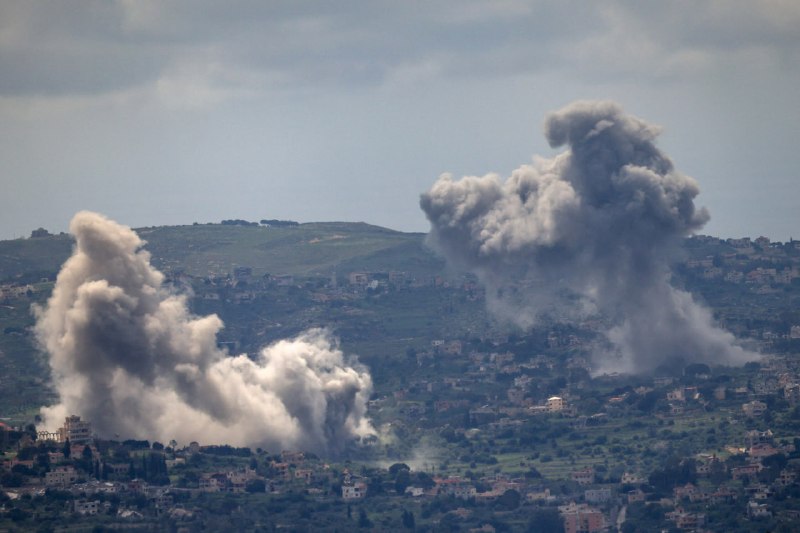
At 13:23 UTC on 19 June 2026, an al-Mayadeen correspondent based in southern Lebanon reported that an Israeli airstrike hit the city of Nabatieh at what he described as the moment the ceasefire took effect. Within the next forty minutes, three further bursts of reporting landed on the wire: a count of twelve Israeli air and artillery strikes since the announcement, sourced by Iran's Fars News to Channel 12 of the Israeli broadcast landscape; a parallel account from The Cradle describing attacks on eleven towns and villages, some struck more than once; and a quote, attributed by Fars to Yedioth Ahronoth, in which an unnamed senior Israeli official insisted that "we agreed to a ceasefire and if Hezbollah does not attack, we will not attack either." A second senior official, speaking to Channel 13, used the same conditional construction: "we are currently in a ceasefire situation; if Hezbollah does not attack us, it is not a war situation." By 14:01 UTC, the first hours of the truce had already been measured in sorties.
The arithmetic of the first day is small but politically loaded. Eleven towns, twelve strikes, and one conditional formula repeated by two separate Israeli officials to two separate Hebrew-language outlets. The pattern — restraint framed as a response to the other side's behaviour, restraint announced on camera while ordnance is still in the air — is what will determine whether the deal holds. Both sides have left themselves an off-ramp. Israel has built its ceasefire as conditional on Hezbollah non-action; the Lebanese and Iranian-aligned reporting has built its narrative as conditional on Israeli non-action. The word "if" is doing most of the diplomatic work.
The shape of the deal, as it has been described
No text of the arrangement has been published on the open wire in the hours captured by this thread, and neither the Israeli Prime Minister's Office nor Hezbollah's media wing has issued a clean, datelined statement that this article can quote at first hand. What is on the record, instead, are two senior Israeli officials speaking off the cuff to Channel 12 and Channel 13, and a series of operational dispatches describing what aircraft were doing over Nabatieh and the surrounding villages during the same window. The Israeli formulation — reported by Fars News citing Yedioth Ahronoth — is that a ceasefire exists and that Israel will continue to observe it so long as Hezbollah does not attack. The Iranian-aligned formulation — carried by al-Mayadeen and amplified by Fars — is that Israeli aircraft struck Nabatieh in the same minute the ceasefire was declared in force, and that subsequent strikes hit additional towns across the south.
The gap between those two accounts is not a contradiction so much as a contest over sequencing. The Israeli line treats the ceasefire as a state that exists from the moment of announcement; the Lebanese and Iranian-aligned line treats it as a state that has been violated by Israeli action in the same breath. Both narratives are internally consistent, and both can be — and are — repeated by partisans on either side. The test of the truce will not be who spoke first, but what is still in the air at midnight local time.
What the Iranian-aligned wire is reporting
The Cradle's mid-afternoon bulletin was categorical. "Since the latest so-called 'ceasefire', Israel has targeted 11 towns and villages in south Lebanon, with some being struck by Israeli aerial attacks multiple times." The qualifier — "so-called" — does a lot of editorial work, signalling that the publication does not accept that a ceasefire in any meaningful sense has taken hold. Fars News, the Iranian state-aligned outlet whose dispatches dominate the thread, added a count and a sourcing claim: twelve air and artillery strikes since the announcement, attributed by Fars to "Channel 12 of the Zionist regime," meaning Israel's Channel 12 news. The same Fars thread quoted Yedioth Ahronoth's read of an unnamed senior Israeli official — restraint conditional on Hezbollah behaviour — and relayed al-Mayadeen's on-the-ground description of strikes landing in southern Lebanese towns during and after the announcement window.
These outlets are not neutral observers. The Cradle describes itself as a Beirut-based outlet critical of Western and Israeli framing of the region; Fars News is the Iranian state-aligned press agency and treats Israeli officials as representatives of a "Zionist regime"; al-Mayadeen is a Beirut-based pan-Arab network with longstanding Hezbollah-adjacent alignments. The factual content of their reporting — town names, strike counts, the timing of specific sorties — is the kind of operational detail that can be cross-checked against Israeli military statements, UNIFIL communiqués, and independent wire reporting in the hours that follow. The framing — what the ceasefire means and who is violating it — is not.
What the Israeli side is saying on its own terms
The Israeli position in this thread is carried not by a government statement but by two Hebrew-language broadcast interviews, both relayed into the Iranian-aligned wire. The first, paraphrased by Fars from Yedioth Ahronoth, is that Israel agreed to a ceasefire and will not attack so long as Hezbollah does not attack first. The second, paraphrased by Fars from Channel 13, repeats the conditional construction almost verbatim. Neither quote names the official, both attribute the comments to "senior" status, and both were made within the same hour in which strikes were being reported on the ground.
The conditional structure is the substance of the deal as Israel is presenting it. The Hebrew-language press has in past rounds used the same formulation — a "quiet for quiet" arrangement under which Israel reserves the right to respond to any incoming fire and treats the absence of incoming fire as proof the arrangement is holding. The Israeli public will read those two interviews as confirmation that the government has not agreed to anything resembling a permanent cessation, only to a suspension contingent on Hezbollah's behaviour. The Lebanese and Iranian-aligned side reads the same words and hears an Israeli administration reserving the right to keep striking in response to perceived violations. Both readings are present in the same sentence.
What the structural pattern suggests
The pattern of the past several rounds in south Lebanon is not new. Announcements of de-escalation have repeatedly coincided with — or been followed within minutes by — Israeli airstrikes on specific targets in the south, with both sides then arguing about whether the strike preceded or followed the announcement and whether the target justified a response to an earlier Hezbollah action. The cycle is familiar enough that it has its own shorthand in regional reporting: the announcement, the strike, the reciprocal claim of violation, the conditional reaffirmation, and then either a quiet period measured in days or a re-escalation.
That structural repetition matters for the read of any single day. A ceasefire announced at hour zero and tested by strikes in the same hour is consistent with how this front has been managed for the better part of two years. The political value of the announcement, on both sides, is that it creates a frame — "we are in a ceasefire" — within which any subsequent strike can be presented as defensive, proportionate, and a response to a prior violation. The frame survives the strike; the strike survives the frame. The towns of south Lebanon absorb both.
Stakes and the next forty-eight hours
The cost of the pattern, when it repeats, is borne in the southern towns named in these dispatches. Nabatieh is a city of meaningful size and historical weight in the south; the surrounding villages have been struck repeatedly across this cycle of escalation. Civilian harm data from UN agencies and the International Committee of the Red Cross will, in the hours and days that follow, provide the most defensible accounting of what the strikes hit and what they cost. The thread context here does not include those figures, and this article does not assert any. What the thread does establish is that, by the early afternoon UTC of 19 June 2026, the Israeli and Hezbollah-linked wire were both operating in a frame in which strikes during a declared ceasefire are the opening move of the next negotiation, not an interruption of this one.
For Israel, the political logic is to maintain the option of immediate response to any Hezbollah rocket, drone, or anti-tank fire while presenting a ceasefire as the operative state of affairs. For Hezbollah and its regional allies, the political logic is to document every Israeli strike during the announcement window as evidence that the ceasefire is Israeli in name only, building the case for either diplomatic pressure or a future round of escalation. The Lebanese state, which is not the principal in either of these narratives, is the party that absorbs the ordnance.
The question for the next forty-eight hours is whether the cycle re-asserts itself — a Hezbollah probe, an Israeli response, a renewed round of mutual conditionality — or whether the announcement, however briefly, holds. The thread context does not yet contain evidence of Hezbollah fire into Israeli territory during this window. The sources do not specify whether UNIFIL or the Lebanese Armed Forces have issued statements. What the sources do establish is the baseline against which the next hours will be measured: eleven towns, twelve strikes, two officials using the word "if."
Desk note: Monexus has carried the Israeli conditional-restraint formulation at the same weight as the Iranian-aligned operational reporting, and has flagged the editorial alignments of The Cradle, Fars News, and al-Mayadeen in the body. Where the thread context contained no verifiable civilian-harm figures, casualty counts, or government statements at first hand, this article has not asserted any.
Wire provenance
This editorial synthesis draws on the following public wire/social posts:
- https://t.me/thecradlemedia
- https://t.me/FarsNewsInt
- https://t.me/FarsNewsInt
- https://t.me/FarsNewsInt
- https://t.me/FarsNewsInt
- https://t.me/FarsNewsInt
- https://en.wikipedia.org/wiki/South_Lebanon_conflict_(2023%E2%80%93present)
- https://en.wikipedia.org/wiki/Nabatieh