Israeli strikes on Baalbek, Nabatieh and the structural question Lebanon's quiet hours cannot answer
Two rounds of Israeli airstrikes on Lebanon's eastern Bekaa and the southern city of Nabatieh on 19 June 2026 land without a coherent diplomatic frame — and the silence from Western capitals is starting to look like policy, not accident.
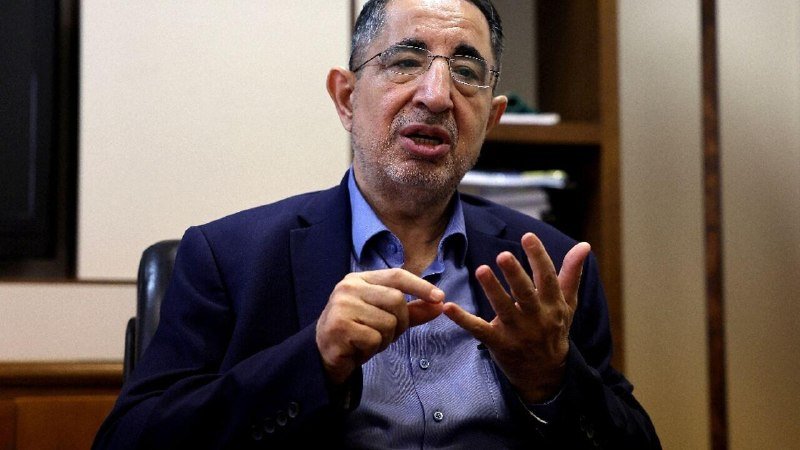
Israeli warplanes struck twice on Thursday morning in Lebanon's eastern Bekaa Valley, hitting the town of Ain Borzai and the outskirts of Baalbek, according to Al Jazeera reporting carried by Iranian state outlet Tasnim. A separate wave hit the southern city of Nabatieh hours earlier. Both reports landed within a six-hour window on 19 June 2026, and neither came with a claim of military target from the Israeli side.
The pattern is familiar, but the framing is not. Lebanon has spent most of the past eighteen months as a low-attention backwater of the wider Middle East file — eclipsed by Gaza, by the Houthi maritime campaign, by the slow-moving US–Iran track. The decision to strike deep into the Bekaa and to hit Nabatieh twice in a single morning pushes the file back toward the top of the desk. The quiet is over. What replaces it is the harder question: who is setting the tempo, and on whose clock?
What the reporting actually shows
The two Bekaa strikes were reported by Al Jazeera and relayed in English by Tasnim News at 07:52 UTC on 19 June 2026, with a duplicate post by Tasnim's Persian-language Jahan Tasnim channel at 07:51 UTC. The Nabatieh strikes arrived earlier in the morning, reported by the same outlets at 06:53–06:54 UTC. The timeline is consistent: two geographic theatres, one morning, two source-pedigree wires carrying essentially the same claims in parallel.
What the reporting does not contain is the part that usually anchors a strike story in Western wire copy — the Israeli military spokesperson's identification of a specific target, the rationale, the warning to civilians, the casualty count. None of that is present in the Telegram thread. The reporting, in other words, is a snapshot of the strike, not an account of the strike. That gap is itself part of the story.
Why the sourcing gap matters
Western wire copy on Israeli airstrikes in Lebanon has historically travelled on a three-track system: an Israeli Defense Forces spokesperson statement, a Lebanese state readout, and an on-the-ground correspondent describing wreckage. When the IDF does not speak — or when its readout arrives late — the first two hours of coverage are dominated by the source with the fastest production line. In this case, that is Tasnim relaying Al Jazeera relaying its own field reporter.
The structural problem with that pipeline is not bias in the colloquial sense. It is that a single, unverified frame — "two airstrikes," unnamed target, no casualty figure — travels from a Hezbollah-aligned regional ecosystem into global coverage before any counter-frame can be assembled. The Reuters / AP / AFP cycle, where it picks up the story later in the day, will inherit the wording already in circulation. The asymmetry is not editorial. It is chronological.
The diplomatic vacuum around it
The quieter story beneath the strike reporting is the absence of any obvious diplomatic frame. There is no ceasefire negotiation visibly on the rocks that these strikes are designed to accelerate, no Hezbollah rocket barrage in the preceding 24 hours that would justify a retaliation cycle, and no public statement from a Western capital framing the strikes within a known policy. Lebanese Prime Minister Nawaf Salam's government, in office since early 2025, has built its credibility precisely on the project of keeping Lebanon out of the wider regional escalation — and yet its eastern border is being struck without acknowledgement from any of the governments that fund and arm the parties on both sides.
That silence is the part that should worry observers in Washington, Paris, and Riyadh. Strikes without a stated rationale and without a diplomatic track are strikes that drift. They produce their own escalation logic. A Bekaa strike at 07:52 UTC invites a response; a Nabatieh strike at 06:54 UTC invites another response; by Friday morning, the regional file has added two new kinetic points to a map that was already being managed by attrition.
What this publication is watching
Three things will clarify in the next 48 hours, and Monexus will report on each as evidence arrives. First, whether the Israeli military issues a retroactive target identification — and if so, whether that identification stands up against open-source imagery of the strike sites. Second, whether the Lebanese army or the UN Interim Force in Lebanon (UNIFIL) issues a position, given that both have standing roles in the south and the Bekaa border areas. Third, whether any Western capital — most plausibly Washington — breaks the silence. The absence of a US readout in the first six hours after the strikes is unusual; whether that absence is intentional will tell us how the regional file is being priced inside the administration.
The sources do not specify casualties, do not specify the weapons used, and do not identify the targets. Until those gaps are closed by independent reporting, any framing of the strikes — whether as calibrated counter-Hezbollah operations, as a pressure tactic on the Beirut government, or as an unmoored escalation — is provisional. The reporting is solid on what was hit and when. It is silent on why, and on what comes next.
Monexus is treating the Israeli strikes on the Bekaa and Nabatieh on 19 June 2026 as a continuation of the post-November 2024 Lebanon file, not as a discrete event; the Western wire cycle tends to cover each strike in isolation, while the structural question — who is managing the tempo of the Israeli–Lebanese frontier and on what authority — runs underneath every one of them.
Wire provenance
This editorial synthesis draws on the following public wire/social posts:
- https://t.me/tasnimnews_en/
- https://t.me/JahanTasnim/
- https://t.me/tasnimnews_en/
- https://t.me/JahanTasnim/
Follow the event.
These dated source records provide context. They do not retrospectively verify this archive article.
Separate what the nuclear watchdog reported from what it could not determine after the June 2025 strikes.