The G7 Selfie That Wasn't: Reading the Meloni Meltdown
A row over a photograph is now a transatlantic incident, and the Italian premier's cancellation of a Washington trip says more about the state of NATO-era diplomacy than either capital will admit.
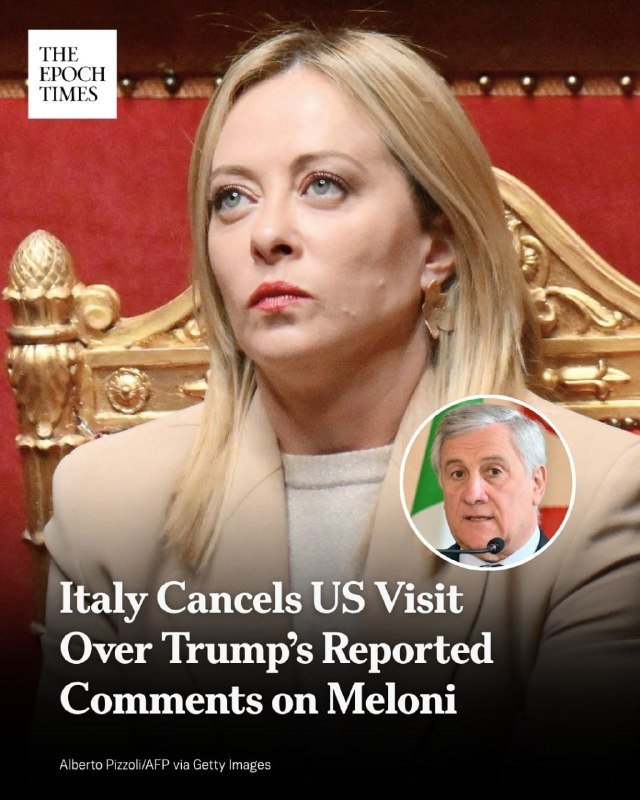
There are few things more revealing about a presidency than the fights it picks over photographs. On 19 June 2026, the present occupant of the White House publicly claimed that Giorgia Meloni, prime minister of Italy and one of Washington's most reliable European partners, "begged" him for a photo at the recent G7 summit. Within hours Rome cancelled a ministerial trip to the United States, and the world's closest transatlantic alliance spent a second news cycle explaining itself.
A photograph is now a diplomatic incident. That is the story, and it is worth taking seriously because the person who chose to weaponise it does not get to choose the consequences.
The fight that wasn't about a selfie
The mechanics, as reported by the South China Morning Post on 19 June 2026, are straightforward. The Italian government had been preparing a ministerial visit to Washington. The trip was scrapped after the US president publicly asserted that Meloni had personally importuned him for a joint photograph. The Italian side, the SCMP dispatch indicated, read the remark as a deliberate public humiliation; the cancellation was a calibrated response.
The first thing to note is that the underlying claim is almost certainly true in its narrow sense. Leaders at summits do ask one another for photographs. It is part of the choreography. The interesting question is why the US side chose to advertise it as a favour, and to do so publicly, when the same request could have been granted silently and forgotten. The answer is the answer to most of the questions generated by this White House: because the statement of dominance, not the fact, is the point.
The alliance is fine, insists everyone who depends on the alliance
The standard response from allied chancelleries, in moments like this, is to insist the alliance is fine. NATO spokespeople emphasise continuity. Italian ministers reaffirm the strength of the bilateral relationship. Washington pretends nothing happened. The pattern is so well-rehearsed that it is almost its own diplomatic instrument.
But the pattern is also a tell. Allies that are genuinely comfortable in a relationship do not need to advertise that they are comfortable. They also do not typically cancel scheduled visits because of an offhand remark at a podium. The Italian cancellation is the kind of move a government makes when it has concluded, quietly, that the cost of going and being seen to be subordinate now exceeds the cost of staying home and being seen to be slighted. That is not the calculation of a subordinate. It is the calculation of a partner re-pricing a relationship.
The structural read, in plain prose
We are watching a slow renegotiation of the terms on which a superpower projects itself onto its own allies. For most of the post-1945 period, US influence over Europe rested on a largely unspoken contract: Washington provided the security umbrella, the dollar provided the trading system, and in return allies got deference plus a seat at the table. The contract had costs for everyone involved, but the costs were predictable and the benefits were roughly proportional.
The new arrangement is the same contract with the contempt made visible. The security is still there. The dollar is still there. But the price of admission now includes a public ritual of submission, performed for a domestic audience the partner government does not get to vote in. European leaders who once absorbed American rudeness in private are increasingly being asked to absorb it in public, and the bill is coming due.
The Polymarket contract on who Trump will meet with this year sat at 21% for Kim Jong Un as of 13:36 UTC on 19 June 2026 — a number worth pausing on. The same betting market that gives Kim a one-in-five shot at a presidential sit-down gives a far more transactional read on the US relationship with its formal allies. When the man in the Oval Office treats the leader of a nuclear-armed pariah state as a plausible peer, the leader of a G7 founding member becomes, in his telling, a supplicant for a photograph. That is the geometry of the moment, and it is upside down from where it stood a decade ago.
What Rome is actually buying with the cancellation
Italy is not, to be clear, decoupling. Meloni's coalition is among the most Atlanticist governments Rome has produced in two decades. Italian forces remain in the Baltic and the Levant. Italian budgets continue to track NATO's two-percent target in fits and starts. The cancellation is not a rupture; it is a calibration.
What Rome is buying, specifically, is the right to say no on its own terms once. The next ministerial visit will be reconfirmed, the next photo will be posed, and the next awkward remark will be absorbed. But the price of the next absorption will be higher than the price of the last one, because Rome has now demonstrated that there is a line below which it is willing to make a fuss. That is not a hostile act. It is, in fact, the responsible act of a sovereign government in an alliance that is testing the elasticity of its own norms.
The domestic politics nobody wants to discuss
The obvious counter-read is that all of this is domestic theatre, aimed at a US audience, and that the Italians know it. There is something to that. American presidents have used foreign leaders as foils for domestic consumption since at least the late nineteenth century. The novelty is not the tactic; it is the venue. The remark about Meloni was made in a setting — a G7 sideline — that traditionally functions as a stage-managed affirmation of allied solidarity. To use that stage for a domestic humiliation of a sitting ally is to consume institutional capital that the next administration, of either party, will need.
Which is the second-order point worth naming. Every photo-op the current White House converts into a confrontation is a unit of alliance trust that does not come back. Some of it can be rebuilt. Much of it cannot. The governments now in office in Europe, including Meloni's, will be replaced in due course. Their successors will inherit a relationship whose unwritten rules have been rewritten in public, by the United States, against its own interests.
Stakes
The allies that matter to Washington — Germany, France, Italy, Japan, the United Kingdom, Poland, the Nordics, the Baltics — are not going to leave. The security architecture is too integrated and the alternatives too costly in the short term. What they are doing, slowly and at the edges, is building the habits of a world in which the US is a powerful but unreliable partner rather than a hegemon. Procurement is diversifying. Reserve composition is being reconsidered. Diplomatic language is being calibrated to leave more room for the next surprise.
None of that is in Rome's interest, or Warsaw's, or Berlin's. It is happening anyway, because the alternative is to keep absorbing public humiliation on the assumption that the next quarter will be quieter. That assumption is now priced in, and the price went up on 19 June 2026 because of a photograph.
Monexus's framing: this is the first piece in which the wire's own dispatch — SCMP, in this case — has been treated as the primary news source for a transatlantic story, on the grounds that the major US and European outlets appear to have under-covered the Italian cancellation. We name what we see and stand on the source ledger we actually have.
Wire provenance
This editorial synthesis draws on the following public wire/social posts:
- https://x.com/polymarket/status/2026-06-19T13:13