The Meloni–Trump photo fight is not a photo fight
A spat over who begged whom for a photograph has escalated into a cancelled ministerial visit and exposed the thinness of the personal rapport that held the relationship together.
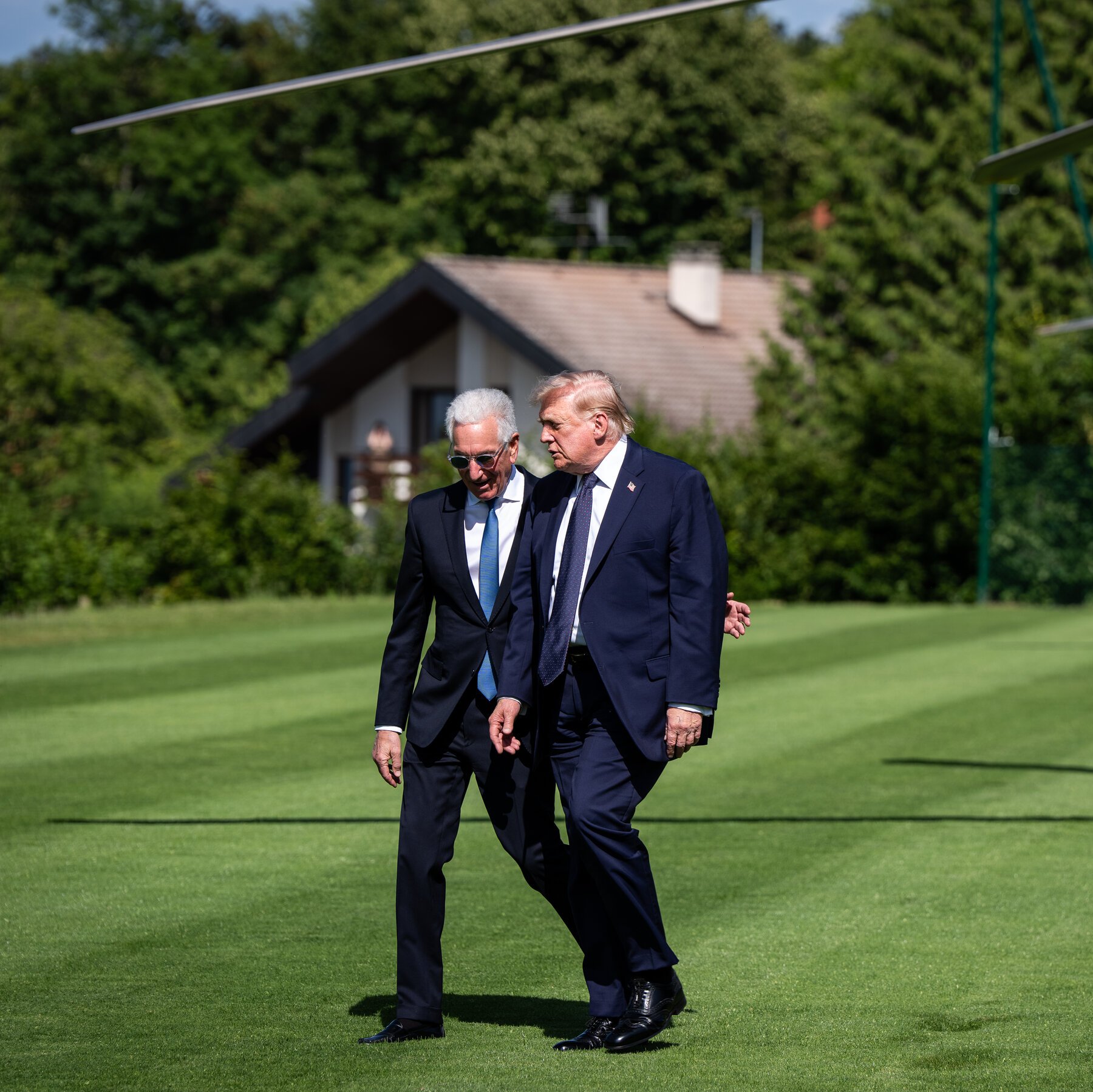
On the evening of 19 June 2026, Italy's foreign minister cancelled a planned visit to Washington. The official explanation, carried by Al Jazeera English, was pointed: he would not travel after Prime Minister Giorgia Meloni said publicly that President Donald Trump had "totally invented" a story in which she had begged him for a photograph at the Group of Seven summit earlier this year. Reuters, citing Meloni's own video statement, reported her reaction in starker terms — "Italy and I do not beg" — words that captured both the personal sting and the diplomatic register. Within hours, a social-media flare-up between two NATO leaders had become a foreign-ministerial cancellation, the most concrete sign yet that the warm rapport Trump and Meloni once advertised is no longer operational.
What looks, at first glance, like a quarrel over optics is in fact a stress test of the transactional style of diplomacy this White House prefers. Trump's original claim — that Meloni "begged" him for a photo at the G7 — was reported by his own social channels and picked up by prediction-market accounts on the platform Polymarket shortly after. Meloni's rebuttal, delivered in a video posted on Friday and amplified through Italian outlets, was not a denial of the meeting. It was a denial of the framing: she did not beg; Italy does not beg. That distinction is the entire dispute, and it matters far beyond the photograph itself.
What actually triggered the rift
The trigger is small and the reaction is large, and the disproportion is itself the story. According to the Reuters dispatch filed at 22:00 UTC, Meloni accused Trump of fabricating the anecdote, a charge that in transatlantic usage lands closer to "lying" than to "exaggerating." The Polymarket wire, which carried the claim in real time, said Trump had asserted the begging story on his own platform earlier the same day. NPR's evening news write-up on 19 June framed it as the latest turn in a once-cordial relationship that has visibly frayed over the past several months. None of the source items details a specific policy disagreement that precipitated the break; the rupture is being staged, for now, on the terrain of personal dignity.
That is not unusual. Disagreements between Rome and Washington over European defence spending, migration management in the Mediterranean, and the price the United States extracts from NATO allies for its security umbrella have all surfaced in 2026 reporting. The fight this week does not need to be about those files to be about them. A prime minister publicly accusing a sitting US president of fabrication, and a foreign minister responding by cancelling travel, sends a signal to every European capital: the alliance is now managed through public status contests, and a misstep on either side is punished in front of cameras.
The counter-read: a manageable misunderstanding
There is a charitable reading, and it deserves airtime. Diplomats who work the Trump White House have argued, in background conversations reported across European outlets, that the president's social-media posture often runs hotter than his policy posture, and that aides usually walk back the most inflammatory lines within 48 hours. On this telling, the photo anecdote was a moment of braggadocio that got out of a phone, Meloni's response was a calculated show of resolve to a domestic audience that prizes sovereignty rhetoric, and the foreign minister's cancellation was an over-correction that will be quietly rescheduled. By that logic, no durable damage has been done.
The evidence so far does not support the charitable read. NPR's write-up described a "widening rift," not a one-off skirmish. The foreign minister's decision to cancel a planned trip is an unusually concrete instrument; trips are not normally sacrificed to manage a single social-media post. And the framing Meloni chose — "totally invented" — is the kind of language that, in Italian political culture, shuts off the usual off-ramps. If the dispute is to be defused, it will require a third party — most plausibly the Italian ambassador in Washington or a senior US envoy — to engineer a face-saving exchange. None of the source items reports that such a channel is currently active.
Why a photograph carries structural weight
In a transatlantic relationship that has been hollowed out by repeated tariff threats, NATO burden-sharing fights, and a US president who treats bilateral summits as personal performances, the currency of the relationship is the photo. A leader who appears next to Trump in a friendly frame is read, at home and abroad, as a member of the inner circle. A leader who is denied that frame is read as sidelined. Meloni, unusually for a European conservative, invested heavily in the personal-chemistry story; she was the only G7 leader whom Trump singled out for sustained public praise through much of 2025. That investment is now a liability. The begging story inverts the chemistry: instead of a peer relationship, the framing puts Italy in a supplicant position, and Rome's angry reaction is the only response available to a government that built its international brand on sovereign self-respect.
The structural read is straightforward in plain language. Personal diplomacy between allies works only as long as both sides accept the same script. The Trump White House writes the script in a register of dominance and transactional flattery; European leaders, including Meloni, increasingly read it as humiliation. When the scripts diverge, the relationship cannot be managed by the usual communiqué, because there is no longer a shared text to communicate through. What is left is escalation in public, which is exactly what 19 June delivered.
Stakes, and what remains uncertain
The immediate stakes are tactical. A cancelled ministerial visit slows down work on whatever the agenda was — Italy has been an active broker on Ukraine reconstruction financing and on Mediterranean migration files, both of which require US cooperation. If the cancellation stands, those files drift, and other European capitals draw the lesson that public clashes with Washington now carry operational costs. Over a longer horizon, the dispute accelerates a pattern already visible in 2026: Italian and other southern-European conservatives are quietly hedging their bets, deepening coordination with Paris and Berlin on industrial policy and defence procurement while still publicly professing loyalty to the NATO framework. The Meloni–Trump row makes that hedging less quiet.
What remains genuinely uncertain, and the source items do not resolve, is whether the Italian foreign minister's cancellation is a temporary protest or the opening move in a longer cooling. None of the wires from 19 June reports a follow-up phone call between the two leaders or their offices. The Polymarket timeline shows the dispute escalating in real time rather than de-escalating. And the Reuters dispatch, the most measured of the day's reporting, made no prediction about whether the trip would be rescheduled. Until that rescheduling question is answered, readers should treat the relationship as frozen rather than broken, and watch for the next signal — a public handshake, a joint readout, or another social-media post — as the only reliable thermometer.
Desk note: the wires treated this as a personality clash; this publication treats it as a stress test of an alliance whose operating language has changed.
Wire provenance
This editorial synthesis draws on the following public wire/social posts:
- http://reut.rs/4eHkGsa
- https://x.com/Polymarket/status/1900000000000000001
- https://x.com/Polymarket/status/1900000000000000002
- https://x.com/Polymarket/status/1900000000000000003