Myles Smith, on the cusp of a debut: therapy, family, and the weight of a year that changed him
The 26-year-old singer-songwriter tells Reuters his debut LP 'My Mess, My Heart, My Life' arrives as the closing chapter of the most public year of his life — and the first he has chosen to spend mostly offline.
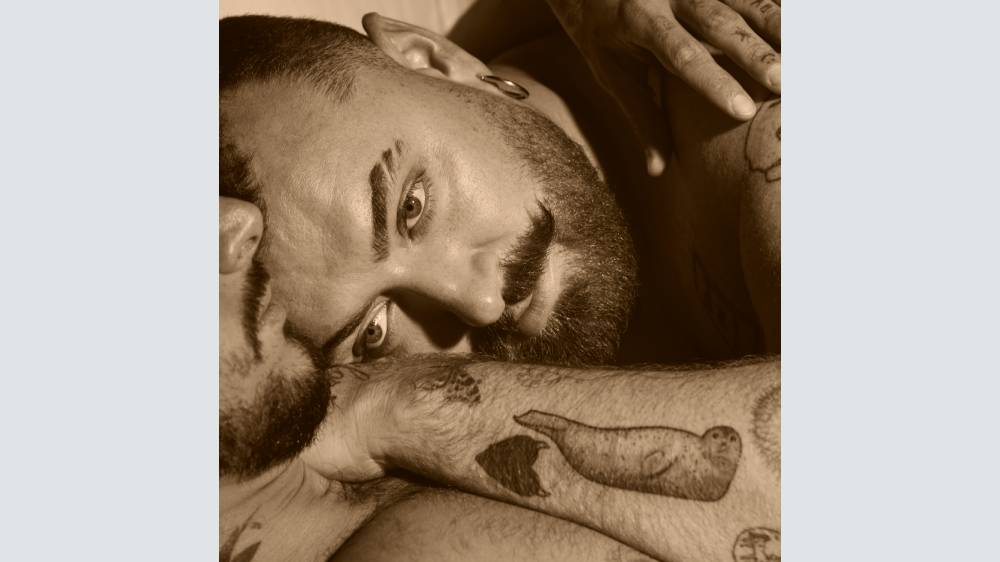
When Myles Smith sits down with Reuters Culture in mid-June, he is, by his own admission, still a few weeks away from the version of himself that can hold the year he has just had at arm's length. The conversation, published on 19 June 2026, is positioned around the imminent release of his debut album My Mess, My Heart, My Life, but it reads less like a press cycle obligation than a partial accounting. "I'm still not ready," Smith tells Reuters, a line that doubles as the headline and the most quotable summary of where he is at the start of his major-label life.
Smith is a 26-year-old British singer-songwriter whose ascent over the past two seasons has been the kind of curve that prompts two competing reactions in the trade press: a story about an artist finding a mass audience on his own terms, and a story about the speed at which a streaming-era machine can scoop up a singular voice and try to render it in its own image. The Reuters Q&A — short by music-feature standards, longer than a standard EPK — sits firmly in the first register. What Smith gives Reuters is a portrait of an artist who has decided, for now, to treat fame as a project to be managed rather than a vocation to be served.
A debut framed as closure, not arrival
The album's title does the work that debut-LP marketing usually avoids. My Mess, My Heart, My Life is positioned, in Smith's own framing, as the end of a chapter rather than the opening of one. The songs, he suggests, are the residue of a stretch in which therapy, family, and the gravitational pull of a viral hit cycle all became competing obligations. Reuters notes the record arrives after a period in which Smith has spoken publicly about the importance of professional mental-health support; the interview extends that thread without dramatising it, and without the kind of confessional register that often signals a label-coached vulnerability sprint.
The framing matters because debut albums in 2026 are increasingly released into a market that punishes them for being debut albums. The default commercial logic — drop the LP inside the same six-week window as the lead single's chart peak, front-load the press, monetise the moment — leaves little room for the slower arc of artistic consolidation. Smith's team, to the extent that the Reuters exchange reveals anything about it, appears to be working against that default. The artist himself is the messenger.
The counter-narrative: a pop star being manufactured in real time
There is a less generous reading of the same interview, and it deserves airtime alongside the more sympathetic one. A 26-year-old releasing a debut LP titled in the first person, photographed in soft focus, accompanied by a therapy-positive headline, is also running a recognisable contemporary playbook: signal relatability, signal mental-health literacy, signal that the artist is aware of the discourse about artist burnout and is choosing not to be consumed by it. The fact that the album exists at all inside a major-label release schedule is, on its own, evidence of the apparatus Smith says he is trying to step partly outside of.
None of this requires treating Smith's disclosures as insincere. It does mean noting that the interview sits inside a wider industry pattern in which the language of therapeutic self-knowledge has become a marketing register as much as a personal one. The phrase "I'm still not ready" can be read as a working artist trying to be honest about his own development. It can also be read as the most efficient possible encapsulation of an artist-brand proposition: I'm not the finished product, and that's the product. Both readings are defensible on the evidence of the Q&A; Reuters does not arbitrate between them, and this publication will not either.
What the album is, and isn't, asked to do
The structural problem of a debut in 2026 is not unique to Myles Smith, but it lands on him with unusual force because the songs that put him on the map were, by his own account, written before the apparatus around them existed. Smith came to attention through a run of tracks that circulated on the strength of voice and writing rather than infrastructure; the debut LP is therefore being asked to do two things at once — confirm that those instincts scale up to album length, and accept that the conditions under which it will be heard are fundamentally different from the conditions under which it was written.
The Reuters interview gestures at this tension without resolving it. Smith speaks about family, about the utility of therapy, about the discipline of writing songs that hold up outside the studio. He does not — and cannot, in the format — speak about the label decisions, the release-window pressures, the streaming-platform politics that will determine how many listeners the record actually reaches in its first month. Those forces are the air the album will breathe, and they are not negotiable from the artist's chair.
What remains uncertain
The Reuters exchange is candid about what it doesn't know, which is mostly the album itself. The release window, the full tracklist, the songwriting collaborators, and the live-performance infrastructure around the LP are not detailed in the published Q&A. The interview is, by design, a portrait of the artist on the eve of release rather than a critical assessment of the work — that work is for the record critics and the audience to do when the album arrives.
The single most concrete thing Smith gives Reuters is the framing of his own readiness: not there yet, getting closer, willing to be honest about the gap. It is a small piece of information, but it is the kind that makes the difference between a debut cycle that reads as a launch and one that reads as a beginning. My Mess, My Heart, My Life will land in that gap, and on the strength of this conversation, Smith seems prepared for it to land unevenly.
Desk note: Monexus treats Smith's Reuters Q&A as a primary-source artist statement, not as a record review. Coverage will return to the album once the work itself is in the world.
Wire provenance
This editorial synthesis draws on the following public wire/social posts:
- https://x.com/reuters/status/2065879918609936384