The Nabatieh raid, in the newsroom’s gap
Israeli strikes on Nabatieh are unfolding in plain sight, but the English-language news machinery is producing almost no verified picture of what is happening on the ground.
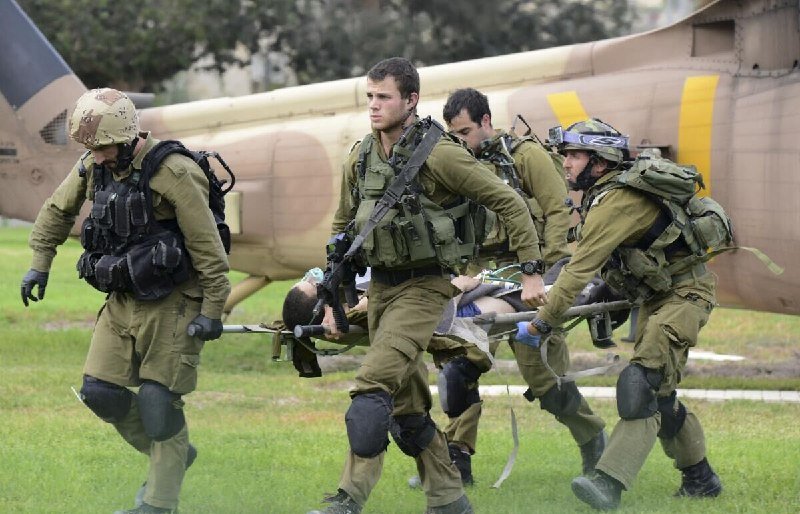
Between roughly 22:00 and 00:20 UTC on 18–19 June 2026, Israeli aircraft and artillery hit the southern Lebanese city of Nabatieh and surrounding towns in a sustained overnight campaign, while a missile was reported fired at an Israeli force in southern Lebanon with claims of two military vehicles destroyed. The strikes — the densest round of fire on the area in the current escalation — were carried in real time on Telegram by Hezbollah-aligned outlet Al-Alam Arabic and the field channel Warfront Witness, with no equivalent English-language wire reporting visible in the same window.
The structural story is the gap. Nabatieh has been a Hezbollah-governed city since 1998 and a recurring target of Israeli fire since 7 October 2023, but the English-language press has rarely treated overnight raids there as a first-order story unless casualties cross a threshold, a senior figure is killed, or a diplomatic track is in motion. That editorial economy is the point. A city of roughly 40,000 people is being struck repeatedly, and the international reader is left to assemble the picture from Arabic-language pushes and monitoring channels.
What the pushes actually say
The Al-Alam Arabic feed records the sequence. At 22:06 UTC on 18 June, Israeli artillery struck the vicinity of Nabatieh. Forty minutes later, Israeli aircraft raided the town of Zabdin, just to the south. By 23:13 UTC, Israeli media — as relayed by Al-Alam — were describing a "very difficult event" involving a tank running over what the channel called "an unusual bomb," followed by evacuations of Israeli casualties from southern Lebanon. At 23:24 UTC, Al-Alam carried a claim, sourced to "occupation flags" in its own framing, that a missile had been fired at an Israeli force with two military vehicles destroyed. The raids continued: Kfarjouz at 23:57 UTC, and then a fresh strike on the city of Nabatieh itself at 00:19 UTC on 19 June, the last timestamp in the cluster.
Warfront Witness, a field-monitoring channel, added a second corroborating feed, noting Israeli jets over southern Lebanon and a strike on the city of Nabatieh in the same window.
What the pushes do not contain is casualty figures, the names of the dead, the precise ordnance used, or any acknowledgement from the Israeli military. The IDF Spokesperson's English-language feed carried no corresponding notice in the same window. That silence is itself a data point.
The counter-narrative, and the framing problem
The standard Western-wire reading of overnight raids in this corridor tends to be either a brief Reuters or AFP line — "Israeli strikes hit southern Lebanon, Hezbollah claims retaliation" — or nothing at all. When a strike is reported, the language almost always defaults to the Israeli military's account, on the assumption that Hezbollah-aligned channels have an interest in inflating or fabricating the picture. That assumption is sometimes correct, and Hezbollah's media operation is a propaganda organ, not a neutral newsroom.
But the reverse is also true. Israeli military communiqués have, on multiple documented occasions since 7 October 2023, omitted or downplayed incidents in southern Lebanon that later emerged through the Israeli press. The result is not a balance of biases but a recurring pattern in which the only immediate, granular, time-stamped account of a strike is a channel that the Western reader has been trained to discount. A reader in London or Washington who only follows Reuters, AP, and the BBC will, on most nights, simply not know Nabatieh was hit until morning.
What the newsroom is missing
The deeper problem is structural. Southern Lebanon is not a closed information environment; it is one that the mainstream English-language press has chosen to under-resource. The Times of Israel, Haaretz, and Ynet carry Israeli-side coverage; L'Orient Today and The Daily Star of Beirut cover from the Lebanese side. The wire services produce file-grade copy. But there is no correspondent in Nabatieh, and the editorial decision not to post one is the same decision that defines what counts as news. A strike in Nabatieh, where dozens of civilians were killed in a single 2023 raid, gets less column-inch in the Anglophone press than a single injured soldier from the same night in the Jerusalem bureau's lead.
This is not a complaint about bias in the headline sense. It is a complaint about a coverage economy that has quietly re-priced what an event is worth. A missile hitting an Israeli Merkava is a story because the Israeli press will not let it be ignored; a 220-kg bomb on a residential block in Nabatieh is, in the Anglophone file, a sentence, on a good day.
Stakes
The 8 October 2023 onward exchange across the Lebanon-Israel border has been a slow-bleed war by international press standards, with casualty counts on the Lebanese side that the UN and Lebanese authorities put well into the four figures. The most plausible reading of the overnight sequence is a continuation of that tempo — tit-for-tat fire, no decisive escalation, no breakthrough on a ceasefire track. The least plausible reading, and the one that bears watching, is a coordinated Israeli push north of the Litani ahead of any US-mediated arrangement, as the previous Trump-administration framework had floated. Nothing in the pushes resolves that uncertainty. What the pushes do show, with monotonous consistency, is that the only places watching Nabatieh in real time are the people in Nabatieh and the channels that speak to them.
The honest summary, for now: an Israeli airstrike campaign on a Hezbollah-governed city is underway, with the standard early reports from the field sourced to outlets that the international newsroom has been conditioned to discount, and no equivalent counter-account from the Israeli military or from Western wire correspondents in the same window. The reader who wants a verified picture will need to read Arabic, and to wait for the morning. That wait is the story.
This publication has framed the overnight sequence around the sourcing gap rather than the strike itself, on the working assumption that the Israeli military's silence and the absence of a wire correspondent in Nabatieh are themselves the most newsworthy facts in the cluster.
Wire provenance
This editorial synthesis draws on the following public wire/social posts:
- https://t.me/s/alalamarabic
- https://t.me/s/wfwitness
- https://en.wikipedia.org/wiki/Nabatiyeh