Obama Presidential Center opens in Chicago, blending archive with a stage for living politics
A new museum and civic center on Chicago's South Side opens with the Obamas, family, artists and dignitaries on hand — and a built-in argument about what a presidential library can be in 2026.
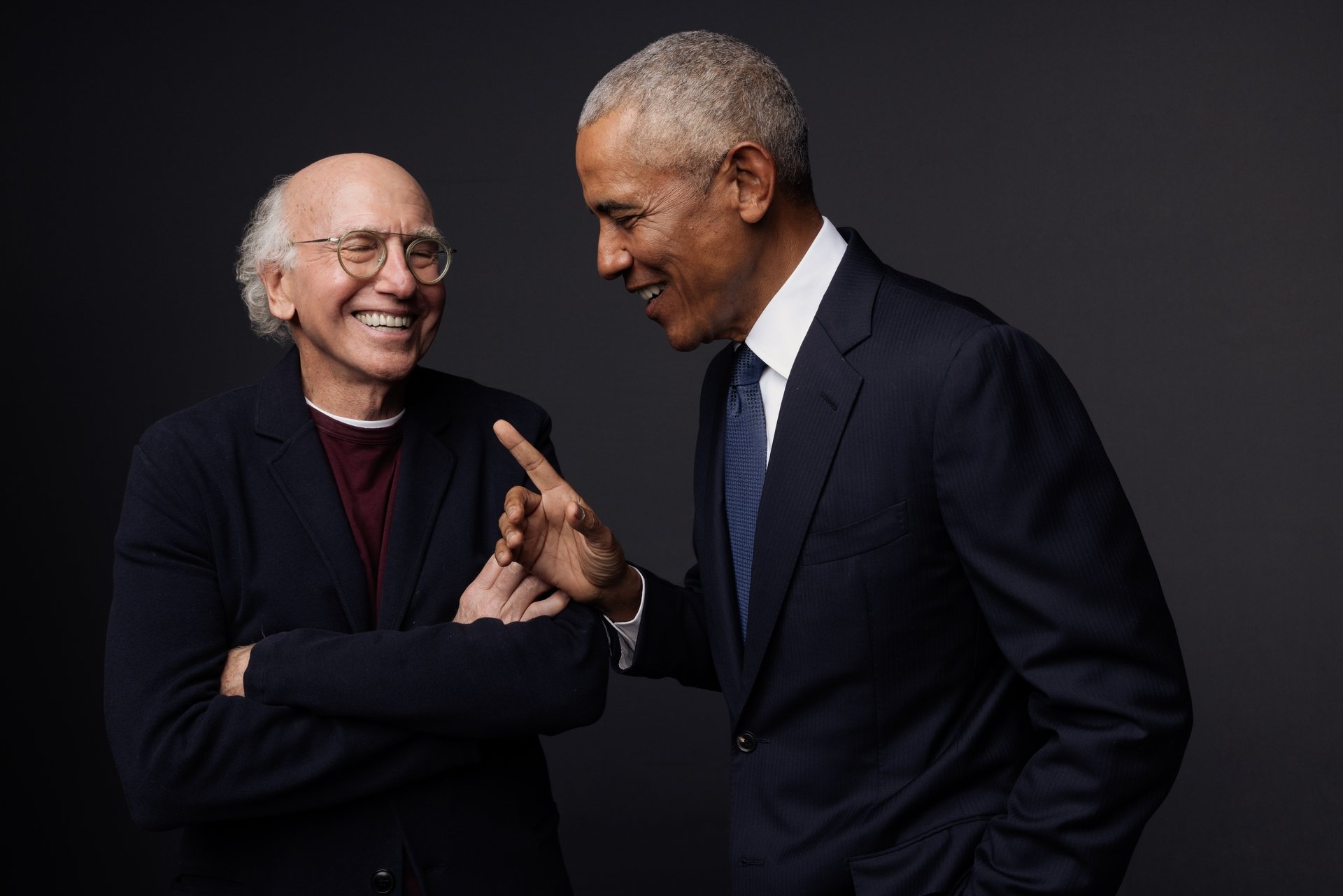
On 19 June 2026, former US President Barack Obama, former first lady Michelle Obama and their daughters joined a roster of dignitaries and artists on Chicago's South Side to inaugurate the Obama Presidential Center, a museum-and-civic complex years in the making. The opening crystallised a deliberate choice the Obamas made early in the planning: the project would be neither a marble mausoleum nor a conventional campaign archive, but an active civic campus designed to host the ongoing work of the Obama Foundation. Coverage by Reuters, whose footage of the ceremony is circulating on social media, frames the moment as the consolidation of a post-presidential brand into brick, glass, programming and place — and as a notable act of capital and attention returning to a Chicago neighbourhood that has long been written off by private investment.
The complex lands at a particular cultural moment: the American presidential-library tradition is being forced to ask, generation by generation, what these buildings are for. Cold War–era libraries tended toward hagiography. The Obama Center is trying something different — a museum that doubles as a community square, with auditorium, forum and recording space threaded through the exhibition halls. Whether that works, as a model for the next presidential museum and as an instrument of civic life on the South Side, is the open question the opening has put back on the table.
The setting, on the ground
The campus sits on the South Side of Chicago, in Jackson Park, the same stretch of Frederick Law Olmsted-designed parkland that hosted the 1893 World's Columbian Exposition. That setting is not incidental. Locating a presidential centre adjacent to a historic fair site, on publicly held parkland within reach of the South Side's predominantly Black residential neighbourhoods, was itself a political act — a deliberate counter to the gravity of downtown and the lakefront museum district, and a quiet rejoinder to the long history of cultural investment flowing around, rather than into, these communities. The Obamas' sustained engagement with the South Side, from community-organising roots in Altgeld Gardens on through the foundation's place-based programming, supplies the project's claim to local legitimacy.
The opening programming reflects that ambition. Reports of the ceremony describe a programme built less around ribbon-cutting ceremony than around convened audiences — artists, civic leaders, young organisers — with the Obamas visibly positioned as host rather than as principal of state. That staging is itself a soft argument about what post-presidency can mean: institutional, public, locally grounded, rather than solitary or mercenary.
The museum model and what it argues
American presidential libraries have traditionally split into two registers. The first, dominant through the late twentieth century, is the federal archive model: a National Archives facility, a museum, a documentary record, often attached to a university. The second, which has gained ground since the 1990s, is the privately built campus — Bush's in Dallas, Clinton's in Little Rock, the George W. Bush Center in the same city — that mixes archive, museum and a foundation's programmatic wing. The Obama Center sits firmly in the second camp and leans further toward the foundation wing than its predecessors, with explicit civic-purpose architecture and a programming calendar that the foundation, not the National Archives, will run.
This is also a deliberate stylistic break. The early renderings were widely mocked for what critics called a fortress-like massing. The finished project has moderated that impression without fully escaping it; the buildings remain heavy on stone and shadow, even as the interior is more porous, more daylight, more performance-oriented than the George W. Bush Center next door in Dallas. Where the Bush Center is read as a statesman's retreat with a policy institute attached, the Obama Center is being read, fairly or not, as a stage — a campus built to host, convene and broadcast, with the museum as the lobby.
There is a real argument that this is the right call in 2026. The civic-square model fits a media environment in which a presidential library must function less as a mausoleum and more as a content engine — a place where the live footage, the curated conversations and the convening power of a former president generate a continuing record that the static exhibits alone cannot. It also fits a fundraising reality: foundation-run campuses can scale programming that federally administered ones cannot, and they can move faster.
The counter-narrative
The project has critics, and they are not all making the same argument. Preservation groups spent years in court over the footprint in Jackson Park; some local residents organised against the campus's effect on green space and traffic. Those objections are a legitimate part of any honest accounting of how the centre came to be built. Separately, a sharper critique from South Side organisers has held that the campus risks functioning as a brand veneer — a curated representation of Black political achievement laid down next to neighbourhoods still contending with disinvestment, displacement and policing patterns the Obama administration's record in Chicago did little to change. The centre's $700-million-plus price tag, by that reading, is the most expensive image of upward mobility on the South Side, even if the foundation's place-based grants are real and ongoing.
There is also a generational question the opening will have to answer. Presidential libraries in the foundation mode have tended to soften, over time, into monument — their founders' political edges sanded down by the institutional need to please donors across the spectrum. The Obama Foundation's programming is more openly political than the Bush Center's or the Clinton Foundation's has been at the equivalent stage, but the trajectory is real. The question is whether the forum and auditorium are built to host a range of civic argument or whether, a decade out, they will be wired to a narrower set of voices.
The stakes
For the South Side, the immediate stakes are concrete. The campus is a fixed, taxable (where the land is privately held by the foundation) and programmable asset in a part of the city that has been starved of them. Construction spending, foundation hiring, foot traffic, transit pressures and the foundation's place-based grantmaking will all be measurable, and Monexus will watch the next several years for whether the centre proves to be a real node of civic infrastructure or a polished one.
For the presidential-library tradition, the stakes are subtler. If the Obama Center works as a civic square, it is likely to be the template the next generation of presidential foundations copy. If it does not — if the programming drifts toward content production, if the museum becomes a backdrop, if the foundation's political edge blunts — then the model will be quietly disowned in favour of something more deliberately archival. The opening day did not settle that question. The next decade of programming will.
The reporting that exists so far is thin on the operational details that will matter most — governance of the campus, the museum's permanent collection, how the foundation intends to share or limit access to its convening space, the labour practices on site. Reuters' opening coverage is essentially scene-setting; longer and more granular reporting will follow as visitors, journalists and scholars work through the building. The framing the Obamas want is clear. The framing the building will earn, in use, is still being written.
Desk note: Monexus has framed this as a cultural-and-civic story, not a political-tribute story. The wire so far is largely celebratory; we have tried to hold the genuinely local objections — preservation, displacement, the gap between brand and neighbourhood — at the same weight as the foundation's stated mission.
Wire provenance
This editorial synthesis draws on the following public wire/social posts:
- https://x.com/reuters/status/2067883150844526592
- https://en.wikipedia.org/wiki/Obama_Presidential_Center
- https://en.wikipedia.org/wiki/Presidential_library
- https://en.wikipedia.org/wiki/Obama_Foundation