Polish president strips Zelensky of Order of the White Eagle, citing UPA unit naming
Warsaw revokes Ukraine's highest Polish honour over a UPA-named brigade; Zelensky returns the order and rebukes Nawrocki, putting historical memory and EU accession on the same collision course.
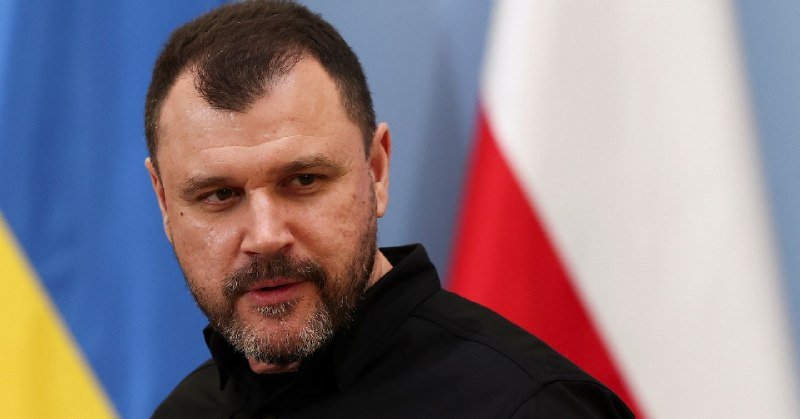
Polish President Karol Nawrocki has revoked Volodymyr Zelensky's Order of the White Eagle, Poland's highest civilian decoration, citing a Ukrainian government decision to name a military unit after a World War II-era formation that collaborated with Nazi Germany and committed mass atrocities against Polish civilians in Volhynia and Eastern Galicia. The decree, signed in Warsaw this week, marks the first time a sitting Ukrainian head of state has been stripped of a Polish state honour, and it lands while Kyiv is still fighting for its survival against a full-scale Russian invasion now in its fifth year. Zelensky responded within 24 hours, announcing he will return the order and publicly chiding Nawrocki over what he characterised as Warsaw's selective memory of twentieth-century violence. The exchange crystallises a long-simmering bilateral collision over historical memory that has outlived governments on both sides and now risks complicating Ukraine's EU accession trajectory at the precise moment Brussels is moving to open the first accession clusters.
The proximate trigger is small and almost certainly deliberate. Ukraine's Defence Ministry, under wartime legislation that allows the president to name units without parliamentary review, conferred the honorary designation of a Ukrainian Insurgent Army (UPA) brigade on an active formation. The UPA fought Soviet occupation through the 1940s and is treated as a liberation movement in official Ukrainian historiography. In Polish memory, the same organisation is indelibly associated with the Volhynia massacre and a sustained ethnic-cleansing campaign that killed an estimated 50,000 to 100,000 Polish civilians between 1943 and 1945. Nawrocki's office argued in a written justification that honouring a unit bearing the UPA name cannot be squared with the symbolic meaning of the White Eagle, the same insignia that decorated resistance fighters and post-1989 democratic reformers. The legal mechanism invoked is the president's prerogative to withdraw decorations previously conferred, a power Polish heads of state have used sparingly and almost exclusively against individuals convicted of serious offences or shown to have collaborated with hostile foreign services.
Zelensky's counter-statement, delivered in his nightly video address and amplified on official Kyiv channels, leaned on three arguments. First, that Ukraine is at war and cannot afford the moral overhead of policing the wartime iconography of units that are actually fighting. Second, that Poland has its own unresolved twentieth-century record and should not lecture Kyiv from a clean sheet. Third, framed as a personal rebuke, the line "Karol, that's his name, right?" followed by a pointed reminder that Poland is a republic, not a monarchy, and that its presidents are accountable to voters rather than to historical grievance. The tone was unusually personal for a wartime leader speaking about a frontline neighbour, and it has been read in Warsaw as a deliberate downgrade of the bilateral relationship from allied solidarity to adversarial equals.
What the dispute is really about is the political economy of memory inside two adjacent but incompatible national narratives. Ukraine's post-2014 decommunisation drive swept away Soviet-era monuments and reclassified the UPA as a national-liberation movement, a framing now embedded in school curricula and in the rhetoric of every sitting president since 2015. Poland's post-1989 settlement treated the same period through the opposite lens, with the Volhynia massacre classified by the Sejm in 2016 as genocide, a designation Kyiv has never accepted. Both readings rest on real historical material; both have been hardened by electoral politics. Nawrocki's presidential campaign, run on a nationalist-conservative platform, made the UPA question an explicit theme, and revoking the White Eagle is a fulfilment of a campaign pledge rather than an improvised gesture. Zelensky's own domestic coalition, including significant nationalist constituencies and a parliament that has refused to repeal UPA-related legislation, leaves him limited room to publicly de-escalate without paying a domestic price.
The EU dimension is where the friction starts to bite strategically. Brussels has framed Ukraine's accession as a geostrategic imperative, a firewall against Russian revanchism and a down-payment on a Europe whole and free. The European Commission's October 2025 progress assessment praised Ukraine's alignment with the EU acquis on judicial reform, anti-corruption architecture and digital markets, while flagging shortfalls on minority rights, deoligarchisation and the pace of war-time institutional reform. Poland is the loudest internal advocate for Ukrainian membership and the single largest national donor of military hardware. It is also, by population, the EU's most direct stakeholder in how Kyiv handles the memory of events that occurred on what is now Polish territory. A bilateral detonation over historical symbolism does not formally block accession, but it complicates the unanimity that every enlargement requires, and it hands ammunition to member states, above all Hungary, that were already arguing Ukraine's candidacy was premature.
The bilateral economy remains intact for now. Polish-Ukrainian trade continues to grow, cross-border traffic at Medyka and Korczowa is heavy in both directions, and refugee returns have proceeded without official friction. The military-to-military relationship has not publicly degraded, and the Polish government has not threatened to slow the delivery of ammunition or air-defence components. What has changed is the diplomatic register. Volodymyr Zelensky's office and Karol Nawrocki's chancellery are now publicly trading barbs in a way neither Andrzej Duda's presidency nor Donald Tusk's government allowed to surface, and the underlying policy dispute has been elevated from a quiet technical irritant to a head-of-state argument broadcast on nightly news on both sides of the border. The risk is not a Polish-Ukrainian rupture over the war, where alignment is total and electorally entrenched. The risk is that historical memory, treated for decades as a manageable irritant, becomes the vector through which a much larger argument about Ukraine's European future is fought.
The most plausible next move is a quiet de-escalation corridor, likely behind a joint commemoration in Volhynia, a reciprocal state visit framed around shared post-2022 sacrifice rather than 1943 grievance, and a Ukrainian procedural adjustment that reclassifies the named unit under a hybrid designation that drops the explicit UPA reference while preserving morale. Warsaw, for its part, is likely to bank the revocation as proof that a nationalist-conservative president can defend Polish memory without breaking the war coalition. The harder scenario, a slow drift in which Polish rhetoric on Volhynia hardens against the Ukrainian framing while Kyiv reciprocates with parliamentary moves on Polish minority commemoration sites in western Ukraine, would not break the alliance but would corrode the political capital on which fast accession depends. Both governments now have a strong incentive to find the off-ramp before the EU's December European Council, where enlargement language is due for an update and where Hungary will be listening for any sign of bilateral fracture.
Sources
- DDGeopolitics (Telegram, 2026-06-21): https://t.me/DDGeopolitics
- Witness from the Front (Telegram, 2026-06-21): https://t.me/wfwitness
- Two Majors channel (Telegram, 2026-06-21): https://t.me/two_majors
- Kyiv Post (Telegram, 2026-06-21): https://t.me/Kyivpost_official
- Ukrainska Pravda (Telegram, 2026-06-21): https://t.me/ukrpravda_news
- UNIAN (Telegram, 2026-06-21): https://t.me/uniannet
- Ruptly (Telegram, 2026-06-21): https://t.me/ruptlyalert
- Clash Report (Telegram, 2026-06-21): https://t.me/ClashReport
Desk note: Monexus frames the dispute as a bilateral historical-policy collision with an EU-accession overlay, rather than as a rupture in Polish–Ukrainian solidarity on the wider war. Wire coverage on Telegram and X has emphasised the personal clash; this analysis treats the named-unit decree, not the leaders' rhetoric, as the operative fact, and reads the escalation against the December European Council calendar.
Follow the event.
These dated source records provide context. They do not retrospectively verify this archive article.
A dated voting record is evidence of one decision. Use the original UN record before turning it into an alignment label.
Visual explainer · historical vote of 2022-03-02 →