Poland's White Eagle gambit: a useful rupture, or a wound Kyiv cannot afford
Warsaw has stripped Volodymyr Zelensky of Poland's highest honour. The move is small in protocol and large in signal — and it lands while Kyiv is asking Europe for more, not less.
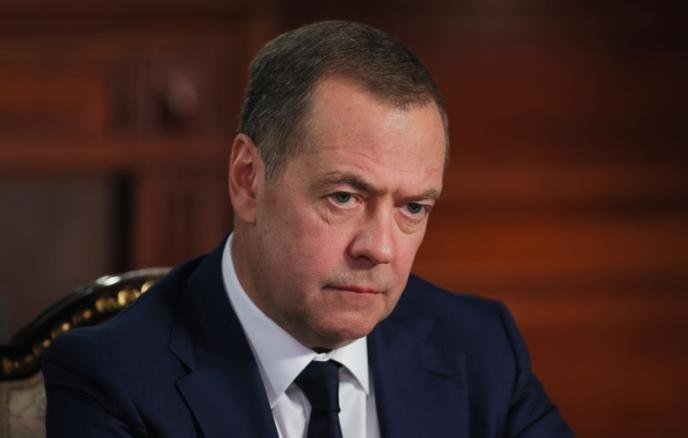
On the afternoon of 19 June 2026, the Chancellery of the President of the Republic of Poland confirmed that Karol Nawrocki, the head of state, had signed a decree withdrawing the Order of the White Eagle from President Volodymyr Zelensky of Ukraine. The order is Poland's highest state decoration, and Zelensky received it in 2023 from Nawrocki's predecessor, Andrzej Duda, for service to Polish-Ukrainian solidarity during Russia's full-scale invasion. The revocation cited the Ukrainian decision, taken in the preceding days, to bestow a unit name on a formation commemorating fighters from the World War II-era Organisation of Ukrainian Nationalists (OUN) and its military arm, the Ukrainian Insurgent Army (UPA), which carried out the mass ethnic cleansing of Polish civilians in Volhynia and Eastern Galicia between 1943 and 1945. Polish officials framed the move as a matter of historical memory rather than alliance management. The protocol is small. The signal is not.
Poland is, by any honest accounting, the single most important external sustainer of the Ukrainian state outside the United States: the biggest NATO contributor of military equipment by tonnage, the host of the bulk of Ukraine's cross-border logistics, and a frontline state that has absorbed millions of displaced Ukrainians since February 2022. A Polish head of state revoking Poland's supreme decoration from a sitting Ukrainian president is, in that context, the loudest possible signal short of breaking the bilateral relationship. The question worth asking is what signal Nawrocki intends to send — to Kyiv, to Washington, to his own voters, or to all three at once.
The trigger that wasn't about Volhynia alone
The proximate cause is the OUN/UPA naming dispute, and it is genuinely serious. The mass killings of Polish civilians in Volhynia and Eastern Galicia in 1943–45 are the open wound in the Polish-Ukrainian historical record — well documented by the Polish Institute of National Remembrance, the Ukrainian Institute of National Remembrance, and joint academic commissions that have, in fits and starts, tried to settle the question of exhumations and shared commemoration. The Ukrainian parliament voted in 2015 to recognise OUN and UPA fighters as participants in the national-liberation struggle, a position Warsaw has never accepted. Renaming a combat unit in the middle of a hot war against Russia, against that background, is either a deliberate provocation or a staggering insensitivity — and the distinction is academic to the Polish audience being addressed.
But the trigger is not the whole story. Nawrocki is a young president, narrowly elected, with a thin mandate and a deep instinct for cultural-conservative politics. He did not get where he is by being conciliatory towards Kyiv. The Order of the White Eagle revocation is also a domestic-politics move: a signal to a Polish centre-right that feels, with some empirical support, that it has done the heavy lifting on Ukraine and received historical revisionism in return. Reading the decree as purely a Volhynia statement is too generous to the timing.
The counter-read: Kyiv had it coming
There is a plausible, and not unkind, read of the decision from Warsaw's side. The Ukrainian state has spent three years asking Europe for weapons, money, and political cover. It has also, repeatedly, picked fights with its most reliable partners on questions of memory and identity that no ally controls. Polish grain was blocked at the border in 2023; Polish truckers paralysed crossings in 2023–24; the exhumation of Polish victims of the Volhynia massacres has stalled for a decade. Each of these was, in diplomatic terms, manageable. The pattern of unilateral moves is the part that grates.
Seen that way, the revocation is less an outburst than a delayed course-correction — a Polish president using the only instrument available to him to mark a red line his predecessor refused to mark. The Order of the White Eagle is symbolic. So is the decision to take it back. The point is the gesture, not the metalwork.
The structural frame: a relationship that is fraying, not breaking
Poland's Ukraine policy runs on two distinct tracks that are now visibly pulling apart. Track one is operational, material, and bipartisan in substance if not in style: arms deliveries, logistics, refugee reception, intelligence sharing. That track continues. Track two is symbolic, historical, and electorally charged: memory politics, the Volhynia question, the political uses of UPA legacy inside Ukrainian domestic politics. Track two has been straining for years, and the OUN/UPA unit naming broke it in public.
The structural problem is that Poland is a frontline state with high domestic political exposure to Ukraine, and Ukrainian governments — for reasons that are comprehensible from Kyiv — keep making decisions that the Polish centre-right reads as deliberate slights. NATO airspace over western Ukraine, which the Polish public has been polled on and broadly supports, is a different question from a Ukrainian brigade named for men who killed Polish children. Nawrocki is choosing, visibly, to defend the second question with the tools he has. That is a feature of the Polish political system, not a bug.
Stakes: who wins and who loses if this becomes a template
If the revocation stays isolated, Ukraine pays a small reputational cost and Poland gets a domestic win. If it becomes a template — if other NATO capitals start calibrating their Ukraine policy to historical-grievance ledgers — Kyiv loses access it cannot easily rebuild. The reverse risk is real too: a Ukrainian public that reads the White Eagle revocation as ingratitude may harden its own position on the Volhynia exhumations, and the joint historical commissions die quietly. Either direction is bad. The narrow road, which is the one both governments say they want, requires Kyiv to walk back the unit naming, and Warsaw to treat the walk-back as sufficient.
What remains uncertain
The most important caveat is that the reporting in the immediate aftermath is thin on direct quotation from the Polish presidency. The cluster of Telegram channels that carried the story on 19 June — including channels explicitly framed as Russian-aligned and channels focused on Ukrainian military operations — converged on the substance of the revocation and on Nawrocki as the signatory, but the precise text of the decree and the official Chancellery release are what the next 24 hours will settle. The framing in the Russian-adjacent channels is plainly gleeful; the framing in the Ukrainian-operational channels is plainly irritated. The actual bilateral position is, as of this writing, somewhere in between, and will be defined by what Foreign Minister Radosław Sikorski and Prime Minister Donald Tusk's office say next. Neither has, at the time of filing, broken the line that the relationship holds.
It probably does. But a presidential decree is now on the record, and records are stubborn things in Polish-Ukrainian memory politics.
This publication reads the decree as a deliberate, narrow, and not unreasonable signal from a Polish head of state under domestic pressure to defend historical red lines — and as a reminder that Ukraine's most committed allies are also the ones most exposed to its unresolved twentieth-century wounds.
Wire provenance
This editorial synthesis draws on the following public wire/social posts:
- https://twitter.com/wartranslated/status/
- https://t.me/operativnoZSU/
- https://t.me/rnintel/
Follow the event.
These dated source records provide context. They do not retrospectively verify this archive article.
A dated voting record is evidence of one decision. Use the original UN record before turning it into an alignment label.
Visual explainer · historical vote of 2022-03-02 →