Scotland and Morocco meet in a World Cup fixture that doubles as a referendum on group-stage ambition
A win in the group would have been Scotland's most consequential World Cup result in decades. Morocco, already qualified, arrive as the test of whether Steve Clarke's side can convert a party into a knockout berth.
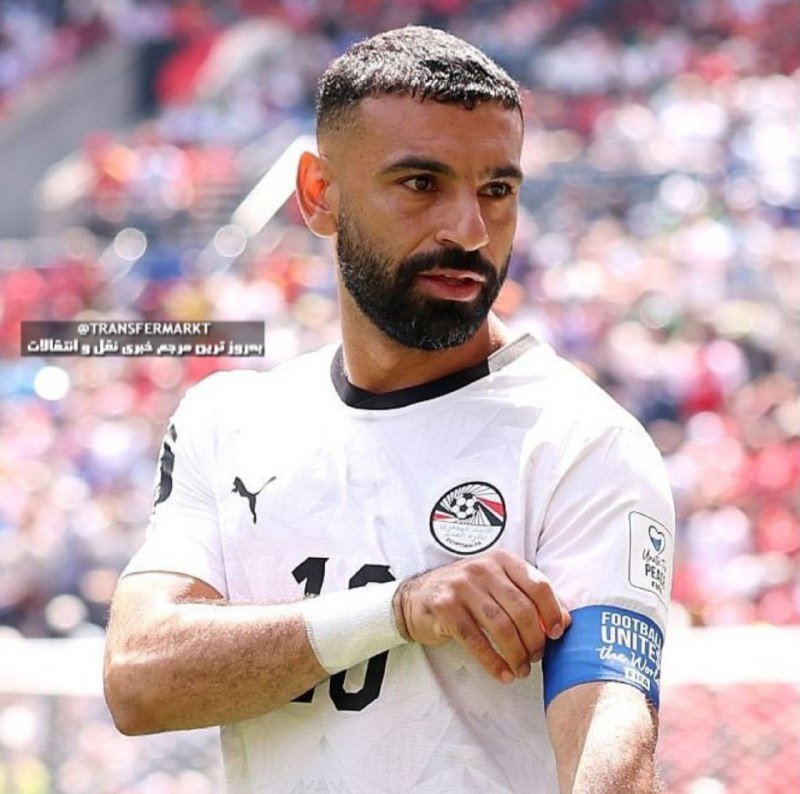
Scotland walked into the 2026 FIFA World Cup as the tournament's most conspicuous romantic story, and on 19 June 2026 they were confronted by the question that romantics eventually have to answer: can the party survive contact with a side that has already done the hard part? Their opponent, Morocco, arrived at the match unbeaten and qualified for the knockout stage, sitting first in Group F. A Scotland victory would have pushed the European side through; anything less and the maths becomes a hostage to other scorelines.
The fixture is the test the calendar built. A Scotland team riding a generational wave of support — and a manager under quiet pressure to justify the optimism — meets a Moroccan side that has spent the cycle institutionalising the lessons of Qatar 2022. The result matters less as a single match than as a referendum on what each programme actually is.
The Scottish proposition
Tom Hamilton's ESPN preview on 19 June framed the occasion with appropriate caution. Scotland, he wrote, have "got down to business with World Cup history in sight," a reminder that this is a squad which has spent a decade accumulating near-misses and a fanbase that has learned to flinch at the sight of them. The manager's brief is simple on paper and punishing in execution: convert a tournament atmosphere into three points against a side that has conceded sparingly and counter-attacked with a fluency that defined the Atlas Lions' run to the semi-finals in 2022. BBC Sport, publishing its player-rating prompt at 22:44 UTC on 19 June, signalled an expectation that the match would produce enough individual decisions — who held their width, who tracked the runner, who took the half-yard in the box — to be settled by hand, not by narrative.
The Scottish case for the knockout round rests on two claims. First, that the squad's collective organisation has tightened across the qualifying campaign and that Clarke's preference for a defensive block can be repurposed as a launchpad for transitions against a Moroccan back line that has shown a willingness to step into midfield. Second, that the emotional reservoir of a nation watching its team at a World Cup again is itself a tactical resource. Neither claim is unreasonable. Neither is proven.
The Moroccan counter
Morocco's structural advantage is that they have stopped being a story. The 2022 run — the defeat of Belgium, the draw with Croatia, the dismantling of Portugal, the narrow loss to France — was presented in some quarters as a fairy tale. The framing missed the more important point: Walid Regragui's side had built a coherent defensive system, recruited intelligently across European leagues, and treated the tournament as an engineering problem rather than a festival. The 2026 cycle has been the audit.
CBS Sports' match preview on 19 June, published at 18:21 UTC, made the calculation plain: the Europeans sit first in the group and can punch their ticket to the knockout stages if they pull off the upset. The word "upset" does work in that sentence. It tells you where the betting market, the federation hierarchies, and the broad expectation sit. Morocco are not favourites in the way their form deserves; they are favourites in the way the bracket was drawn, and that gap — between rating and recognition — is the contest Scotland must close in ninety minutes.
Achraf Hakimi, operating from the right flank, is the most obvious mechanism by which Morocco tilt the field. His capacity to invert into central midfield, to carry the ball across the halfway line, and to arrive at the far post as a third runner gives Regragagui a tactical problem for opponents that does not have a clean solution. Scotland's left-sided defender, whoever starts there, will be asked to do two jobs at once.
What the group maths actually permit
Group standings at this stage of a World Cup are read in conditional tense. The structural point worth making plainly: a draw likely suits both sides more than the framing suggests. Scotland taking a point keeps the qualification conversation alive into the final matchday; Morocco taking a point formalises a top-of-the-group finish and the softer side of the knockout bracket. The risk-reward calculus is asymmetric. Scotland need a win; Morocco need only not to lose.
That asymmetry, more than anything else, will dictate the shape of the match. Expect Scotland to press higher, to commit numbers into the wide channels, and to accept the transitions that follow as the cost of doing business. Expect Morocco to set the defensive line at the edge of their own box, to invite the cross, and to pick the moments — a reset, a set piece, a turnover in the Scottish half — to spring the counter. The game, in other words, will be a referendum on whether Scotland's tactical discipline can outlast their ambition.
Stakes and the limits of the preview
What remains genuinely uncertain — and what the available reporting does not resolve — is the question of rotation. Morocco, already through, have every incentive to rest players whose clubs will shortly be demanding them back. Regragui's selection in the final group match is a federation-political decision as much as a sporting one. Scotland's selection is simpler: pick the eleven most likely to win the game and accept the consequences if the plan fails.
For Scotland, the stakes are existential in the narrow sense that the word is used in qualifying campaigns: a defeat renders the rest of the tournament a series of friendlies against higher-ranked opposition, and the public narrative hardens into one of a side that arrived as a story and left as a footnote. For Morocco, the stakes are reputational and architectural. A draw confirms the institutional case; a defeat to a side ranked below them would be treated, fairly or not, as evidence that the 2022 run was a peak rather than a plateau.
The match, then, is a referendum on both programmes at once, and the only honest preview is one that admits the result will tell us more about the trajectory of each than the standings ever can.
This article is part of Monexus's sports desk coverage of the 2026 FIFA World Cup. We have framed the fixture around the two competing programmes rather than the betting line; the desk note is that preview coverage in the wire tends to under-weight Morocco's institutional case and over-weight the Scottish emotional one.