The smoke over south Lebanon is real. The framing around it shouldn't be.
Reports of a serious overnight incident in southern Lebanon are circulating through channels with very different political valences. The events are real; the way they are described is not neutral — and that should concern readers on every side.
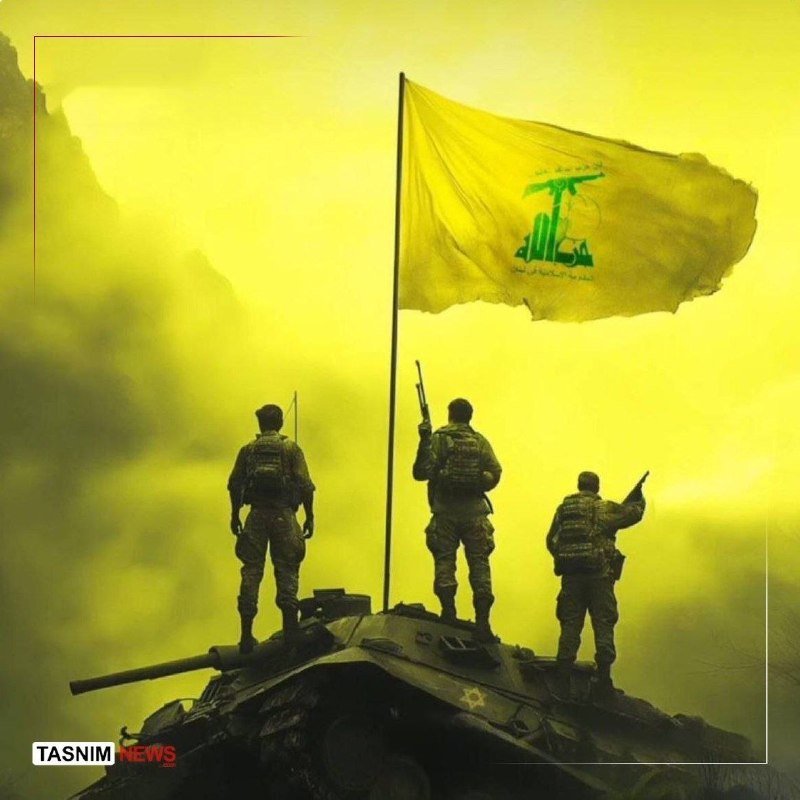
Before sunrise on 19 June 2026, Arabic-language outlets carried urgent bulletins describing continuous Israeli strikes against southern Lebanon since the early morning hours. Within the same news cycle, Hebrew-language Channel 14 broadcast that "the situation in Lebanon is very dangerous for our fighters and this is costing many lives," and Hebrew media reported "serious incidents" overnight with dead and wounded among Israeli ranks. Each of these accounts arrived through channels with sharply different political valences — and the gap between them is itself the story.
The events themselves are not in serious dispute: something kinetic and significant happened overnight along the Israel-Lebanon frontier. What differs is the frame: who initiated, who suffered, what it means, and which version of the night a reader wakes up to. Three short wires from Al-Alam Arabic's Telegram feed, timestamped between 05:15 and 05:48 UTC on 19 June 2026, give the texture of the moment. None of them is a neutral source; none of them is the only source a reader should rely on.
What the wires actually say
The earliest bulletin, at 05:15 UTC, cited Hebrew media as reporting "serious incidents" overnight in southern Lebanon, with casualties inside Israeli ranks. The 05:32 UTC follow-up quoted Channel 14's assessment that the situation was "very dangerous for our fighters" and that "many lives" were being lost. The 05:48 UTC bulletin framed the night's activity as "continuous Zionist aggression" against southern Lebanon since the early morning hours. Each of these is a real claim attributed to a real source. None of them is the whole picture.
The first two wires lean on Hebrew-language reporting — Channel 14 in particular is a right-leaning Israeli outlet whose editorial line favours a hard-security framing. The third wire, distributed by Al-Alam, is the Arabic arm of Iranian state broadcasting; "Zionist aggression" is its standard formulation for Israeli military action, and the channel's coverage of the border has consistently emphasised Israeli initiation. Both sets of framing are interpretable; both are also partial.
The frame problem
Here is the structural issue, and it is one that operates on every side of this conflict. Coverage of the Israel-Lebanon border routinely defers to the language of official spokespeople on whichever side the outlet is closer to. Israeli security concerns are real and must be conveyed without dismissiveness — hostage trauma, rocket fire into northern Israel, the cumulative casualty toll on Israeli communities near the frontier are first-order facts. Palestinian and Lebanese civilian harm is also a first-order fact, and is reported with equal human weight by outlets that take that frame as their starting point.
The risk is not that one side is right and the other wrong. The risk is that a reader who consumes only Hebrew-language security reporting, or only Iranian-aligned Arabic reporting, will absorb a narrative in which the other side barely appears as a subject at all. "Dead and wounded among the ranks of the army" is a sentence that erases the question of how those casualties came to be; "continuous Zionist aggression" is a sentence that erases the question of what prompted the operation in the first place. Both are true; neither is the whole truth.
What a sober reader does with three wires
The honest move is to treat the three Telegram bulletins as three signals inside a larger field of reporting. The substantive content — strikes, casualties, danger to frontline personnel — is corroborated across them, which raises confidence that something significant happened. The interpretive content — who started it, what it means, what should be done — is divergent, and that divergence is information about the media ecosystem, not about the battlefield.
A reader in Tel Aviv and a reader in Beirut, reading only their preferred outlets on the morning of 19 June, will absorb two incompatible mornings. The Israeli-side reports will emphasise Israeli military losses and the difficulty of the operational environment; the Iranian-aligned Arabic coverage will emphasise Israeli initiation and Lebanese exposure. Both readings will be internally coherent. Both will be incomplete.
Stakes
When a border episode of this scale is filtered through three channels with three different editorial centres of gravity, the cost is not just informational but political. Hardening narratives on each side make de-escalation harder. Each cycle of partial framing produces a small increment of inattention to the human cost on the other side of the line — Israeli families told their soldiers are dying in a "very dangerous" operational environment, Lebanese families told they are enduring "continuous" aggression. Both statements can be true at the same hour of the same morning. The work of a serious press is to hold both, not to pick one.
What remains uncertain as of this writing: the precise scope of the overnight operation, the identity of the units involved, the casualty count on each side beyond the directional indicators in the wires, and the diplomatic channel — if any — through which the episode is being managed behind closed doors. The sources do not specify those details. They confirm activity, not its full anatomy.
Desk note: Monexus ran this as an opinion piece because the wire material on the table is partial and politically inflected on every side. The events are real; the framing around them is the editorial question. Where the wires diverge, the piece names the divergence rather than resolving it.
Wire provenance
This editorial synthesis draws on the following public wire/social posts:
- https://t.me/alalamarabic
- https://t.me/alalamarabic
- https://t.me/alalamarabic
- https://en.wikipedia.org/wiki/South_Governorate