The Switzerland Round That Wasn't: How Israeli Strikes in South Lebanon Derailed a US-Iran Track
Vice President JD Vance cancelled his departure to Geneva after Tehran said its delegation would not travel while Israeli strikes in south Lebanon continued, exposing how an outside battlefield can veto a great-power track before it begins.
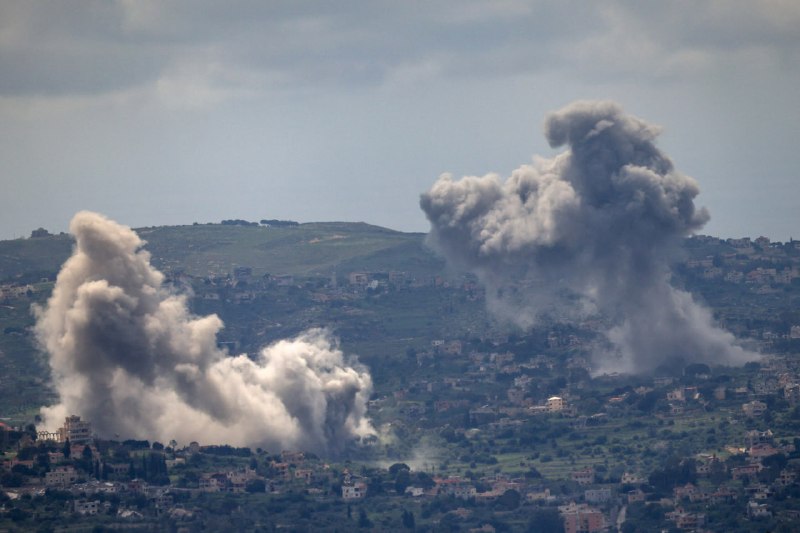
Vice President JD Vance was due to leave Washington for Switzerland on the evening of 18 June 2026, with a meeting between a United States delegation and an Iranian counterpart in Geneva pencilled in as the next move on a long-stalled nuclear track. He did not board the plane. The Iranian side informed Washington that its delegation would not travel so long as Israeli strikes on southern Lebanon were continuing, and the US side, having no one to meet, called the trip off. By the early hours of 19 June, four separate channels — Israeli political commentator Amit Segal, the BRICS-focused BRICS News wire, the Russia-aligned RNIntel channel, and the OSINTtechnical press pool — were carrying the same one-line story: a round that had existed on paper for days was, in practice, off.
The collapse is small in surface terms. No communiqué was issued, no deadline was broken, no treaty was on the table. What is striking is the mechanism. A diplomatic process nominally between Washington and Tehran was held hostage, before it had even convened, to the operational tempo of a third country's air force over a fourth country's territory. The Swiss meeting was always going to be exploratory. Its cancellation is a reminder of how much of Middle Eastern diplomacy now travels on the rails of someone else's war.
What the four wires say, and what they leave out
The four items that surfaced the cancellation between 01:38 UTC and 03:52 UTC on 19 June 2026 are consistent on the headline facts and nearly silent on everything else. Amit Segal, the Israeli political journalist, framed the postponement as a consequence of "IDF attacks in Lebanon" (Segal, Telegram, 03:52 UTC, 19 June 2026). BRICS News reported the same linkage in plainer terms, with no attribution beyond its own handle (BRICS News, Telegram, 03:02 UTC, 19 June 2026). RNIntel, a Russia-adjacent channel that has been broadly sympathetic to the Iranian framing of regional security, gave the most detailed account: Vice President Vance would not depart for Switzerland "after the Iranian delegation stated they would not meet due to Israeli strikes in southern Lebanon" (RNIntel, Telegram, 02:03 UTC, 19 June 2026). OSINTtechnical, sourcing the US press pool, confirmed the cancellation and the Iranian decision not to travel (OSINTtechnical, Telegram, 01:38 UTC, 19 June 2026).
What none of the four items establish is the operational picture on the ground in southern Lebanon. None names a specific strike, a specific target, a specific casualty figure, or a specific date of strike. The phrase "ongoing Israeli attacks on Lebanon" is doing heavy lifting; the reader is invited to assume that Israeli strikes were and are taking place, and that they were of a scale or character that Tehran was prepared to make a public issue of. That is a reasonable inference — Israel has conducted near-daily operations in southern Lebanon since hostilities escalated, and Iran has framed those operations as a regional provocation — but the four-source record does not, on its own, allow a reader to test the claim. The sources do not specify. A reporter working from this ledger alone cannot say which villages were struck, how many civilians were killed, or whether the operations in question fell inside the framework of a named Israeli campaign or outside it.
A second silence is procedural. It is not clear from the four items whether the Switzerland round was a bilateral US-Iran meeting of the kind last seen in 2015 in Lausanne, a follow-up to the Oman-mediated channel that has run intermittently in 2024-2026, or a fresh track. The vice-presidential level of the US delegation is itself a tell — Vance rather than a sitting special envoy or the secretary of state — but the four wires do not say who was leading the Iranian side, what mandate they carried, or what the agenda was. The diplomatic substance, in other words, is a black box. The cables only tell us that the box failed to open.
The veto from the outside
The structural lesson is not about Switzerland. It is about the veto. For most of the period since the 1979 revolution, US-Iran diplomacy has been shaped by the question of whether a third actor — Iraq in the 1980s, Israel at various points, the Gulf states, the IAEA — would tolerate a deal. The classical account of why the 2015 Joint Comprehensive Plan of Action survived long enough to be signed was that the Obama administration had built a sanctions architecture severe enough to give Tehran a reason to engage, and an Israeli and Gulf posture quiet enough not to give Tehran a reason to walk away. The reverse dynamic is now operative. The incentive structure on the Iranian side reads, in this telling, less as "what does Washington offer" and more as "what does the broader regional environment look like on the day we sit down." When Israeli air operations over southern Lebanon are running at a tempo that Tehran can characterise as a campaign, the answer is no.
That is the asymmetry worth naming. The United States, as the convener of the round, controls the date and the venue. Iran, as the reluctant traveller, controls whether it shows up. And Israel, as the operational actor in a third theatre, controls one of the inputs that determines the answer. None of the four items suggests that Washington or Tehran believed the meeting was a certainty; the cancellation reads as the realisation of a low-probability outcome, not the rupture of a high-confidence process. The more important fact is that the inputs to the probability — Israeli strike tempo, Iranian domestic politics, US electoral calendar — are not inputs the State Department or the vice president's office can dial.
It is also worth saying what this episode is not. It is not evidence that the US-Iran track is dead. The four wires are reporting a postponement, not a rupture. RNIntel's phrasing — that the Iranian delegation "stated they would not meet due to Israeli strikes" — leaves open the possibility that a meeting becomes possible again if and when the strike tempo changes, or if the Iranian side finds it useful to claim that it does. The Switzerland round, in other words, sits in a queue of potential future rounds, each of which is conditional on the same external variable.
The Israeli calculus, read carefully
Israeli strategic thinking on Lebanon since the 2024 escalation has been publicly committed to the displacement of Hezbollah infrastructure from the border zone and to a deterrent posture that does not depend on a permanent ground presence. The four items do not let Monexus adjudicate whether the strikes referenced in the Iranian statement were calibrated for those objectives or whether they had drifted. They do, however, let a reasonable observer ask a question. A US administration that has built its Middle East policy around a separate Israel track, around Abraham Accords-style normalisation, and around containing Iran is, on this evidence, discovering that the Israel track can crowd out the Iran track at the operational level. The cancellation in Geneva is not a policy choice by Jerusalem. It is, more precisely, a side effect of an operational tempo that Jerusalem has judged necessary on its own account.
The corollary is that if the Israeli government wanted to free up the US-Iran channel, it has levers. The four items do not establish whether those levers are being used. The pattern of reporting — Segal phrasing the postponement as a function of "IDF attacks" rather than, say, of an Iranian precondition — is consistent with a posture in which Jerusalem is reporting facts rather than owning responsibility for the diplomatic cost of those facts. That posture is familiar from earlier rounds of the regional conversation and is worth naming plainly: a third-party air campaign can be a barrier to a great-power negotiation without anyone in the third-party government ever having to take a decision, on the record, to block the negotiation.
What the four-source record cannot tell you
A reader trying to draw a policy conclusion from these four items will find three limits and should be honest about each. The first is operational. The sources do not specify the intensity, geography, or character of the Israeli strikes in southern Lebanon. They do not name a target set. They do not say whether civilian casualties were reported by UN agencies, the Lebanese government, or humanitarian organisations on the ground. They do not specify whether the strikes in question fell inside an Israeli-declared operation or outside it. A reader who wants to know whether the Iranian precondition was reasonable on the facts has, on this record, no way to test it.
The second limit is diplomatic. The sources do not say who the Iranian delegation would have been, who in the US government beyond the vice president was committed to the meeting, or what the agenda was. The four items also do not say which intermediary — Oman, Qatar, Switzerland itself, the United Nations — was carrying the message. The procedural backstory of the round is invisible.
The third limit is forward-looking. None of the four items is dated after 03:52 UTC on 19 June 2026. There is, on this record, no indication of when or whether a substitute date will be set, what conditions the Iranian side has attached, or what the Israeli operational posture will be in the interim. The four items, in other words, are a snapshot of a moment, not a forecast of a trajectory.
The honest summary is that a meeting the world did not yet know it should be paying attention to was, on the evening of 18 June 2026, prevented from happening by a war the world was already paying attention to. The four wires agree on that. They do not agree, and do not claim to agree, on much else.
The stakes if the pattern continues
If the pattern of the 19 June 2026 cancellation becomes the rule rather than the exception, the regional consequences are tractable. The US-Iran nuclear track, in that world, is not dead — it is intermittent, gated on the operational tempo of a third actor, and therefore fundamentally unsuited to a confidence-building role. Gulf states watching from the sidelines will read this as confirmation that the regional security architecture is, in practice, decided in Tel Aviv and Beirut rather than in Washington or Geneva. Domestic Iranian politics will treat each cancelled round as evidence that the negotiating path is decorative; the harder-line faction in Tehran, in that reading, is handed an easy argument. And the Israeli government, having discovered that its air operations can quietly veto a US-Iran meeting without anyone in Jerusalem having to take that decision on the record, has little incentive to recalibrate.
The more important variable is the one the four items do not name. The pattern holds only as long as the underlying Israeli operational tempo in southern Lebanon is, from Tehran's standpoint, a precondition. The moment that tempo changes — by Israeli choice, by Hezbollah collapse, by a ceasefire of the kind discussed intermittently in 2025-2026 — the gating input changes, and the Switzerland round, or its successor, is back on. The cancelled meeting is therefore best read not as a verdict on US-Iran diplomacy but as a snapshot of a regional order in which the most consequential diplomatic events are not the meetings that happen but the meetings that were almost scheduled.
This publication read four Telegram posts carrying the same one-line story and found a structural problem worth naming. The wires will move on; the pattern will not.
Wire provenance
This editorial synthesis draws on the following public wire/social posts:
- https://t.me/amitsegal/
- https://t.me/bricsnews/
- https://t.me/rnintel/
- https://t.me/osintlive/
- https://en.wikipedia.org/wiki/Joint_Comprehensive_Plan_of_Action
- https://en.wikipedia.org/wiki/Israel%E2%80%93Hezbollah_conflict_(2023%E2%80%93present)
- https://en.wikipedia.org/wiki/Iran%E2%80%93United_States_relations
- https://en.wikipedia.org/wiki/Abraham_Accords
Follow the event.
These dated source records provide context. They do not retrospectively verify this archive article.
Separate what the nuclear watchdog reported from what it could not determine after the June 2025 strikes.
- https://t.me/amitsegal/
- https://t.me/bricsnews/
- https://t.me/rnintel/
- https://t.me/osintlive/
- https://en.wikipedia.org/wiki/Joint_Comprehensive_Plan_of_Action
- https://en.wikipedia.org/wiki/Israel%E2%80%93Hezbollah_conflict_(2023%E2%80%93present
- https://en.wikipedia.org/wiki/Iran%E2%80%93United_States_relations
- https://en.wikipedia.org/wiki/Abraham_Accords