The "primitive genius" remark and the cost of treating a country as a punchline
Donald Trump's "primitive genius" line on Iran to Axios is the kind of line that travels for a week and ages for a decade. It also tells you something about who is, and is not, at the table.
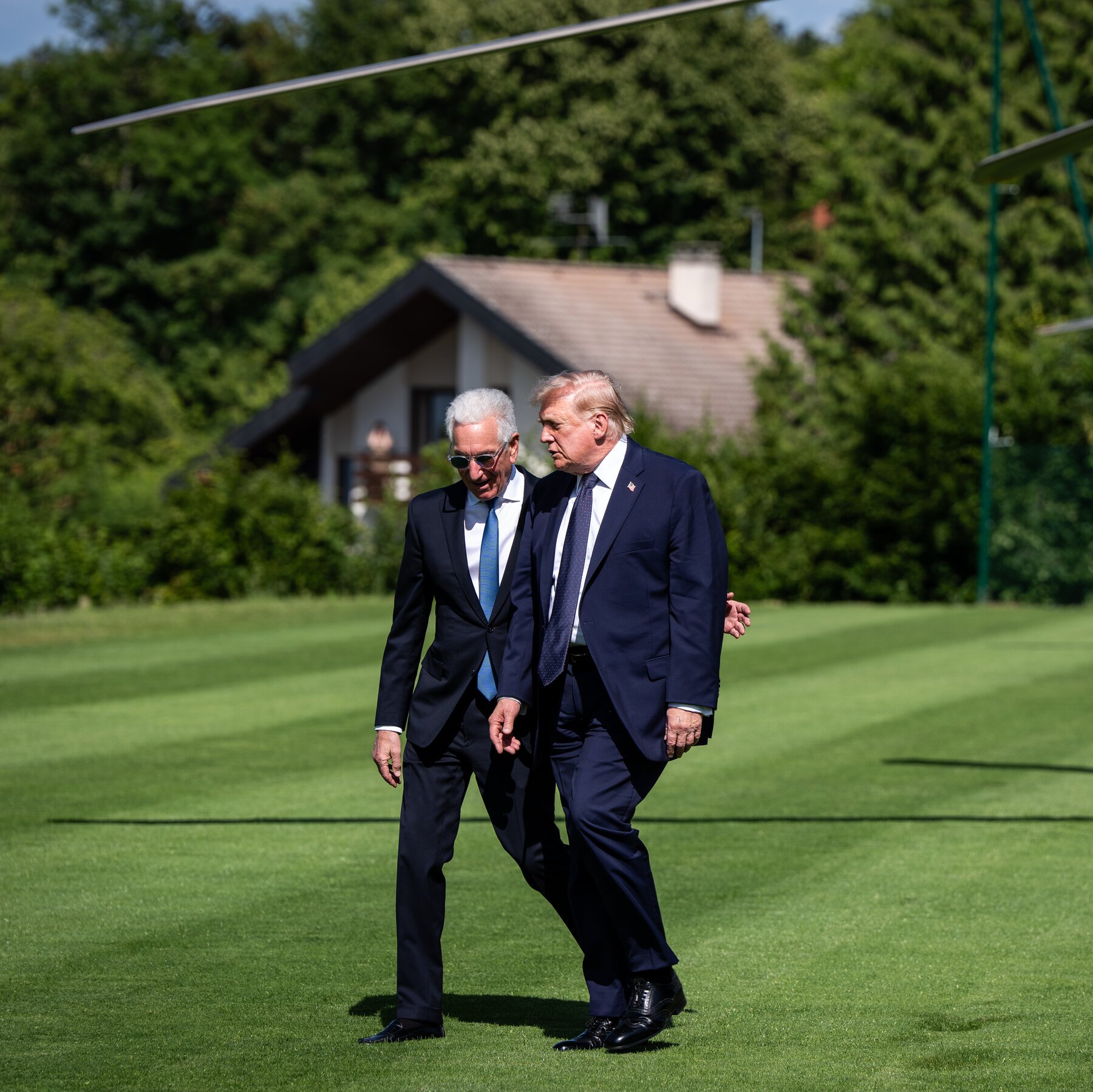
On 19 June 2026, Axios published an interview with Donald Trump in which the sitting US president described Iranians as "very smart people" who are "sort of primitive genius, but they're smart" — and then, in the next breath, said that without him "Israel would not exist today" because Iran "would've blown up Israel." The clip was cross-posted within hours by Telegram channels including Megatron Ron and Clash Report, and was picked up in Iran by Tasnim, which framed the remark as an insult to the Iranian people by "the head of the American terrorist state." Within a single news cycle, a casual aside had become a diplomatic incident, a meme, and a Rorschach test for how the United States talks about a country of nearly 90 million people it has spent four decades trying to coerce.
The pattern around the remark matters more than the remark itself. In the same Axios sit-down, Trump told interviewer Marc Caputo that he opposes a "regime change" approach in Iran — pointing to the succession of Mojtaba Khamenei as a figure "different from the father." He claimed he would beat any Democratic opponent by 25 points. He bragged about not wanting to "kill people" in response to the war-hawks in his own circle. Each of these is, on its own, a familiar Trumpian line. Read together, they sketch a foreign policy being conducted in real time through personality, grievance, and the steady denigration of entire societies — and they make clear that the Iranian file is being run on a knife-edge between self-proclaimed dealmaking and an unconstrained escalatory default.
The quote, and what it does
Strip the phrasing down and the claim is striking enough on its merits. Trump is saying, in a formal on-camera interview with a tier-one outlet, that he personally is the only thing standing between the Islamic Republic and the destruction of Israel. That is not a foreign-policy doctrine. It is a personal indemnification. It places the president — not US strategy, not Israeli deterrence architecture, not the joint strike capability the two countries have spent twenty years building — at the centre of a regional deterrence story. The same interview then turns around and treats the 89 million people of Iran as a collection of "primitive geniuses," a phrase that manages, in four syllables, to be both orientalist and grudging at once.
The structural move is familiar from how the US has talked about adversaries for decades. Adversaries are simultaneously portrayed as 10 feet tall — capable of wiping Israel off the map, sophisticated enough to require maximum pressure — and as somehow lesser. The two are not contradictory in the Washington speaker's mind; they are mutually reinforcing. The first justifies the sanctions architecture, the assassination campaigns, the carrier strike groups. The second justifies treating the country as a punchline, an object of management rather than a polity to be bargained with on equal terms.
The Iranian read
In Tehran, the line did not land as a curiosity. Tasnim, a news agency closely aligned with the Islamic Revolutionary Guard Corps, ran the quote under a frame that called Trump "the head of the American terrorist state" and characterised the remark as "the insult of the head of the American terrorist state to the people of Iran." That phrasing is itself a window: Iranian state media does not need to invent a story here, because the source material hands them one. When the US president speaks publicly about your country in the language of a 19th-century travelogue, you do not have to spin the quote. You just have to translate it.
This is the part the Western press tends to under-weight. The Iranian regime's domestic legitimacy problem is real and well-documented; it is also not the whole story. The Islamic Republic has spent the last four years selling its population a narrative of dignified resistance to American humiliation, and Washington has obligingly walked onto the stage of that narrative again and again. Every "primitive genius" line is, in effect, a campaign advertisement for the faction in Tehran that argues negotiation is impossible.
The Caputo exchange, and what "regime change" means in 2026
The most consequential exchange in the Axios interview is the one the social media clips are not surfacing. Caputo pushes Trump on the regime-change question by pointing to the succession picture — Mojtaba Khamenei is the rumoured heir in waiting. Trump's answer is that the son is "different from the father" and that "they're different people." He does not disavow the goal; he disavows the tactic. The implication is that the United States under Trump is not pursuing the toppling of the Islamic Republic but is willing to outlast it — to wait for a softer successor, the way previous administrations waited for Soviet succession in the 1980s.
That posture has a logic. It also has a price. A sanctions architecture designed to outlast a regime is, definitionally, a sanctions architecture designed to outlast the patience of the population under it. It is a strategy that bets the Iranian state cracks before the Iranian people do — and the historical record on which side of that bet cracks first is mixed at best. The 2022 protests were contained. The 2019 protests were contained. So far, the bet is technically intact, which is not the same as saying it is working.
Stakes
The danger of the "primitive genius" register is not that it is impolite. It is that it is a tell. It tells Tehran, and every other state watching, that the United States is conducting its Iran policy in a register that does not admit Iranian agency, that does not treat Iranians as interlocutors, and that leaves the only dignified position available to Tehran's leadership as the defiant one. A sanctions regime that runs on humiliation is more brittle than a sanctions regime that runs on deterrence, because it is hostage to the next news cycle and the next unguarded quote.
The readers who most need to hear this are not in Tehran. They are in the foreign-policy commentariat that treats the Trump-Iran file as a real-estate negotiation between two personalities. It is not. It is a relationship between a state and a population of nearly 90 million people, the bulk of whom are under 35 and have been told for a generation that the United States is at war with their future. The question is not whether the next deal can be cut. It is whether the next deal can survive a discourse in which the most powerful man in the room cannot bring himself to describe the country he is dealing with in language that respects its people.
How Monexus framed this: the wire coverage of the Axios interview is treating the "primitive genius" line as a colourful quote. We are treating it as a policy artefact — and giving the Iranian state's reading of it the same structural weight we give the White House's.
Wire provenance
This editorial synthesis draws on the following public wire/social posts:
- https://t.me/megatron_ron
- https://t.me/ClashReport
- https://t.me/ClashReport
- https://t.me/ClashReport
- https://t.me/tasnimnews_en
- https://t.me/ClashReport
Follow the event.
These dated source records provide context. They do not retrospectively verify this archive article.
Separate what the nuclear watchdog reported from what it could not determine after the June 2025 strikes.