Trump's Hormuz rhetoric and the geometry of a non-strike
Three Trump remarks in a single evening — ships pouring out of Hormuz, missiles over billion-dollar hulls, and a refusal to send boots — sketch the limits of the air-only posture.
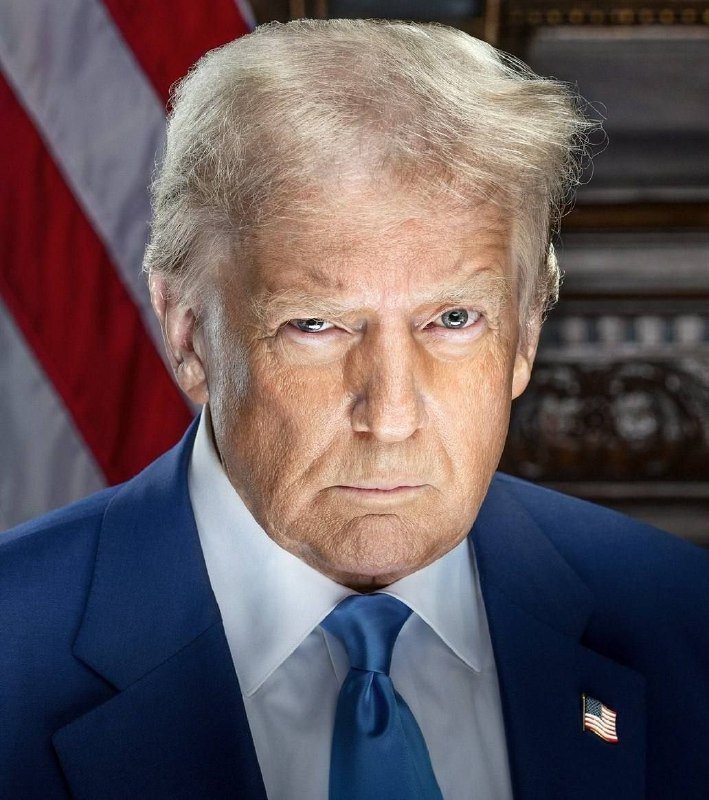
On the evening of 19 June 2026, three short relays from Telegram channels — Clash Report and the Iranian outlets Jahan Tasnim and Tasnim News English — captured the same interviewee, the same interlocutor (Axios), and roughly the same ten-minute window of conversation. Read separately, each clip is a Trump line. Read together, they sketch a posture: an air-only operation, a refusal of ground troops, and a Strait of Hormuz that is open in the telling but demonstrably nervous in the trading. The posture is its own kind of policy.
What connects the three remarks is not a strategy on paper but a constraint in plain words. Trump told Axios, per the Clash Report relay at 19:50 UTC, that ships are "flowing out of the Hormuz Strait like nobody has ever seen before." Half an hour earlier, at 18:56 UTC, Jahan Tasnim reported him describing Iran's missiles as flying over billion-dollar hulls. By 18:49 UTC — the earliest of the three — he was already ruling out the ground option. "If we're not going to put boots on the ground," he told Axios, "probably the [answer] is…" The sentence in the relay trails off, but the conditional is the news.
What the air-only posture buys, and what it does not
The air-only frame is a position, not a tactic. It promises continuity of the tanker trade without the political cost of a ground occupation, and it concedes — by what it omits — that the United States has no appetite for the kind of sustained presence that destroying Iran's coastal missile batteries, mine stocks, and Revolutionary Guard Corps Navy fast-boat nests would require. Hormuz is a defensive problem more than an offensive one. It is a 21-mile-wide chokepoint with two shorelines, each lined with anti-ship missiles, shore-based guns, and small craft that can lay mines in minutes. Air power degrades these systems; only ground presence, partner-nation basing, or a cooperating Iranian faction disarms them.
The shipping claim is the more brittle of the three. The wire channels that have covered the post-strike period — the same Axios interview Trump's interlocutors are pulling from — have consistently reported insurance premiums, war-risk surcharges, and reroutings. Tanker and LNG markets price this in real time. The phrase "flowing out like nobody has ever seen" reads less like an observation than an aspiration voiced by the principal who would most benefit from shipowners believing it. Shipowners price war-risk by probability, not by presidential adjective.
Counter-read: the Strait is busier because the alternative routes are worse
There is a coherent counter-read, and it deserves airtime. Maritime traffic data over the last several years has repeatedly shown that Hormuz volumes stay elevated through periods of acute tension because the Gulf's crude and LNG exporters — Saudi Arabia, the UAE, Iraq, Kuwait, Qatar, and Iran itself — have no pipeline or rail substitute large enough to bypass the Strait. The Gulf's oil, by and large, has to go through Hormuz or not go. A drawdown of US naval escort activity, or a single high-profile boarding or mine incident, could change that math in hours. "Ships are flowing" can therefore be true in the literal present tense and still consistent with a market that is one incident from a re-rating.
The Iranian read, as relayed through Tasnim News English at 18:52 UTC, frames the President as insulting Iranians by calling them "primitive" — a translation that Tasnim itself frames as the insult of "the head of the American terrorist state to the people of Iran." The phrasing is editorial, but the underlying quote is the news: Trump describing Iranians as "kind of primitive geniuses." Two things can be true at once: the line is a taunt aimed at a domestic audience, and it is also a signal to Tehran that the US side has no interest in de-escalation through diplomatic language. The Iranian outlets' amplification of the insult is the predictable response; the structural fact is that name-calling closes off the off-ramps.
The ground question in plain economic prose
The most consequential of the three exchanges is the briefest. "If we're not going to put boots on the ground" is, on the page, a sentence fragment; in policy terms it is a definition. The American political system has not supported a sustained ground deployment in the Middle East since the early years of the post-2003 period. Air power, special operations, partnered local forces, and over-the-horizon strike have been the actual operating model for two decades. Trump's remarks do not break with that model; they confirm it.
What that means for Hormuz is uncomfortable. An air campaign can attrit launchers; it cannot continuously sweep the Strait, escort every tanker, or guarantee that a single mine does not close commercial traffic for the days it takes to render safe. The Gulf states' own navies have grown more capable in the last decade, but the residual deterrence work still falls disproportionately on the US Fifth Fleet, based in Bahrain. "No boots" therefore translates, in plain terms, into a posture that is willing to absorb episodic tanker risk rather than deploy the force structure that would eliminate it.
Stakes, and what the sources do not yet tell us
The next forty-eight hours will tell which of the two readings of Hormuz traffic is correct. The bullish reading — that the President's adjective is becoming the market's reality — requires sustained, low-premium, on-schedule sailings. The bearish reading — that traffic is elevated because there is no alternative, not because risk has fallen — requires only one incident to vindicate itself. The four Telegram relays in the source set do not resolve this; they document the rhetoric that the market is now discounting.
What the sources do not contain is a casualty count, a damage assessment on Iranian launchers, a figure on war-risk premia, or a single named shipping-company suspension. Tasnim's framing of the President's language and Jahan Tasnim's reporting of the missile-over-ships line are both framed through an Iranian-state lens and should be read as counter-claim material rather than as stand-alone evidence. The shipping data, when it arrives from Lloyd's List, the IEA's Oil Market Report, or Bloomberg tanker trackers, will be the verdict on the adjective.
The structural fact underneath the rhetoric is older than this week. The Strait of Hormuz is the most consequential bottleneck in the global energy system, and it sits in waters that no air campaign can permanently secure. A president who wants ships "flowing" without sending ground forces is asking for a market outcome that the operational physics of the Strait do not, on their own, deliver. Either the off-ramp is diplomatic and the rhetoric will soften, or the off-ramp is a partnered forward presence and the rhetoric is mis-selling the policy. The three relays from the evening of 19 June suggest the second is more likely than the first.
Desk note: Monexus led with the air-only constraint, treated the Tasnim framings as counter-claim rather than as primary, and kept the shipping-traffic claim to the President's adjective rather than asserting it as verified market data. The wire outlets covering Hormuz in real time — Bloomberg, Reuters, Lloyd's List — will adjudicate the shipping question over the days ahead.
Wire provenance
This editorial synthesis draws on the following public wire/social posts:
- https://t.me/ClashReport
- https://t.me/JahanTasnim
- https://t.me/tasnimnews_en
- https://t.me/ClashReport