Sixty days, one strait: parsing the Trump-Iran memorandum and the fight over who gets a vote
A 60-day clock now governs diplomacy with Tehran — and a 2015 law looms over whether the White House can keep Congress on the sidelines.
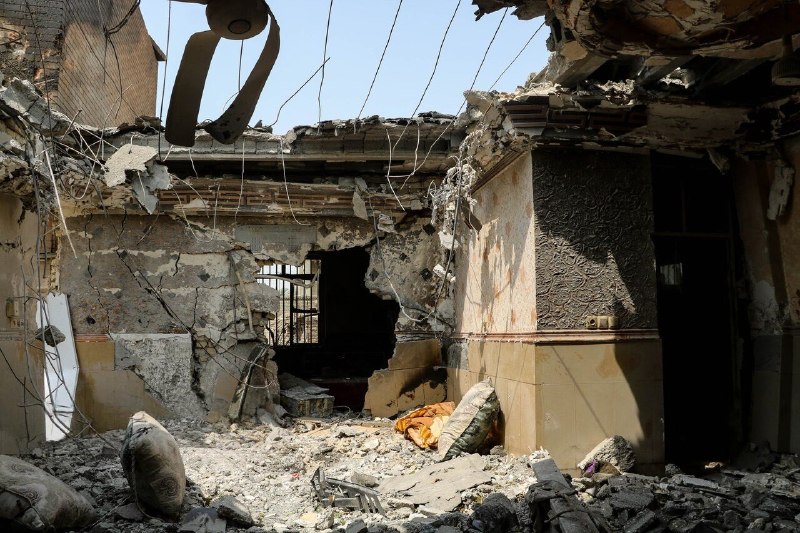
At 19:52 UTC on 19 June 2026, Donald Trump told reporters that the United States and Iran had "an agreement that was signed last night" — a 60-day arrangement in which Tehran is expected to make a deal, after which "we'll do things that won't make them happy, but I don't think it's gonna get to that." Twenty minutes later, asked what would happen if the 60 days lapsed without an accord, the president offered a different kind of threat: an attack on Iran would almost certainly stop the oil from "flowing out of the strait" — the Strait of Hormuz, the chokepoint through which roughly a fifth of the world's crude normally transits. The two statements, taken together, sketch the geometry of a crisis that is being negotiated with one hand on a warhead and the other on a tanker schedule.
The question now is not just whether the deal holds, but who, in a constitutional sense, owns it. A 2015 law — the Iran Nuclear Review Act, signed by Barack Obama as a hedge against the original Joint Comprehensive Plan of Action — requires the executive branch to submit any nuclear agreement with Tehran to Congress for review. The law was designed for a slow, paper-heavy diplomatic process. What the White House is calling a "memorandum of understanding" looks, in its public contours, like something smaller and faster: a political handshake with a 60-day shelf life. Whether the difference in form changes the obligation in law is the fight that is about to begin on Capitol Hill, and it is the fight that will determine whether this agreement can be enforced, extended, or torn up.
The 60-day clock and the Strait of Hormuz
Trump's two statements, separated by roughly 18 minutes, lay out the administration's posture with unusual bluntness. The first sets a deadline. The second names the leverage. "Remember," the president said at 20:15 UTC, "if we do that, then all of a sudden you're not going to have the oil flowing out of the strait too quickly. People that own billion-dollar ships don't love missiles." The line is partly a deterrent aimed at Tehran and partly a market signal aimed at oil traders and tanker insurers: expect volatility, expect premiums, expect the kind of disruption that prices in within hours.
The Strait of Hormuz has been described as an economic nerve for a reason. Even short disruptions in tanker traffic produce double-digit moves in benchmark crude and rewire shipping routes for weeks. The Iranian side has its own counter-leverage: a 2019 episode in which commercial vessels were seized or shadowed, and a more recent pattern of harassment that has prompted naval escorts from the US Fifth Fleet and Royal Navy frigates operating out of Bahrain. The Strait, in other words, is a two-way weapon. Trump's threat to weaponise it implicitly acknowledges that.
What the 60-day framework actually obligates is less clear. Trump described the document as a memorandum signed the previous night. Iranian state-aligned channels, where they have commented at all, have used softer language about "understandings." No text has been published. No third-party guarantor — the European Union, the International Atomic Energy Agency, the Gulf states — has been named as a signatory. The arrangement, as it stands, is a verbal commitment wrapped in a presidential news conference, with the legal status of the underlying document still undisclosed.
The 2015 law and the case for a vote
The Iran Nuclear Review Act requires the president to transmit any "agreement" with Iran regarding its nuclear program to Congress, after which lawmakers have 30 days to pass a joint resolution of approval or disapproval. The statute was a deliberate constraint on executive discretion, drafted in the same Congress that produced the Corker-Cardin framework for the original JCPOA review. Its drafters understood that a nuclear deal with Tehran would involve tradeoffs — sanctions relief, enrichment limits, verification regimes — and that those tradeoffs deserved a popular mandate, not just a presidential signature.
The threshold question is whether a 60-day memorandum counts. Lawyers who worked on the 2015 statute have long argued that "agreement" should be read broadly, to cover any understanding that alters the legal relationship between the US and Iran on nuclear matters. The Trump administration's instinct, in its first term and again now, is the opposite: that politically non-binding frameworks fall outside the statute, and that a memorandum is by definition not a treaty. That reading has a respectable intellectual pedigree, but it has never been tested in court, and it will not be tested now unless Congress forces the issue.
A second, narrower question is timing. The statute's review clock assumes a finished document that can be transmitted as a single package. A 60-day arrangement that is explicitly preliminary — a framework for further talks rather than the talks themselves — gives the White House an argument that there is nothing yet to transmit. That argument will have a shelf life. The minute the memorandum hardens into specific enrichment caps, specific sanctions waivers, or specific release of frozen funds, the statutory clock starts to run.
The market's read: a coin-flip with a tail
Polymarket's prediction market, as of 19:46 UTC on 19 June, put the odds of Congress approving an Iran deal by year-end at 34% — a number that has tracked steadily downward since the memorandum was first signalled. That is not a market that believes the political process will bless whatever the White House negotiates. It is a market that sees a deal as more likely than not to either (a) be rejected, (b) be circumvented, or (c) collapse before it ever reaches a vote.
Each of those outcomes has different consequences. Rejection would restore the sanctions architecture and force the administration back to a coercion track — track that, in the Strait of Hormuz calculus, has immediate price implications. Circumvention, in the form of executive action that treats the memorandum as non-binding, would invite a constitutional confrontation with Congress, with subpoena power and appropriations leverage on the administration's side. Collapse, the cleanest of the three, would leave the 60-day clock expiring and the question of force back on the table.
The market is also implicitly pricing the Strait. War-risk premia for tanker insurance through Hormuz have been elevated since the first reports of a US-Iran framework surfaced. Insurers do not need to know the text of the memorandum to know that the policy is unstable. A 34% probability of a deal that the Constitution might require to be voted on is, in insurance terms, a 66% probability of something else — and "something else" in this corner of the world has historically meant a missile, a mine, or a boarding party.
The structural frame: a presidency that wants speed, a Congress that wants paper
What is happening is not really about Iran. It is about the kind of foreign policy the US executive branch is willing to run, and the kind Congress is willing to let it run. The pattern is familiar from the first term: an agreement that the White House presents as fait accompli, a Congress that responds by demanding the text, a market that prices the legal uncertainty alongside the geopolitical one. The 2015 statute is the legal residue of that earlier fight. It is, in effect, a built-in delay mechanism that the drafters hoped would force deliberation.
The current White House has several tools to argue around it. It can call the document a memorandum and assert that memoranda are not agreements within the meaning of the statute. It can argue that a 60-day political understanding is not a binding commitment and therefore not transmittable. It can publish the text voluntarily and invite Congress to comment without triggering the formal review clock. Each of these is defensible; none is conclusive; all of them set up a legal fight that will outlast the 60-day window.
The political question is whether Congressional leadership wants that fight. On the evidence of the first term, both parties have reason to want the deal to fail: hawks want to restore maximum pressure, and a cross-section of Democrats have been sceptical of any framework that does not include explicit enrichment-to-zero language. The 34% market price is, in this sense, a measure of legislative scepticism as much as it is a measure of diplomatic probability.
Stakes: a constitutional test, an oil market, and a 60-day window
The next 60 days will determine three things, in descending order of importance. First, whether the legal status of the memorandum is contested, and how. A formal transmittal under the 2015 law would set in motion a 30-day review clock and a binding joint resolution; a refusal to transmit would invite a subpoena, a declaratory judgment action, or an appropriations rider that strips the executive of the funds to implement the deal. Both paths are visible from here.
Second, whether the oil market re-prices the Strait. Even a partial blockade, a handful of seizures, or a credible threat of either would push benchmark crude into a range that begins to matter for inflation expectations in the United States, Europe, and Asia. The administration's calculus is sensitive to that move: a deal that is supposed to lower the temperature of the Middle East will not survive a price shock that re-introduces gasoline as a US political issue.
Third, whether the 60-day window is observed at all. The president has reserved the right to do "things that won't make them happy" if the deadline lapses. Iran has the means to make those things costly. The Strait of Hormuz, in that scenario, becomes the site of an actual military test rather than a rhetorical one — and the legal questions about who authorised it, on what authority, and under what congressional review, become harder rather than easier to answer.
What remains uncertain
The text of the memorandum has not been published. Iranian official sources, beyond the soft-language statements carried by state-aligned channels, have not confirmed the 60-day timeline in the form the White House described. The 34% market probability is, by the platform's own design, an aggregation of bets rather than a forecast. What is verifiable on the public record, as of 21:10 UTC on 19 June 2026, is the president's own characterisation of the arrangement, the existence of a 2015 statute that arguably applies to it, and the absence of any visible third-party guarantor. The rest is, for the moment, an argument about what kind of paper was signed, and whether the country has to vote on it.
This publication treats the Iran memorandum as a constitutional question first and a nuclear question second. The wire services have largely framed it as a diplomatic milestone; the actual fight, on the evidence of the 2015 statute, is over whether Congress gets a seat at the table.
Wire provenance
This editorial synthesis draws on the following public wire/social posts:
- https://t.me/ClashReport
- https://t.me/ClashReport
Follow the event.
These dated source records provide context. They do not retrospectively verify this archive article.
Separate what the nuclear watchdog reported from what it could not determine after the June 2025 strikes.